Best AI Character Creators in 2026
The best AI character creator depends on what kind of character you are trying to make. Some tools are better for anime-style OCs. Some are better for stylized portraits. Others start to make sense only when the character has to survive later scenes and animation.
That is why the real comparison is not "which tool makes a cool character?" It is "which tool makes a usable character?"
Best Options at a Glance
- Best for reusable creator workflows: Elser AI
- Best for anime-first character work: PixAI
- Best for flexible art exploration: OpenArt
- Best for high-volume experimentation: SeaArt
- Best for stylized creator use: Komiko
What Matters Most in This Category
I weighed:
- silhouette and readability
- style flexibility
- reuse potential
- fit for story and scene workflows
Those are the areas where the difference between a pretty image and a production-ready character becomes obvious.
Elser AI
Elser AI is strongest when character creation is part of a longer workflow. The AI image generator, AI image generator , and broader anime workflow make it useful for creators who want to reuse characters later instead of only generating portraits.
PixAI
PixAI is often part of anime-character conversations because it is closely associated with stylized anime outputs and character exploration.
OpenArt
OpenArt is useful when flexibility matters and the creator wants broader experimentation across styles before locking a final identity.
SeaArt
SeaArt tends to make more sense when the creator wants high-volume prompt experimentation and many variations quickly.
Komiko
Komiko is more niche, but it matters in anime-leaning creator workflows and character-focused comparison sets.
How I'd Choose
- If the character must survive later scenes, workflow fit matters most.
- If you only need exploration, broader art tools may be enough.
- If the style is clearly anime-specific, anime-first tools usually create a stronger start.
Final Word
If you want a character generator that connects naturally to later story, scene, and animation workflows, Elser AI is one of the strongest fits. If you only want loose experimentation, the broader art-generator field may feel faster.
What "Usable Character" Really Means
This category becomes much easier to judge once you stop rewarding the prettiest portrait and start rewarding the most usable character. A usable character can survive:
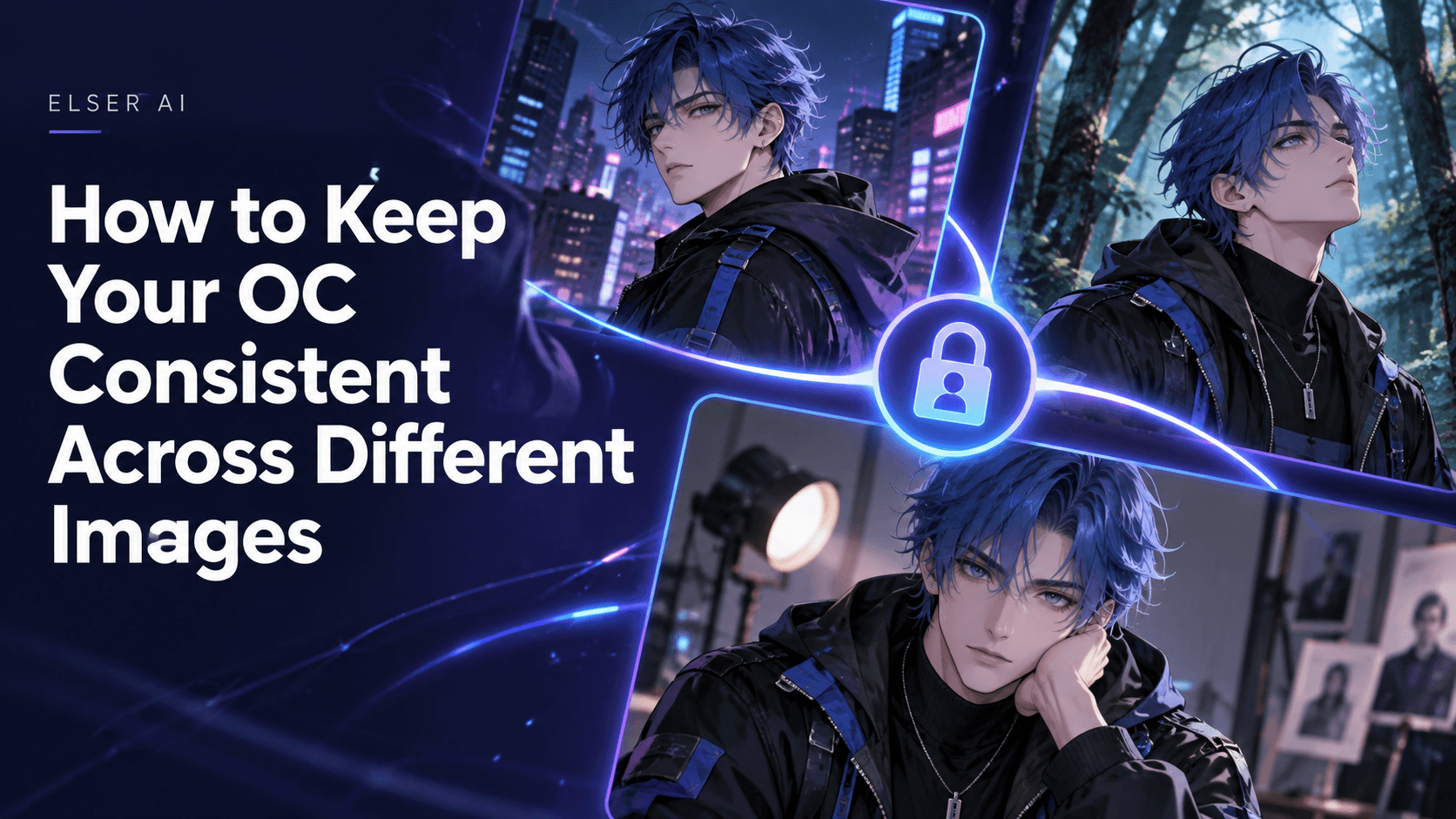
- multiple angles
- different expressions
- different lighting conditions
- later scene work
That standard immediately changes the ranking, because many tools are great at generating attractive one-offs but much weaker at building reusable assets.
Best Choice by Character Goal
If your goal is:
- anime OC design, prioritize anime-specific style fit
- stylized portraits, prioritize exploration speed
- story-led projects, prioritize reuse and continuity
- animation prep, prioritize reference stability
The best tool depends on which of those jobs matters most. That is why the category needs more nuance than "best character creator overall."
How I Would Stress-Test a Character Tool
A strong stress test is simple:
1. generate a neutral version
2. generate an intense expression
3. generate a medium-distance pose
4. generate one action-ready frame
If all four still feel like the same character, the tool deserves serious consideration. If not, the output may be attractive but fragile.
The Hidden Cost of Weak Character Tools
Weak character tools do not only waste time in character creation. They create downstream problems:
- scene drift
- more manual correction
- weaker story continuity
- harder animation handoff
That is why choosing a stronger character workflow early often saves more effort later than people expect.
Which Type of Creator Should Prioritize Which Tool
If you are an OC-focused creator, identity and repeatability should rank above raw style variety. If you are a concept artist or art explorer, flexibility may matter more. If you are building comics, animation, or story clips, downstream workflow fit becomes critical very quickly.
That is why the best character creator for one person may feel oddly weak for another. They are not using the character for the same job.
Red Flags When Comparing Character Tools
Be careful when a character tool:
- only looks good in one flattering angle
- struggles with expression changes
- loses key outfit logic too easily
- makes every output feel like a variation of the same face
Those issues often look small in a gallery view but become huge once the character needs to live in scenes or motion.
The Best Character Tools Reduce Re-Decision
A strong character tool does something subtle but valuable: it reduces how often you need to make the same design decision again. That means fewer prompt rewrites, fewer continuity fixes, and fewer moments where you wonder whether the character is still the same person.
That reduction in friction is one of the clearest signs that the tool is genuinely useful.
Why Some Character Tools Feel Exciting but Not Sustainable
Some tools are exciting because they produce strong novelty quickly. But novelty is not the same as sustainability. If every new image feels like starting over, the creator may still enjoy the outputs while quietly losing workflow confidence.
That is why durable character creation usually comes from systems that make later scenes easier, not just first impressions prettier.
Compare the Recovery Cost, Not Just the First Result
Another smart comparison question is how expensive it is to recover when the output is slightly wrong. Good character tools make correction relatively easy. Weak ones make every small drift feel like a full restart. That recovery cost affects real workflow far more than most comparisons admit.
A Practical Test for Character Confidence
One useful way to judge a character tool is to ask how confident you feel after the first good result. Do you feel ready to build more with the character, or does it still feel fragile? That confidence signal matters because it often reveals whether the tool is helping you build assets or just collect pretty images.
Think About the Second Use, Not Just the First Use
The first use of a character is obvious: the initial image. The second use is more revealing. Can the character survive another mood, another angle, another scene? The tools that make that second use easier are usually the ones worth keeping.
That is usually where serious creator value begins.
In real creator work, that second-use test often matters more than the hero image itself.
It is also where weak tools usually start revealing their limits.
That second-use test is often the point where confident character creation begins to separate itself from simple image generation
If your goal is building characters you can use again later, start with Elser AI and build the design as a reusable creator asset.