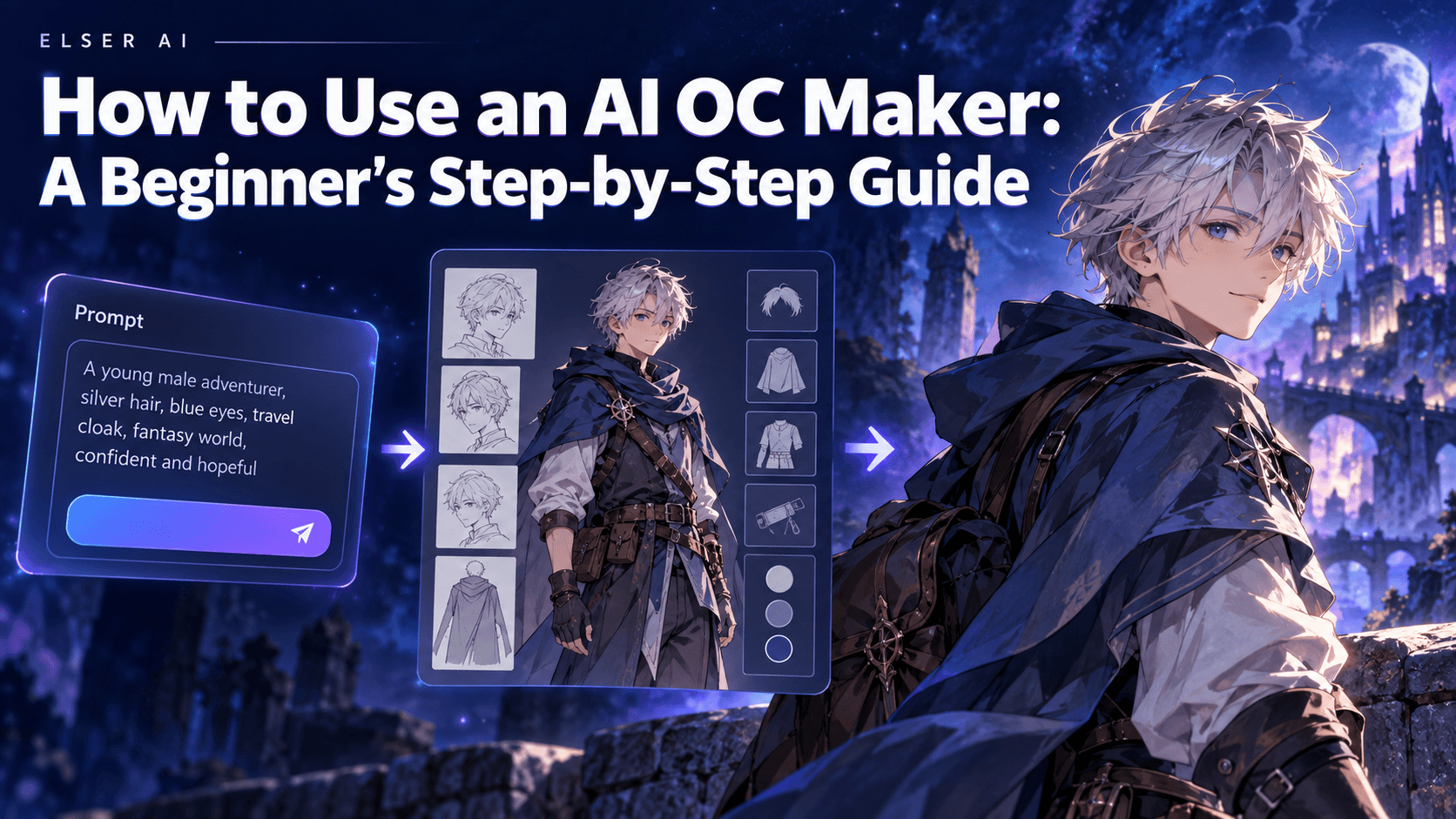
Best AI Comic Generators for Creators in 2026

The best AI comic generator depends on whether you need comic-style art, stronger character identity, or a broader storytelling workflow. Some tools are best for experiments. Others matter more when the comic is only one part of a larger creator project.

My Shortlist

- Best for story-led creator workflows: Elser AI

- Best for art experimentation: OpenArt

- Best for manga-adjacent styling: Komiko

- Best for prompt-heavy variation: SeaArt

- Best for broader creator exploration: ImagineArt

What I Compared

- comic-style output

- character reuse potential

- story and panel planning value

- creator usability

Elser AI

Elser AI is more useful when the comic idea is part of a larger story workflow. The AI video generator, AI image generator , and anime-style creation workflows make it relevant for creators building character-led visual stories.

OpenArt

OpenArt is often useful for broad visual experimentation and style exploration.

Komiko

Komiko belongs in this conversation because it is closely associated with manga and character-driven creation.

SeaArt

SeaArt is often a fit for prompt-heavy art experimentation and style variations.

ImagineArt

ImagineArt is worth comparing when flexibility and visual iteration matter more than a narrow single style.

How I'd Choose

Choose based on whether the project needs:

- stronger character identity

- broader visual experimentation

- panel planning

- later animation or story expansion

Final Word

If your comic idea is part of a larger storytelling workflow, Elser AI is one of the better fits. If the goal is pure image experimentation, the broader visual-generation field may feel looser and faster.

Comic Tools Are Really Solving Three Different Problems

The comic category gets confusing because creators are often asking for one thing while buying another. In practice, comic tools tend to solve three different jobs:

- making comic-style art

- building recurring characters

- planning story flow across multiple panels

Some tools are strong at the first job and weak at the other two. Others make more sense once the creator wants a comic that can grow into a series, a pitch, or an animated extension.

Why Panel Logic Matters More Than a Good Single Image

A comic lives in sequence. That means a beautiful single frame is not enough. You also need:

- rhythm between panels

- visual contrast

- readable emotional progression

- recurring character identity

This is why story-led comic workflows often borrow from planning tools and not only art generators. The story has to move, not just the rendering quality.

What I Would Test in a Comic Tool First

Before trusting a comic tool, I would test whether it can support:

1. one hero frame

2. one reaction frame

3. one transition frame

4. one closing frame

If those four pieces still feel like one story world, the tool is promising. If they feel like separate posters, the workflow may still be too image-first for serious comic creation.

Character Reuse Is the Hidden Difficulty

Comics look easier than animation because they do not require motion, but recurring identity is still hard. Characters must stay recognizable across:

- new angles

- emotional shifts

- changing lighting

- different panel sizes

That is why strong character logic matters so much in comic workflows. Without it, every page becomes a new design task.

When to Prioritize Storyboarding Over Raw Style

Creators should usually prioritize planning first when:

- the comic has more than one scene

- the reader needs to follow an emotional turn

- the project may later become a short video or pitch

- multiple characters share the page

In those cases, panel logic and shot logic matter more than simply finding the most attractive art style.

A Good Comic Workflow Should Make Expansion Easier

The best comic tools do not only help with one chapter or one page. They make later expansion easier. That means:

- reusing character identity

- keeping the visual language coherent

- planning scenes before rendering every panel

- preserving optional paths into animation or storyboards later

That flexibility is why workflow-led tools often matter more for creators than pure style generators.

Comics Need Visual Memory

A strong comic workflow creates visual memory. The reader should remember how the world looks, how the cast feels, and how the pacing behaves. Tools that support that kind of memory are usually far more valuable than tools that only make striking isolated images.

Panels Need Contrast, Not Just Consistency

Consistency matters, but so does contrast. A comic page works best when panels do not all carry the same visual weight. Some should establish, some should react, and some should land the emotional or narrative turn. Good comic workflows support both memory and contrast.

Comic Pages Are Also Timing Devices

Panels do not only show information. They control timing. A wider panel can slow the reader down. A tighter reaction panel can sharpen emphasis. The best comic workflows support this sense of timing instead of treating every image like a standalone illustration.

Build the Character Before You Build the Page

If the cast is unstable, page planning becomes much harder. That is why strong comic workflows usually start with character logic first, then move into panel rhythm and scene order.

The Best Comic Tools Help You Return to the Same World

That matters because comic creation is rarely one page and done. The more the project grows, the more useful it becomes to have a workflow that can return to the same world without rebuilding its identity every time.

That kind of “return path” is one of the clearest signs that a tool actually supports storytelling, not just making one-off cool images.

It’s also what makes longer projects feel less fragile over time.

Once your project goes beyond a single page and needs visual memory across scenes, that stability becomes really valuable.

It also means your comic workflow can support future chapters, not just one nice-looking sample page. That kind of continuity is often what separates concept art from actual serialized storytelling.

Creators usually feel that difference as soon as they move from page one to page two—and page two still has to belong to the same world.

That second page is where the quality of your workflow becomes impossible to fake. If the world can’t hold up for a second page, your process is probably still too image‑first.

Series thinking reveals that weakness very quickly.

That’s exactly why creators who plan for continuity early usually build stronger comic systems. When your workflow actually supports that continuity, the project feels much less likely to fall apart as it grows.

If your comic idea needs stronger character and story structure, start with Elser AI and build the visual storytelling workflow first.

Best AI Comic Generators for Creators in 2026 | Elser AI Blog