Best AI Video Model for Commercial Product Videos
The best AI video model for commercial product videos is not necessarily the model that creates the most dramatic scene. It is the model that keeps the product accurate.
Commercial product videos have stricter requirements than general AI video. A fantasy landscape can change slightly and still look impressive. A product cannot. If the logo bends, the label changes, the packaging shape warps, the color shifts, or the material looks wrong, the video becomes unusable for real marketing. In product advertising, accuracy is part of trust.
This is why product video generation should be judged by different standards: product preservation, image-to-video fidelity, lighting quality, background control, camera movement, editability, caption space, and platform fit. A model that generates beautiful but inaccurate product visuals may be less useful than a model that produces simpler but stable ecommerce-ready shots.
As of 2026, several major AI video models are relevant for commercial product videos. Veo is strong for cinematic quality and native audio-video generation. Seedance 2.0 is strong for multimodal references and 15-second multi-shot audio-video output. Runway Gen-4 is strong for reference-based consistency. Kling is strong for motion control and can be useful when a product is presented by a character or used in motion.
But the best choice depends on the product and campaign.
What Commercial Product Videos Need
A commercial product video usually needs to do one of five things. It may need to present the product beautifully, explain a product benefit, show a use case, create a social media hook, or end with a strong call-to-action.
Each job requires a different video structure. A luxury perfume ad needs slow motion, reflections, and controlled lighting. A TikTok Shop product video needs a fast hook and clear caption space. A skincare ad needs accurate packaging and believable texture. A tech product video needs clean screens, ports, materials, and interface clarity. An app promo video needs readable UI and a clear before-and-after transformation.
The product itself must remain stable. This includes:
shape
logo
label
packaging
screen
buttons
color
material
proportions
brand marks
A good product video prompt should always protect these details. The model should be told what must not change before it is asked to create cinematic motion.
Veo for Commercial Product Videos
Veo is a strong candidate for commercial product videos when the goal is premium cinematic quality. Google describes Veo 3.1 as supporting text-to-video, image-to-video, text-to-audio-plus-video generation, and realistic physics. Google AI Studio also highlights Veo’s native audio-video generation.
For commercial work, this matters when a brand wants a product video that feels polished, atmospheric, or emotionally rich. Veo can be useful for luxury products, lifestyle scenes, cinematic brand ads, travel-related products, music-driven product campaigns, and storytelling ads.
However, product marketers should test product fidelity carefully. A cinematic model may create beautiful light and motion, but the product must remain accurate. For ecommerce, the product cannot become a prettier but different version of itself.
A Veo-style product prompt should be strict:
“Create a premium product video from the reference image. Preserve the exact product shape, logo, label, packaging, cap, color, material, and proportions. Use cinematic soft studio lighting, slow camera push-in, realistic reflections, and a clean background. Do not change the product design, add new text, alter the logo, or distort the label.”
Veo is best when the commercial video needs high-end mood and cinematic polish.
Seedance for Commercial Product Videos
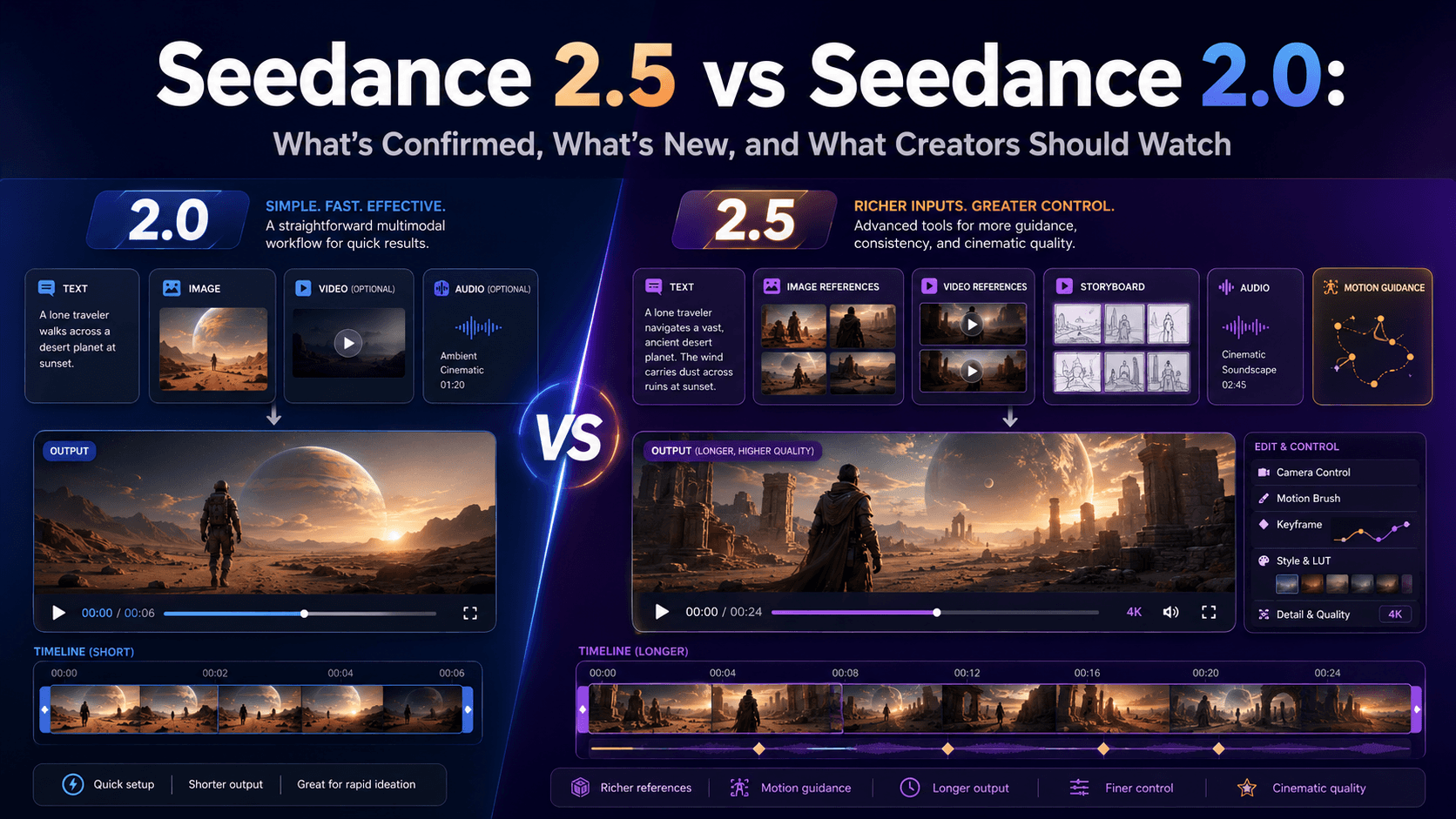
Seedance 2.0 is highly relevant for product video workflows because ByteDance Seed officially describes it as supporting text, image, audio, and video inputs. The official launch blog says Seedance 2.0 supports up to 9 images, 3 video clips, and 3 audio clips as references, plus natural language instructions, with 15-second high-quality multi-shot audio-video output.
For commercial product videos, multimodal references are valuable. A product ad may need a product photo, brand style reference, motion reference, music direction, and ad script. Seedance’s multimodal direction fits that kind of workflow.
Seedance can be useful for:
TikTok product ads
ecommerce hero videos
multi-shot product promos
product-to-lifestyle transformations
music-backed social ads
app or tool demos
short commercial story ads
Because Seedance supports audio-video direction, it may also be useful when the product video needs sound design, voiceover direction, ambience, or short campaign music.
A Seedance-style product prompt might be:
“Create a 15-second commercial product video using the product image as the main reference. Shot 1: clean product hero reveal. Shot 2: close-up of product texture and label. Shot 3: lifestyle scene showing the product on a modern bathroom counter. Shot 4: final CTA frame with clean space for text. Preserve product shape, logo, label, color, packaging, and material in every shot.”
Seedance is a strong option when the product video needs structured multi-shot generation.
Runway Gen-4 for Commercial Product Videos
Runway Gen-4 is especially relevant for product videos where reference consistency matters. Runway’s official Gen-4 page says it can generate consistent objects across different lighting conditions, locations, and treatments, and its help documentation emphasizes reference-based consistency.
For product marketing, object consistency is a major advantage. If the same product must appear in a studio shot, lifestyle shot, close-up, and final CTA shot, the model needs to preserve the product’s identity across different scenes.
Runway can be useful for:
consistent product hero shots
brand campaign visuals
product in multiple environments
object-focused ads
product launch teasers
visual style exploration
product-story scenes
The main value is not only video beauty but object continuity. A product ad often needs multiple variations from the same reference. A model that can keep the object recognizable across treatments can save time.
A Runway-style prompt should protect the product:
“Use the same product from the reference image. Preserve the exact shape, logo, label, packaging, color, material, and proportions. Place the product in a clean premium studio environment with soft reflections. Camera slowly pushes in. Do not redesign the product or alter any printed details.”
Runway is best when the product must remain visually consistent across multiple scene treatments.
Kling for Commercial Product Videos
Kling is most useful for commercial product videos when motion and character interaction matter. Kling’s VIDEO 3.0 Motion Control documentation emphasizes improved facial consistency and smooth expressions across complex motion scenarios. This is particularly relevant when a product is presented by a person, mascot, anime character, or virtual influencer.
Product videos often struggle when hands or characters interact with the product. A model may distort fingers, warp the product, or change the object during movement. Motion-control workflows can help when the scene requires presentation, holding, pointing, walking, or gesture-based demonstration.
Kling may be useful for:
virtual influencer product ads
character holding product
fashion and accessory motion
fitness product action clips
product demonstration scenes
talking spokesperson videos
stylized product animations
However, product accuracy must still be tested. Motion control is valuable, but commercial use requires the product to remain stable. If the character looks good but the product warps, the ad is not ready.
A Kling-style prompt might be:
“Use the same character and product from the reference images. The character presents the product with simple controlled hand movement. Preserve the character’s face, outfit, and style. Preserve the product shape, label, logo, packaging, color, and material. Camera remains stable in a medium shot. No product warping, no distorted hands, no logo changes.”
Kling is best when the product video depends on movement or character performance.
Best Model by Product Video Type
For luxury product commercials, Veo is a strong choice because of cinematic atmosphere, lighting, and audio-video direction.
For structured 15-second product ads, Seedance is highly practical because of multimodal references and multi-shot audio-video output.
For product consistency across multiple environments, Runway Gen-4 is valuable because of its reference-based consistency for objects, characters, and locations.
For product videos with people, characters, or motion performance, Kling is worth testing because of its motion-control strengths.
For simple ecommerce clips, image-to-video workflows may be more important than the model name. A clean product photo, strict product-preservation prompt, and controlled motion often matter more than a dramatic model demo.
Product Video Prompt Template
Use this structure for commercial product videos:
“Create a [format] product video from the reference image. Preserve the exact product shape, logo, label, packaging, material, color, and proportions. The video should show [specific product action or commercial goal]. Camera: [movement]. Lighting: [style]. Background: [environment]. Leave space for [caption/CTA]. Do not change the product, distort the label, alter the logo, invent features, or add false claims.”
Example:
“Create a vertical 9:16 commercial product video from the reference image. Preserve the exact product shape, logo, label, packaging, cap, color, material, and proportions. Start with a fast hook, then show a premium close-up with soft water reflections. Camera: slow push-in with subtle light sweep. Lighting: clean beauty studio style. Leave space at the top for caption text and a final CTA. No product warping, no label distortion, no logo changes, no new claims.”
Final Recommendation
The best AI video model for commercial product videos depends on the campaign goal. Use Veo when cinematic brand quality matters most. Use Seedance when you need multimodal, multi-shot product ads. Use Runway Gen-4 when product consistency across scenes is the priority. Use Kling when motion performance or character-product interaction is central.
The most important rule is simple: product accuracy comes before visual drama. A product video is only useful if the product remains truthful and recognizable.
Before choosing a model for a full campaign, test one product photo across several workflows. Compare product fidelity, logo stability, label clarity, motion quality, caption space, and editability. The best model is the one that helps you create usable commercial assets, not just impressive demos.