GPT-5.6 Sol, Terra, and Luna Explained: What’s Different from GPT-5.5?
GPT-5.6 Sol, Terra, and Luna Explained
OpenAI’s GPT-5.6 family introduces a new way to think about model choice. Instead of treating GPT-5.6 as one model, OpenAI presents it as a family with three tiers: Sol, Terra, and Luna. OpenAI describes Sol as the flagship and most capable model, Terra as a strong lower-cost option, and Luna as the fastest and most cost-efficient model. During the preview, OpenAI says these models are available only to selected organizations through API and Codex, and GPT-5.6 is not included in ChatGPT during the preview.
For developers, this matters because it gives more explicit tradeoffs between intelligence, speed, and cost. For creators, it matters because creative production is not one type of task. A creator may need deep planning for a story, fast caption generation for Shorts, structured prompt writing for video, and cheap variation generation for ads. Those jobs do not always require the same model tier.
The easiest way to understand GPT-5.6 Sol, Terra, and Luna is to think of them as different creative team members.
Sol is the senior creative director.
Terra is the strong production strategist.
Luna is the fast assistant for high-volume iteration.
That is not OpenAI’s official wording, but it is a useful way for creators to understand the workflow difference.
What Is GPT-5.6 Sol?
GPT-5.6 Sol is positioned as the flagship model in the family. OpenAI calls Sol the most capable model in the GPT-5.6 preview. The broader launch material describes GPT-5.6 as advancing work in software engineering, computer use, professional knowledge work, scientific research, and cybersecurity.
For creators, Sol is likely the model tier you would choose for complex planning tasks once access becomes available. These are tasks where reasoning quality matters more than speed.
Examples include:
developing a full AI video campaign
creating a character bible for a recurring anime series
planning a multi-scene music video
turning a rough story into a storyboard
designing a YouTube Shorts content system
rewriting product ad concepts for different audiences
analyzing why prompts fail
creating a full workflow from script to final edit
Sol is not just for “better writing.” Its value is in structure. A complex creative workflow has many dependencies. A character prompt affects image generation. The image affects video consistency. The video affects editing. Captions affect framing. A CTA affects the final shot. Sol-style reasoning can help organize those relationships.
For Elser AI users, GPT-5.6 Sol would be most useful before generation. You could use it to create the complete production plan, then bring the prompts and visual directions into Elser AI for actual video creation.
What Is GPT-5.6 Terra?
GPT-5.6 Terra is described as a strong lower-cost option. That makes it interesting for production workflows where the task still requires quality, but not always the highest possible reasoning.
For creators, Terra may be useful for tasks like:
rewriting video prompts
creating alternate hooks
turning a script into shot lists
generating scene variations
adapting a prompt from anime to product video
summarizing audience feedback
creating caption options
planning several versions of the same short video
Think of Terra as the practical workhorse. It may not be the model you choose for the most complex strategic analysis, but it could be a strong fit for repeated creative tasks.
For example, a product marketer might ask Terra to generate ten AI video ad angles from one product description:
premium lifestyle
TikTok hook
problem-solution
before-and-after
unboxing
demo
UGC-style
ecommerce hero
seasonal campaign
final CTA shot
Then the marketer can bring the best ideas into Elser AI and generate product video variations.
This is where model cost matters. Creative production often requires many iterations. If every small rewrite uses the highest-cost model, the workflow becomes inefficient. Terra’s role is likely to be important for scalable creative teams.
What Is GPT-5.6 Luna?
GPT-5.6 Luna is described as the fastest and most cost-efficient GPT-5.6 model.
For creators, Luna is useful to think about as a high-speed iteration layer. Once a creative direction is already defined, many tasks become lightweight. You may need 30 hook variations, 20 caption options, 10 title ideas, or five shorter versions of a script. You may need to reformat prompts for vertical video, convert a scene into a caption, or create social post copy from a finished video.
These tasks benefit from speed and volume.
Examples:
Generate 25 YouTube Shorts hooks.
Rewrite one CTA in five tones.
Create 10 video titles.
Shorten a script from 90 seconds to 45 seconds.
Generate caption text for a product video.
Turn one AI video prompt into three platform versions.
Create alt text or metadata.
In an Elser AI workflow, Luna-style tasks would happen around the generation process. After creating video scenes, you might use a faster model to create captions, titles, descriptions, social snippets, and A/B test copy.
How GPT-5.6 Differs from GPT-5.5 for Creators
GPT-5.5 Instant was positioned as an update to ChatGPT’s default model, with OpenAI emphasizing smarter, more accurate, clearer, and more personalized answers. OpenAI said GPT-5.5 Instant reduced hallucinated claims compared with GPT-5.3 Instant in internal evaluations and improved everyday tasks like image analysis, STEM questions, and decisions about when to use web search.
GPT-5.6 is different in positioning. It is not simply described as a default ChatGPT upgrade. It is previewed as a family for API and Codex use, with tiers for capability, cost, and speed. It also introduces model family naming around Sol, Terra, and Luna. OpenAI says the number identifies the generation, while Sol, Terra, and Luna identify durable capability tiers.
For creators, the practical difference is this:
GPT-5.5 was easier to understand as a general everyday assistant improvement. GPT-5.6 is better understood as a professional model family for structured workflows.
That means GPT-5.6 content should focus less on “chatting with a smarter bot” and more on “building AI production systems.”
How Creators Can Use the Three-Tier Model Concept
Even if GPT-5.6 is not broadly available yet, creators can already learn from the model family concept. A good AI workflow should use different levels of reasoning for different jobs.
For example, an AI anime creator might structure work like this:
Use the strongest reasoning model for the series bible, character system, and episode structure.
Use a mid-tier model for scene prompts and storyboard expansion.
Use a faster model for captions, titles, short descriptions, and variations.
Use Elser AI for image-to-video generation, character animation, and final visual testing.
This is a better workflow than using one model for everything.
A product video team might do:
Sol-level task: define campaign strategy and product messaging.
Terra-level task: create product video prompt variations.
Luna-level task: generate ad titles, captions, and CTA variations.
Elser AI task: generate the product videos from photos and prompts.
This division saves time and keeps quality where it matters.
Why This Matters for Elser AI Users
Elser AI users are not only looking for text. They want video outputs: anime clips, product videos, short-form ads, music visuals, app promos, educational animations, and character-driven scenes.
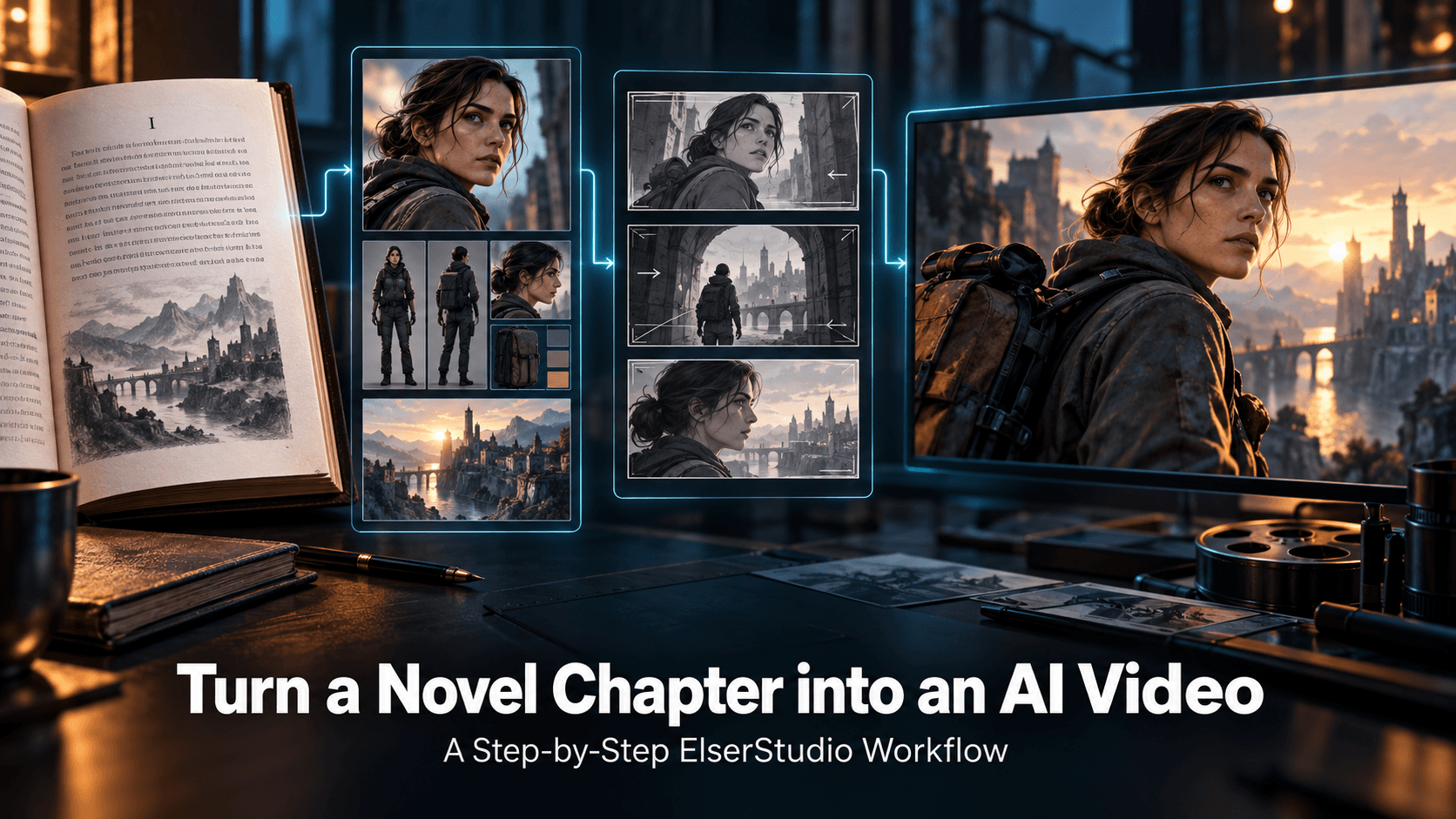
GPT-5.6 can improve the upstream creative planning. It can help write better scripts, prompts, character bibles, style guides, shot lists, and platform-specific content structures. But Elser AI is where those ideas become visual assets.
A practical workflow could be:
Ask GPT-5.6 to create a 30-second product video plan.
Use GPT-5.6 to write three scene prompts.
Upload the product photo into Elser AI.
Generate clean hero, lifestyle, and CTA shots.
Use GPT-5.6 to write captions and ad copy.
Use Elser AI to test visual variations.
The value comes from combining reasoning and generation.
Final Thoughts
GPT-5.6 Sol, Terra, and Luna represent a more structured way to think about AI model use. Sol is positioned as the flagship, Terra as a lower-cost strong option, and Luna as the fastest and most cost-efficient option. For creators, the real lesson is not only “new model, better output.” It is “choose the right intelligence level for each production task.”
GPT-5.5 improved everyday assistant quality and personalization. GPT-5.6 introduces a family structure that is more obviously useful for professional workflows, especially when paired with creative tools.
If you create AI videos, use GPT-5.6-style reasoning for planning and Elser AI for production. Let the model help you design the script, prompt, character, storyboard, and campaign logic. Then bring those assets into Elser AI to generate the actual videos. That is where the new workflow becomes practical.