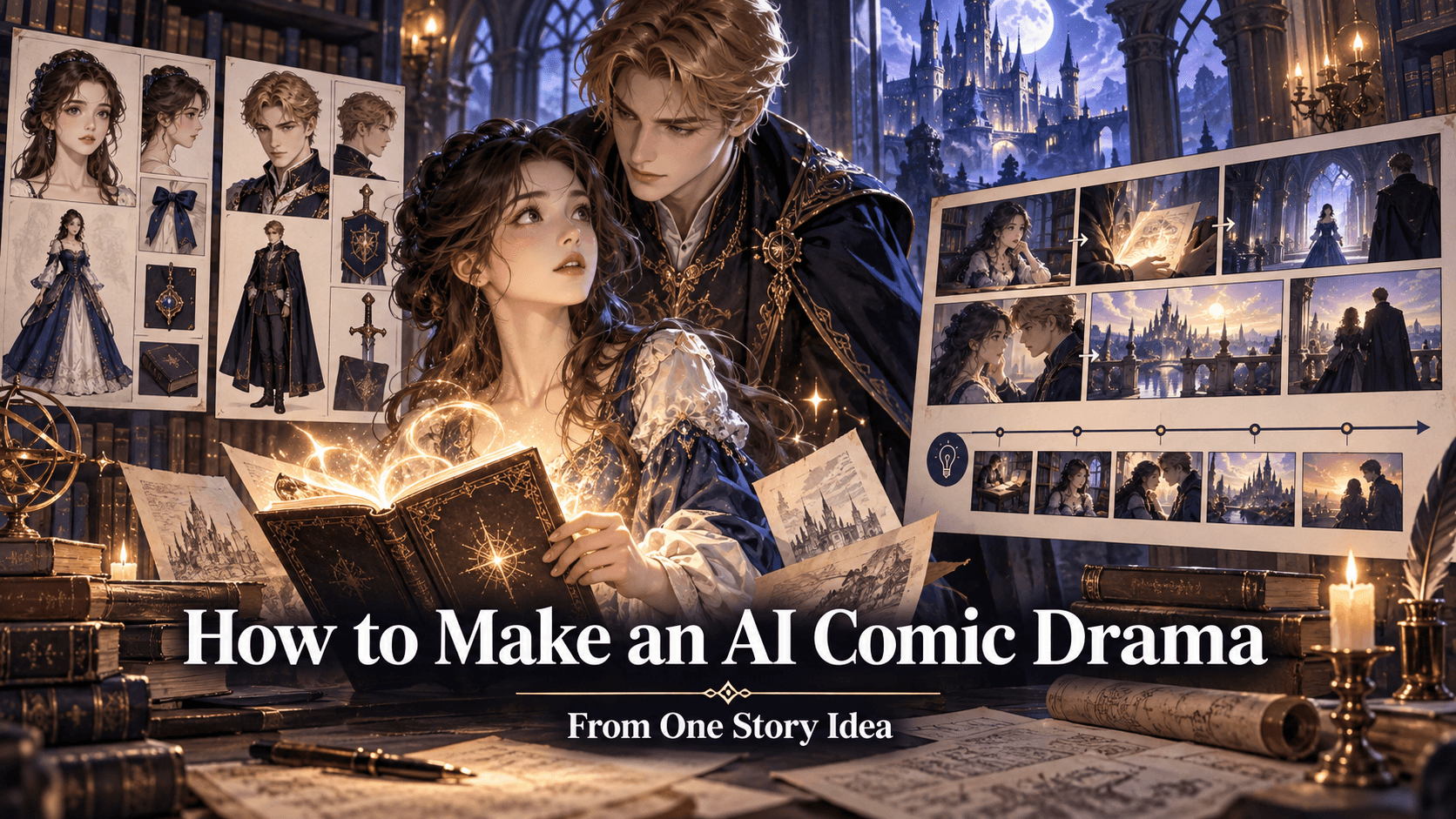
AI Comic Generator Guide: Create Manga, Webtoons, and Comic Strips
The promise sounds wonderfully simple: describe the result, press generate, and keep the best version. The useful reality is more hands-on. Good work depends on a clear brief, a suitable source, controlled changes, and an honest review at the size where people will see it. The goal here is a repeatable method for AI Comic Generator Guide, with clear checkpoints and room for creative judgment.
For AI comic generator guide, searchers usually want a usable result rather than a definition. The key is to judge the comic sequence by its intended use, not by how impressive it looks in isolation. A thumbnail, a printable page, a character reference, and a motion keyframe impose different requirements.
Start With the Result You Actually Need
Begin with one sentence that names the audience, subject, action, mood, and delivery format. Then list the elements that cannot change. This turns the panel into a controlled production unit rather than an invitation to regenerate everything. For “AI Comic Generator Guide: Create Manga, Webtoons, and Comic Strips,” the highest-value constraint is the one implied by the title: solve that problem first, and treat extra decoration as optional.
Before opening a generator, write a miniature acceptance test. For this project, a strong result means:
- Reading order is immediate.
- Characters remain recognizable.
- Dialogue fits without crowding art.
- Camera choices serve the beat.
- Each panel changes the story.
Use these points as pass-or-revise gates. They stop surface polish from hiding a structural failure and make collaboration easier because every rejection names a visible problem instead of asking the model to “make it better.”
The Working Process
1. Reduce the premise to a clear conflict
Work from the final use backward. A vertical social image needs different spacing from a wide banner; a comic panel must leave room for text; an animation keyframe needs clean edges and a stable pose. Choose the format early so later crops do not destroy the composition.
2. Break the story into visual beats
Describe what a reviewer should be able to point at: the cut of a sleeve, the direction of a gaze, the distance between characters, or the source of a rim light. Broad praise words are not production notes and often compete with one another.
3. Assign one job to each panel
Create a continuity card from the approved design. Record proportions, palette, hairstyle, costume layers, props, and features that must never change. Feed later stages from that original card, not from a chain of increasingly altered outputs.
4. Write dialogue after the visual action works
Generate a small batch with one variable changed at a time. Compare structure before polish: silhouette, anatomy, perspective, reading order, garment fit, and visual hierarchy. Surface detail cannot rescue a broken foundation.
5. Generate and review panels as a sequence
Use a review pass that mirrors the audience experience, then zoom in for technical defects. A beautiful close-up can collapse into noise on a phone, while a strong thumbnail can still hide malformed fingers or broken seams.
6. Repair continuity and lettering before export
Once most of the image or page is approved, reduce the scope of every edit. Repair the faulty region, compare it with neighboring details, and keep the successful composition intact. Broad regeneration reopens solved problems.
A Realistic Example
Suppose the scene is “a courier discovers that the package is whispering.” Break it into beats: arrival, odd sound, denial, closer inspection, revelation, decision. Keep dialogue short because the visual change carries the story. Establish the courier’s coat, bag, hair, and height in a reference. Then check each panel for a new piece of information and remove any panel that merely repeats the previous one. This example is intentionally modest. A controlled, finishable project teaches more than a spectacular prompt with no continuity plan.
Topic-Specific Production Notes
The first technical decision
Choose webtoon, manga page, strip, or cinematic panels before writing because format shapes pacing and text density. Decide this before adding decorative detail, then write it into the project notes. Later revisions should follow the rule instead of reopening a solved question.
The detail most creators miss
Use character fields for stable cast information and keep scene-specific changes in the script. Make this a pass-or-revise check for the next batch. A visible rule is easier to evaluate than a general request for higher quality.
The final review that matters
Review generated script and shot suggestions before spending effort on finished visuals. Inspect it in the final delivery context and compare it with the approved reference. If it fails, repair the smallest affected region.
Common Mistakes and Better Fixes
Changing too much at once
Lock successful regions and alter one category per pass. For this topic, ask whether the change advances “AI Comic Generator Guide” or merely adds novelty.
Using style words instead of construction
Describe what is visible and how it is built.
Reviewing only the best-looking preview
Inspect anatomy, edges, text, and continuity at full size.
Where Elser AI Fits
The AI Comic Generator is designed around story input, character fields, comic format, script generation, and editable panel production.
A sensible registration point is when you have a real source asset and a defined output format. Sign in, run a small test, save the winning version, and continue only if it passes the acceptance checklist above. This keeps the call to action tied to useful work rather than curiosity clicks.
Archive approved assets separately from experiments and give versions meaningful names. When a later stage drifts, you can return to a known reference instead of searching a download folder full of anonymous candidates.
Quality, Safety, and Rights
Use source photos, characters, logos, and reference art only when you own them or have permission. Get consent before editing a recognizable person, particularly for clothing changes or public posts. Mark conceptual mockups clearly if viewers might mistake them for real products, events, or documentary images. Before commercial release, review the platform’s current terms and the copyright, publicity, trademark, and fan-art rules that apply to the project. Keep a provenance note for client work.
FAQ
Should I generate an entire comic at once?
For a short test, perhaps. For stronger control, approve the script and character references first, then review the sequence panel by panel and repair weak panels locally.
Do I need professional drawing or editing skills?
No. You do need a clear brief and a willingness to review details. Basic knowledge of composition, continuity, and file formats improves results more than advanced software knowledge.
How many versions should I generate?
Start with a small controlled batch—often three or four. If none solve the structural problem, revise the source or prompt before generating more.
Can I use the result commercially?
Possibly, but check the platform’s current terms and the rights attached to your source material, characters, brands, and references. Client work deserves a documented rights review.
Conclusion
A strong outcome does not require endless prompting. It requires a clear acceptance test, a stable reference, a small number of deliberate iterations, and human judgment at the end. Apply that discipline to AI comic generator guide, and “AI Comic Generator Guide: Create Manga, Webtoons, and Comic Strips” becomes a repeatable workflow rather than a gamble.