Can GPT-6 Make an Anime? What It Can Do and Where Elser AI Fits
GPT-6 Astra cannot natively render a finished anime. Its published output modality is text, and the current model page lists video and audio as unsupported. What it can do is solve many of the reasoning problems around production: develop the premise, structure the script, define characters, design shot coverage, write prompts and audit continuity.
Elser AI fits after and around that planning layer. It provides the visual production workflow for characters, storyboards, image and video generation, voice, music, sound and final editing. Used together as a manual workflow, they can move an idea toward a finished short without pretending that one prompt replaces directing.
The Honest Capability Boundary
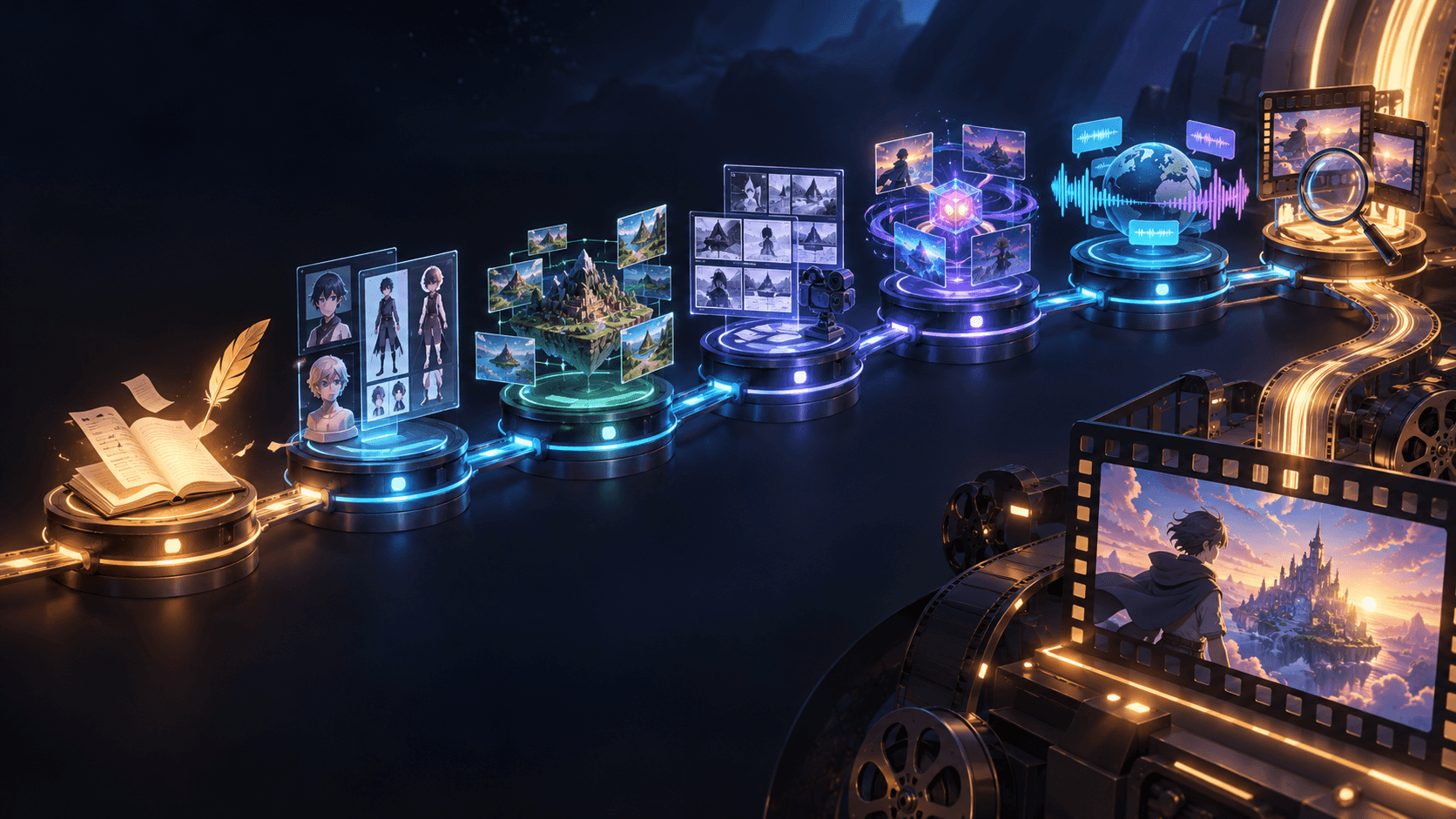
There are four separate jobs in “make an anime”:
- Development: premise, theme, script and dialogue.
- Preproduction: character design, locations, storyboard and shot plan.
- Production: images, motion, voices, music and effects.
- Postproduction: scene order, trimming, transitions, mix, captions and export.
GPT-6 Astra is strongest in development and structured decision-making. It accepts image input, so it can also critique references or storyboard frames. According to the official GPT-6 Astra specifications, its native output remains text. A configured application can let it call an image-generation tool, but that is still a separate renderer.
Elser AI covers the production sequence in one creative environment. The partnership is a handoff through scripts, references and specifications; this article does not claim an automatic GPT-6 integration.
What GPT-6 Can Contribute
Story architecture
Astra can transform a premise into a logline, visible beats and a timed script. Its large context window is useful when a project includes world notes, episode outlines and character history. Label approved material so old drafts do not override current canon.
Character bibles
It can extract visible traits from reference images and organize identity rules: silhouette, face anchors, hair, palette, costume, props and behavior. It can also identify contradictions across descriptions.
Shot planning
Astra can turn script beats into shot cards with framing, action, camera, duration, ending state and continuity. This forces a literary scene to become filmable.
Prompt writing
It can rewrite an approved shot card for image or motion generation while preserving stable traits. Prompt quality improves when the model is asked to describe one primary action and one motivated camera move.
Review
Given the brief and selected images, Astra can compare outputs with the intended composition or continuity list. Its review is an aid, not final quality assurance.
What GPT-6 Cannot Finish by Itself
It does not natively return the animated clip, recorded performance, music track or final timeline. It also cannot guarantee a character remains identical across independently generated frames. Consistency depends on references, saved assets, model behavior, prompt discipline and review.
It cannot resolve rights questions merely by generating a confident statement. Original characters, licensed inputs, voices and music require appropriate permissions. It cannot guarantee that a generated fact or translation is correct.
Most importantly, it cannot decide whether the scene feels emotionally right for your audience. It can articulate pacing principles, but the final cut still needs a viewer.
Try the smallest complete proof: Give Astra a 30-second premise, approve six shots, then build only those shots in Elser AI. A finished proof reveals more than a 20-page speculative plan.
A Two-Tool Anime Workflow
1. Define a production-sized concept
Choose one character, one goal, one obstacle and one visible change. Limit a first experiment to 20–60 seconds. Avoid crowds, costume changes and complex fights until the pipeline is stable.
Prompt Astra:
Turn this premise into a 45-second anime short. Use one protagonist, one
location and six to eight shots. The ending must reverse or deepen the opening
image. Identify any element that cannot be shown or heard within the runtime.
2. Approve the story before visual generation
Request a beat sheet, then challenge it. Does the protagonist make a choice? Is the obstacle visible? Does each beat change information or emotion? Remove lore that exists only to explain itself.
Do not proceed because the prose sounds cinematic. Proceed when the sequence is understandable.
3. Lock the character
Ask Astra for a short production card, then create or customize the character in Elser AI. Save a clear reference and record traits that must not drift.
Useful locks include:
- face shape and two anchors;
- hairstyle and accessory side;
- body proportions;
- costume construction and palette;
- one prop;
- movement style;
- allowed expressions.
Separate optional detail from identity. If every ornament is mandatory, prompts become crowded and review becomes slow.
4. Build a storyboard
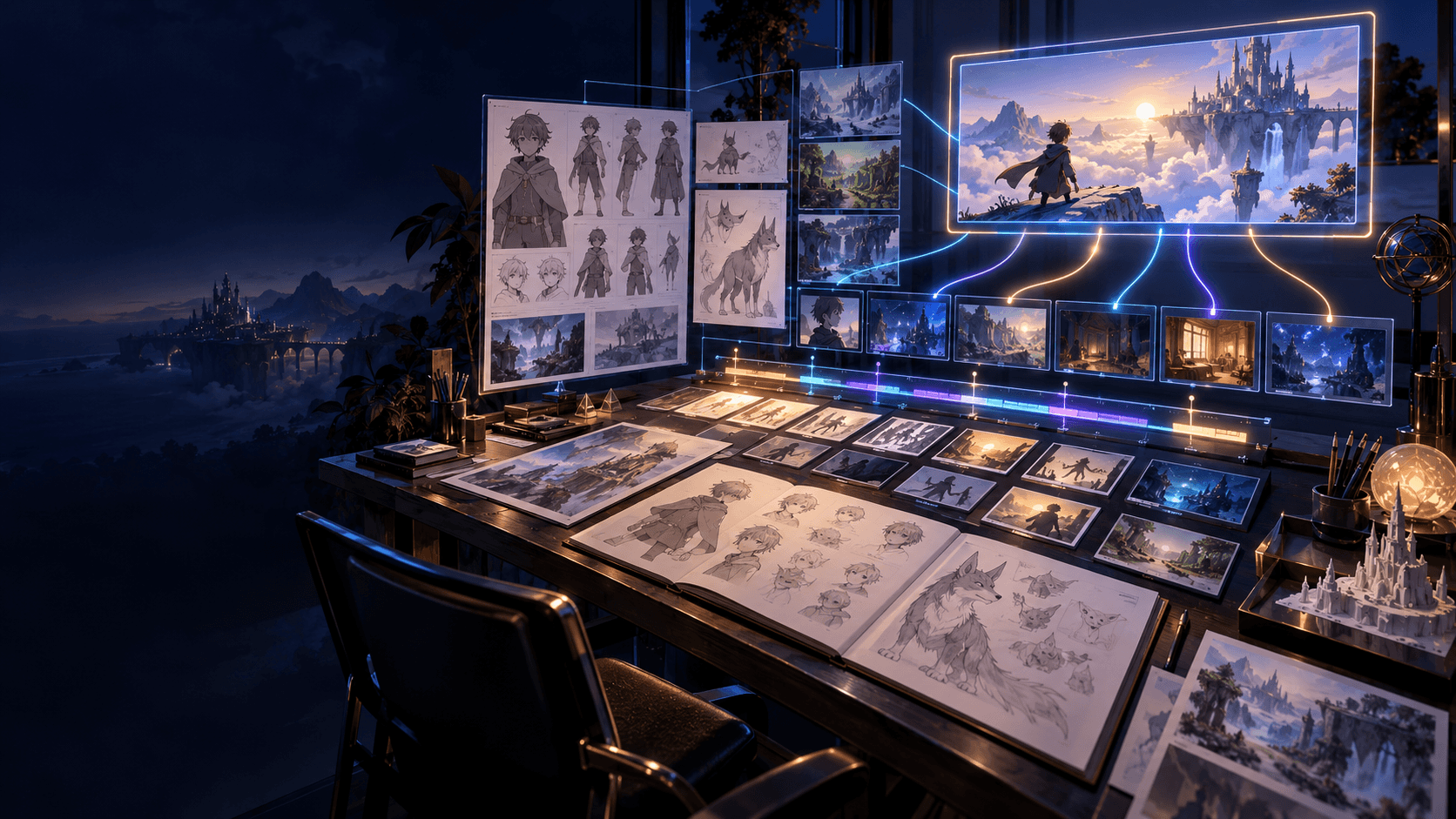
Convert the script into shot cards and create the storyboard in Elser AI. Review the entire sequence as thumbnails. Check geography, eyelines, screen direction, shot-size rhythm and reveal order.
A storyboard is a decision document. It should answer why the camera is there and what the viewer learns.
5. Approve keyframes
Generate the still image for each shot before motion. Compare the frames side by side. Fix face drift, wardrobe changes, prop errors and lighting jumps now.
You may return a contact sheet to Astra and ask it to compare against a checklist, but verify the observations yourself. Image understanding can miss small or ambiguous details.
6. Generate motion
Write a motion prompt with subject action, environment movement, camera and end state. Keep each shot focused.
Weak:
Epic anime battle, dynamic cinematic camera, amazing action.
Usable:
The courier plants her left foot and raises the sealed letter against the wind; her red scarf streams toward frame right; medium low-angle shot with a slow push; end as the wax seal begins to glow. Preserve face, navy jacket, silver ear cuff and rooftop at dusk. No camera orbit or new characters.
Generate short clips, assemble them and revise the weakest interval. A continuous 20-second shot may be harder to control than three edited shots.
7. Add performance and sound
Use Astra to tighten dialogue after the visual timing is known. Ask for lines that fit the actual duration and a performance note for tone, pace and pauses.
In Elser AI, create or add voiceover, music and sound effects. Build from ambience outward. Let effects support cause and space; let music shape the dramatic turn. Confirm permissions for cloned or recognizable voices.
8. Make the final cut
Assemble scenes in Elser AI and judge the sequence at normal speed. Cut repeated information. Hold the reveal long enough to register. Use transitions only when they express a change in time, place or viewpoint.
Export after checking subtitles, levels, safe areas and the target aspect ratio.
Match the Workflow to the Project
For a dialogue scene, use Astra for subtext and line timing, then Elser AI for the character, performance shots, voice and lip sync. For action, let Astra simplify cause and consequence while Elser AI handles approved poses and short motion segments. For manga-panel animation, use Astra to identify which elements may move without changing meaning, then preserve the composition while adding restrained motion and sound.
How GPT-6's Long Context Helps an Anime Project
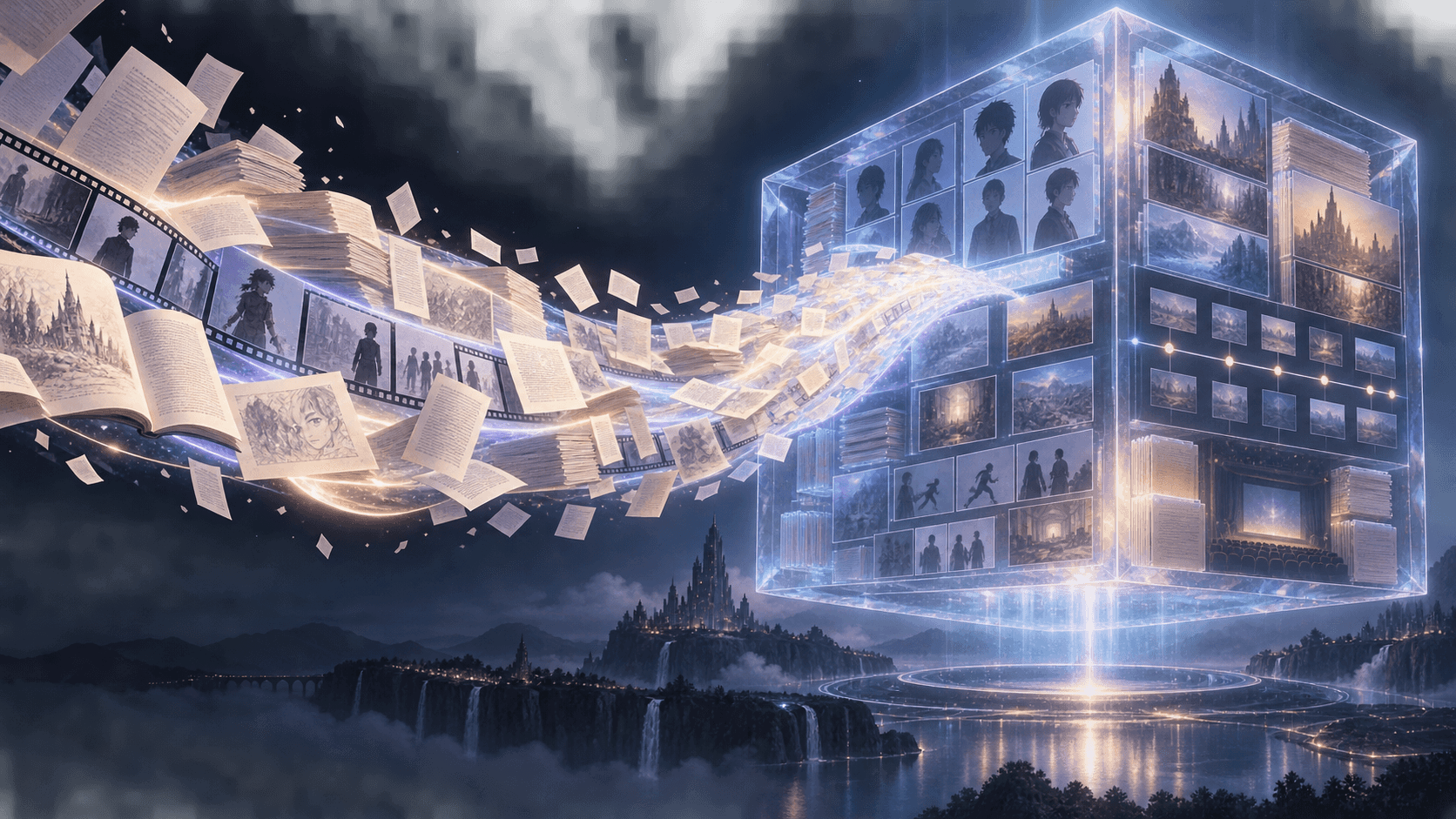
Astra's 1,050,000-token context window can hold a large production bible, but the winning use is continuity rather than volume. Provide:
- current script;
- approved character cards;
- location rules;
- terminology and pronunciation;
- shot log;
- unresolved decisions;
- a manifest marking obsolete drafts.
Then ask targeted questions. “Find every prop continuity conflict between scenes 3 and 8” is more useful than “read everything and improve it.”
Inputs above 272,000 tokens also face higher API rates on the entire request. Retrieval and clean version control may be more economical than resending the whole archive.
Keep the source of truth visual: Save approved characters and scenes in Elser AI while keeping the text bible versioned. When text and image disagree, pause and decide which one is canonical.
Does This Workflow Preserve Character Consistency?
It improves consistency; it does not guarantee it.
Use a three-layer system:
- Canonical asset: the saved character and approved reference.
- Text lock: a short list of traits repeated in relevant prompts.
- Shot review: side-by-side checks for every keyframe and clip.
Track scene state too. A clean coat in shot one may be torn in shot five. That difference is intentional if the continuity sheet records when it happens.
Do not solve identity drift by adding endless adjectives. Strong references, fewer simultaneous changes and selective regeneration are more effective.
Is GPT-6 Better Than a Dedicated Anime Generator?
They solve different problems. GPT-6 Astra is a general reasoning model designed for difficult end-to-end knowledge and tool workflows. An anime platform is designed to create and assemble media.
If the problem is “the plot has no emotional turn,” use Astra. If the problem is “this approved character needs to appear in a storyboard and animated scene,” use Elser AI. If the final cut feels slow, inspect both the shot plan and the timeline.
A tool comparison based on a single output-quality score misses this division.
A Realistic First Project
Create a 30-second short with:
- one protagonist;
- one room;
- five shots;
- one spoken line;
- one meaningful prop;
- one lighting change;
- ambience, two effects and a short music cue.
Ask Astra for the timed plan. Create the character and frames in Elser AI. Generate motion one shot at a time, add the audio and finish the edit. Record which stage caused the most rework. That becomes the next process improvement.
Frequently Asked Questions
Can GPT-6 Astra generate an anime video from one prompt?
Not natively. It outputs text and can help create the production plan. Use a dedicated animation platform for video rendering and editing.
Can GPT-6 create anime images?
Astra can call an image-generation tool in a configured Responses API workflow. The generation tool, not the base text-output model alone, renders the image.
Can GPT-6 analyze anime character references?
Yes, the model supports image input. It can extract visible traits and compare frames, but important details still need human confirmation.
What should I ask GPT-6 to produce before opening Elser AI?
Prepare a logline, timed script, character lock, shot cards, visual prompts and continuity checklist. Transfer only approved versions.
Is there an official GPT-6 and Elser AI integration?
This guide does not claim one. It describes a manual workflow using transferable scripts, prompts and references.
How long should my first AI anime be?
Twenty to sixty seconds is a practical learning scope. One completed short exposes the entire pipeline and provides useful evidence for scaling.
Conclusion
GPT-6 Astra can help make an anime in the same sense that a writer, script editor and production planner help make one: it improves the decisions that guide the work. It does not replace visual generation, performance, sound or editing.
Use Astra to convert the idea into a clear, timed and internally consistent plan. Use Elser AI to turn that plan into characters, boards, moving scenes and a final cut. The human creator remains responsible for the theme, approvals and finished experience.