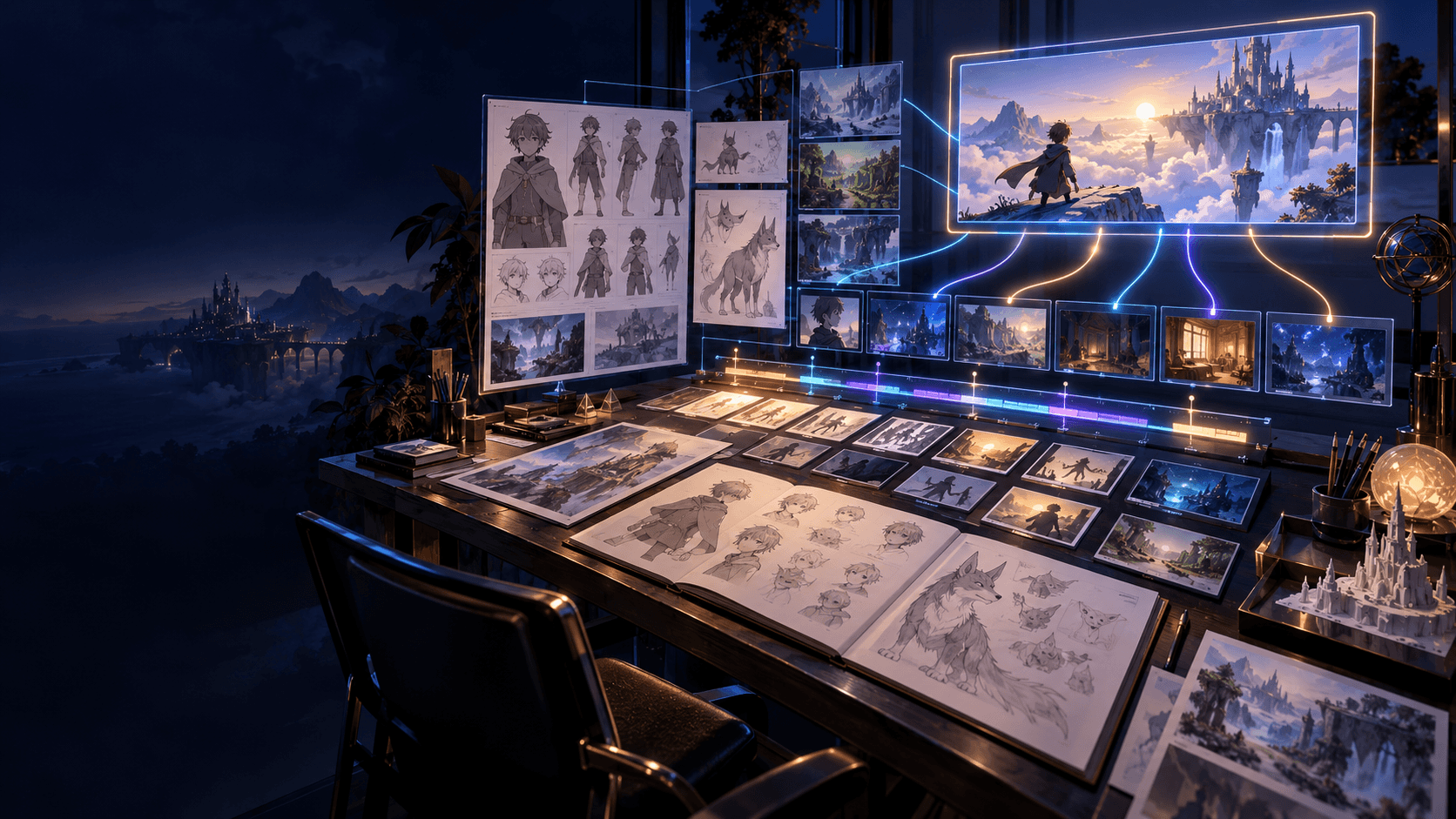
Elser AI Character Generator: Create and Reuse Original Characters
Reusable characters are production assets, not isolated portraits. A character must remain recognizable across scale, angle, expression, wardrobe variants and motion while still being able to act. The process begins with narrative function, turns it into visual hierarchy, and ends with a reference system that collaborators can apply consistently.
Elser’s public pages describe character creation, customization, saving to an asset library and reuse across images, video and storytelling. Those capabilities help, but disciplined design and continuity review are what make reuse trustworthy.
Begin with Role, Desire and Contradiction
Write what the character does in the story, what they want, and the behavior that blocks them. Translate that contradiction into posture, wear, prop handling and expression. “Brave courier who avoids silence” guides more decisions than a list of fashionable attributes.
Separate Identity, Styling and State
Identity includes face, body proportions, age cues and permanent marks. Styling includes outfit, hair arrangement and accessories. State includes rain, dirt, injury and emotion. When these layers are mixed, a temporary scene detail can accidentally redefine the base character.
Apply this now: Create one neutral character candidate in Elser from a narrative-first brief. Use Elser AI to keep the next decision connected to the same project.
Design a Readable Visual Hierarchy
Choose one dominant silhouette idea, one signature color relationship and one memorable prop. Supporting detail should reinforce rather than compete. Test the silhouette in black and the portrait at thumbnail scale. Avoid cultural symbols used only as exotic decoration.
Generate and Select the Base
Use a neutral pose, simple background and controlled lighting. Describe visible construction, not invisible lore. Compare candidates for anatomy, costume logic, recognizability and narrative fit. Save the exact stable identity description with the chosen asset; do not select solely for rendering shine.
Apply this now: Save the approved base asset before making costumes or emotional variants. Register with Elser AI, record the settings, and compare the result against the brief.
Build the Reference Pack
Create full body, three-quarter portrait, profile, back view, expression grid, hands with signature prop, palette and material notes. Check left/right placement and layer order. Rank a primary identity reference above secondary views and contextual costume variants.
Reuse without Accidental Drift
Keep identity and style prompt blocks stable; change shot, action, camera and state. Maintain a shot-state ledger for outfit, weather, held objects and damage. Name every approved variant. Review adjacent outputs together rather than trusting individual beauty.
Apply this now: Test the character across three shots before building an episodic project. Elser AI provides a practical workspace for this controlled test.
Prove the Character in Motion
Test a quiet close-up, walking medium shot and prop interaction. Score face, silhouette, costume, hands, motion and emotional readability. Simplify coverage when complex interaction causes drift. Accept low-salience texture variation if the audience clearly reads the same person.
The Difference between an AI Character Image and a Reusable Character
An image can succeed once. A reusable character must remain recognizable in portraits, full-body shots, new poses, changing light and video. Elser’s character workflow and asset library are useful because the approved design can stay connected to later image, video and story projects. The long-tail intent “create and reuse original characters with Elser AI” therefore requires a reference system, not just a prompt.
An Elser AI Character Prompt Template
Use: “[role and apparent age], [face and stable features], [hair], [body proportions], wearing [outfit layers and materials], carrying [signature prop], [neutral pose], [chosen anime or visual style], simple background, even reference lighting.” Keep personality in a second sentence only when it changes posture or expression. Start neutral so action does not hide design defects.
Build the Base Character in Four Passes
Pass 1: Silhouette
+Choose proportions, coat or hair mass, and signature prop.
Pass 2: Identity
+Approve face, eyes, permanent marks and color hierarchy.
Pass 3: Construction
+Resolve garment layers, closures, shoes and prop attachment.
Pass 4: Performance
+Test calm, stress, joy and determination without changing identity.
Create a production-ready OC: Generate a neutral base in Elser AI, save the approved character, then build the reference pack before animating it.
What to Save in the Elser Character Asset Library
Save the canonical character and record the exact identity description, primary portrait, full-body view, profile, back view, palette, expression sheet, prop detail and permitted variants. If the interface stores only part of that information, keep the rest in a project folder. Label which reference has authority when images disagree. This supports an AI OC reference sheet for consistent animation.
Reuse the Character across Images and Storyboards
When adding the character to a new scene, keep the identity block unchanged. Add only scene state, action, camera and lighting. In the storyboard, annotate outfit, prop hand, weather, damage and emotional state. Compare adjacent frames together. Reuse means carrying approved identity forward; it does not mean every scene should use the same pose or expression.
Reuse the Character in Video without Losing Identity
For image-to-video, begin from an approved keyframe and prompt restrained, readable motion. Test a close-up, walk and prop interaction. If the face changes during a fast turn, redesign coverage: cut to the prop, use a reaction or reduce camera movement. Measure recognizability at playback speed. A simpler shot often preserves an Elser AI consistent character across videos better than a complicated continuous take.
Manage Outfit Variants and Character Growth
Create named assets for base, travel, formal, battle-damaged or time-skip designs. Preserve facial identity and a recognizable silhouette relationship while allowing story-driven change. Update the character bible when a change becomes canonical. Never let a beautiful accidental costume in one generation silently become continuity; approve it deliberately or regenerate the shot.
A Copy-Paste Original Character Example
Use this AI character prompt template: “Adult signal courier, narrow oval face, amber eyes, short uneven auburn bob, compact athletic build; moss-green waterproof coat over navy workwear, cross-body satchel, small red wax-seal pouch; cautious forward posture, observant expression; clean full-body three-quarter reference, neutral studio background, refined cinematic anime, even light, no extra props or text.” Generate several candidates, select by silhouette and construction, then save the winner. For a scene, keep that identity block and add: “rain-dark station, medium close-up, opens a glowing envelope, blue practical light.” For motion, shorten again: “holds one beat, opens envelope, eyes lift, slow push-in, preserve outfit and face.” Compare the resulting frame with the saved full-body and portrait references before approving it for video.
Frequently Asked Questions
How do I create an original character in Elser AI?
Start with a narrative and visual brief, generate a neutral base, approve identity and construction, then save the character and build supporting reference views.
Can I reuse an Elser AI character in multiple videos?
The public movie page says saved characters can be reused in image, video and storytelling workflows. Reuse references and still check continuity.
What should an AI character prompt include?
Stable face and body traits, hair, outfit layers, signature prop, neutral pose, style and simple reference lighting. Avoid invisible lore that does not affect appearance.
How do I create alternate outfits without losing identity?
Save each outfit as a named variant while preserving face, proportions and recognizable silhouette logic. Map the correct variant to every shot.
When is an AI character ready for animation?
After it remains recognizable in a close-up, full-body view, new expression and a short motion test involving walking or a prop.
Conclusion
A reusable Elser character needs a stable identity, documented variants and proof that it survives new scenes. Build the base carefully, save the canonical asset, reuse only controlled blocks and test motion before expanding the world or cast further. Continue with Elser AI when you are ready to apply this exact workflow to a real project.