Elser AI Tutorial: From Your First Prompt to a Complete Animation
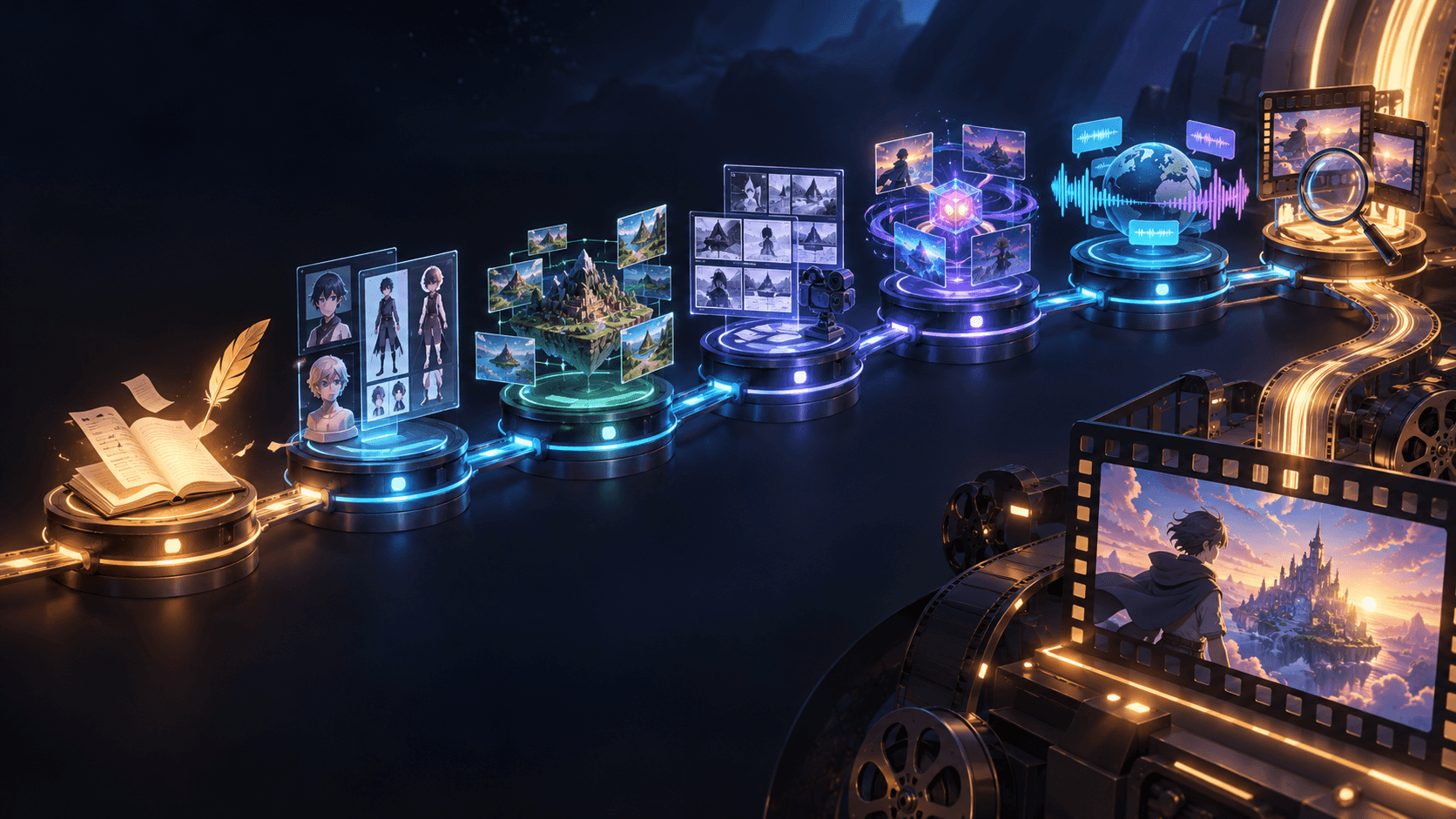
A first prompt is not a finished screenplay, and a finished screenplay is not a shot list. The job of an animation workflow is to translate one level of intent into the next without losing the story. This tutorial follows one seed—“A train-platform courier receives a letter addressed to her future self”—from a prompt to a reviewable final animation.
The emphasis is on controlled transformation. At each gate, you will approve one type of truth: narrative, character, visual, motion, audio and editorial. If a gate fails, return to that layer instead of rewriting everything.
Prompt Zero: State the Audience Promise
Write what the viewer should feel and understand by the end. Here: curiosity becomes unease when the courier recognizes her own handwriting. Add runtime, location and cast limit. This is a development prompt, not a request for final pixels.
Expand into Beats, Then Challenge the Draft
Use setup, disturbance, investigation, recognition and unresolved choice. Remove any generated subplot that cannot fit the runtime. Ask whether each beat is visible. Replace “she remembers a warning” with a prop, reaction or short line the camera can capture.
Apply this now: Start the future-letter concept in Elser and compare idea expansion with your own five-beat outline. Use Elser AI to keep the next decision connected to the same project.
Convert Beats into a Shot Table
Assign ID, purpose, framing, starting state, action, camera, duration, dialogue, reference and transition. A six-shot version might use platform wide, envelope insert, wary medium, handwriting macro, reaction close-up and train-arrival silhouette. This table becomes the production contract.
Lock Character and Environment Truth
Approve face, hair, coat, satchel, height and gesture language. Define the platform architecture, clock position, weather, train direction and palette. Keep an asset board separate from the changing shot board. Conflicting references should be removed, not averaged.
Apply this now: Register the courier only after the neutral reference passes review. Register with Elser AI, record the settings, and compare the result against the brief.
Write Stage-Specific Generation Prompts
A keyframe prompt should emphasize composition and light. An image-to-video prompt should emphasize action, environmental movement, camera and timing. A voice prompt should specify performance rather than appearance. Stable identity and style blocks remain unchanged across shots.
Cut the Draft Before Chasing Perfect Shots
Generate a usable version of every shot and assemble immediately. The edit may reveal that the handwriting insert must arrive earlier or a close-up is redundant. Fix narrative timing with cuts before spending more generations on surface quality.
Apply this now: Use the Elser editor to assemble a rough sequence before polishing any single shot. Elser AI provides a practical workspace for this controlled test.
Finish Audio, Captions and Delivery
Record or generate final dialogue to actual picture length. Build platform ambience, envelope paper, approaching rail vibration and restrained music. Add editable captions, verify safe areas, normalize levels, export a master and test compression on the destination platform.
Case Study Setup: The Future Letter
The first prompt is: “A courier waiting alone on a rainy train platform receives a sealed letter addressed in her own handwriting from ten years in the future.” The deliverable is a 35-second 16:9 anime scene with six shots, one original character and one spoken sentence. This single premise lets the tutorial test script expansion, character design, storyboard coverage, object continuity, image-to-video motion and sound.
Prompt Version 1: Development, Not Generation
In Concept, add the story constraints: the courier first assumes the letter is a prank; recognition happens through a distinctive way she crosses the letter “t”; the train arrives before she can decide whether to open it. Ask for six visual beats and minimal dialogue. In Storyline, delete any flashback or second character. The long-tail intent “turn a prompt into a complete animation with Elser AI” begins with editing the expansion.
Prompt Version 2: Character and Keyframe Briefs
For Cast: “Adult courier, short auburn bob, amber eyes, moss-green waterproof coat, navy satchel, small red seal pouch, cautious posture.” For the handwriting insert, generate a blank or abstract close-up and add readable writing later in the editor; generative text is not a dependable story prop. Keep the character identity block unchanged in every keyframe prompt.
Build the same case study: Start the future-letter premise in Elser AI Movie Generator, then save the edited six-beat Storyline before creating the cast.
Prompt Version 3: Six Shot-Specific Motion Prompts
Shot 1 uses locked rain and distant train light. Shot 2 lets the envelope slide beneath the shelter bench. Shot 3 follows the courier kneeling. Shot 4 is a controlled hand insert. Shot 5 holds her recognition before a slow push-in. Shot 6 lets approaching light wash the platform while she grips the unopened letter. Each prompt describes only the action, camera, environmental motion and prohibited changes.
How the Elser Storyboard Prevents Prompt Drift
The storyboard stores narrative order while Cast stores identity. Annotate every panel with purpose, duration, camera and the exact reference needed. If Shot 4 fails, regenerate the insert without changing Shots 1–3. This is why an Elser AI first prompt tutorial should not jump directly from one paragraph to a long video: shot-level control preserves both story and budget.
From Generated Clips to a Complete Animation
Assemble draft clips in Final Cut before perfecting them. Use platform rain as a continuous sound bed, paper contact as a precise cue, rail vibration before visible light, and one whispered line after the handwriting close-up. Trim duplicated looks. Add the address as editable graphics or captions. Export, test on the target display, and archive the cast, board and prompt record for a second episode.
The Final Prompt Package to Save
The first Elser AI prompt is only the opening asset in this Elser AI animation tutorial. Archive five reusable items from the future-letter case study: the edited Storyline, the canonical courier identity block, the station style card, the six-row storyboard table and the shot-specific motion prompts. Add the selected model, aspect ratio, duration and output IDs. This package is more valuable than the original one-sentence prompt because it records how Elser transformed the idea into production decisions. For a sequel, duplicate the stable cast and environment information, then write a new beat sheet and storyboard. Do not copy the original camera moves automatically; reuse identity and world rules, not accidental staging. The saved package also makes later Elser scene regeneration easier to audit.
Frequently Asked Questions
Can one prompt create a complete Elser AI animation?
One prompt can start the process, but a controlled result comes from editing the expanded story, creating the cast, approving a storyboard and using shot-specific prompts.
Why should prompts change between stages?
Development prompts describe story intent; character prompts describe stable design; keyframe prompts control composition; video prompts control motion and camera. One overloaded prompt does all four poorly.
Should I generate every shot before editing?
Generate usable drafts for the full sequence and assemble early. The rough cut reveals missing coverage and redundant shots before you spend time polishing.
How do I keep the first character consistent?
Save an approved cast asset, reuse a stable identity block and reference, and change only scene state, action and camera from shot to shot.
What makes the animation complete?
A complete deliverable has a readable story, approved cast, coherent shots, timed voice and sound, captions where needed, and a reviewed export—not merely several generated clips.
Conclusion
A first prompt becomes a complete animation only through successive, controlled translations. Keep the story, character, shot, motion and audio prompts separate, then assemble drafts early enough for editing to change the plan. Continue with Elser AI when you are ready to apply this exact workflow to a real project.