How to Use GPT-6 Astra to Write an Anime Script for Elser AI
GPT-6 Astra can help turn a loose anime idea into a production-ready script, but the useful deliverable is more than dialogue. Before a scene enters Elser AI, you need a visible story beat, target duration, character rules, shot purpose and continuity constraints.
This tutorial builds a 60-second anime short from a single premise. GPT-6 Astra handles development and structured planning. Elser AI handles the character, storyboard, visual generation, audio and edit. There is no implied native integration; the bridge is the creative brief you approve and transfer between the two workflows.
The Example Premise
We will start with one sentence:
On the last night before her floating town disappears, a young cartographer finds a street that exists only when she stops looking at her map.
The premise contains a protagonist, deadline and visual rule, but no producible sequence yet.
For a first short, set firm boundaries: 60 seconds, one speaking protagonist, one location, eight to ten shots, no crowd or combat, one visual reveal and fewer than 70 spoken words. Constraints make the story finishable and give Astra a standard for rejecting excess ideas.
Step 1: Ask Astra for Story Questions, Not a Draft
Do not begin with “Write an anime script.” First ask the model to identify the decisions that control the story.
You are developing a 60-second anime short from the premise below. Before
drafting, identify the five decisions that most affect visible action,
emotional change and production scope. Do not expand the world unless the
viewer needs the information. Recommend one option for each decision and
explain the production trade-off in one sentence.

Premise: [paste premise]
Constraints: one protagonist, one location, 8–10 shots, under 70 spoken words.
A strong response should surface what the cartographer wants to save, why she trusts the map and which final image proves change. Answer those questions yourself; the creator owns the theme.
Step 2: Lock the Story Spine
Once the choices are clear, ask for a compact structure:
Create a six-beat story spine. Each beat must describe something visible or
audible and must change the viewer's information, danger or emotion. Use this
order: setup, disruption, choice, escalation, reveal, final image. Keep the
sequence producible within 60 seconds. Remove narration that merely explains
the world.
For our premise, the spine might be:
- The cartographer marks the final street while buildings begin to fade.
- A blank alley appears when she lowers the map.
- She must choose between trusting the official map and entering the alley.
- Street signs rearrange whenever she looks down.
- At the end, she finds residents' hand-drawn routes glowing beneath official ink.
- She tears the map's border away, revealing the town can change rather than vanish.
The visual arc suggests props, transitions and a final action without requiring extensive lore.
Create the project early: Open Elser AI and save the premise, runtime and approved story spine. Keeping the production shell visible helps prevent the script from growing beyond what you intend to animate.
Step 3: Build a Character Bible That Serves the Scene
Ask Astra for decisions that affect continuity and performance. Avoid a biography the camera never uses.
Create a production character card for the protagonist. Include silhouette,
face anchors, hair, outfit construction, palette, one prop, movement style,
emotional baseline and final emotional state. Every trait must be visible or
useful for directing performance. Keep locked traits separate from flexible
details. Do not reference copyrighted characters or living artists.
Example locked traits:
- short ink-blue hair with one uneven fringe;
- amber compass-shaped hair clip on the left;
- cream survey coat with navy piping;
- red map case across the right shoulder;
- precise hand movements that become looser after the reveal.
Create the protagonist in Elser AI and save the approved asset. Check the face, silhouette, accessory side and costume construction before story frames.
Step 4: Draft for Time, Not Page Count
A 60-second animation needs timed beats and lean dialogue.
Write the script as eight timed scene units totaling exactly 60 seconds.
For each unit include duration, location, visible action, dialogue or sound,
and the story change. Dialogue must total fewer than 70 words. No internal
thought unless it becomes voiceover. Preserve the locked character card.
Read the dialogue aloud with a timer. Emotional pauses and reactions consume time. If spoken lines occupy most of the runtime, visual storytelling has no room.
A useful revision instruction is:
Cut 20 percent of the spoken words without removing the protagonist's choice
or the final reveal. Replace explanation with action, prop behavior or sound.
Return the revised script and list only the three most important changes.
Step 5: Convert the Script into Shot Cards
Script units and shots are not identical. A single scene may need a wide shot, an insert and a reaction. Ask Astra to design coverage:
Convert the approved script into 9 shot cards. Each card must include:
story purpose, framing, subject action, environment motion, camera behavior,
duration, end frame, continuity constraints and audio cue. Use one primary
action and no more than one camera move per shot. Total duration: 60 seconds.
Check that every shot changes information or emotion, fits its duration, uses the camera to clarify the moment and ends in a frame that supports the next cut. Remove decorative coverage.
Step 6: Create the Storyboard in Elser AI
Move the approved script and cards into Elser AI. Use the workflow that matches how fixed the script is: automatic interpretation for a quick visual pass, or closer manual/studio control when framing and order are already decided.
At storyboard stage, check geography, prop continuity, reveal order, visual clarity and shot-size rhythm. Reject a beautiful frame if it breaks story logic; correction is easier before motion.
Step 7: Turn Shot Cards into Visual Prompts
Use Astra to rewrite each approved card as a compact generation prompt. Supply the character lock and ask it not to invent new objects.
Rewrite each shot card as a visual prompt in this order: subject and locked
traits, primary action, location, lighting, framing, camera, ending state,
preservation constraints. Keep each prompt under 90 words. Do not add a new
character, outfit, prop or weather condition.
Example:
The young cartographer with short ink-blue hair, left-side amber compass clip, cream survey coat and red map case lowers her paper map; a narrow street appears behind it as surrounding buildings fade into blue mist; medium close-up, eye-level, slow push toward her widening eyes; end with the blank alley centered over her shoulder. Preserve outfit, accessory side, dusk palette and hand-drawn anime style. No new person or camera orbit.
Prompts should describe what changes during the shot; mood words do not direct motion.
Generate one proof shot: Build the protagonist and the reveal frame in Elser AI before producing the entire sequence. If identity or visual logic fails here, revise the source asset or prompt template first.
Step 8: Animate One Primary Motion per Shot
Once the keyframes pass review, generate motion. Complex hand work, fast turns and several interacting characters increase instability. Split difficult actions into an insert and reaction rather than demanding everything in one continuous clip.
Preserve the first frame when identity and composition are locked. Describe the main action, secondary environment motion, camera and final pose. Avoid contradictory directions such as “static camera” and “fast orbit.”
Assemble rough clips immediately. A scene that looks impressive alone may repeat information or disrupt pacing.
Step 9: Write Voice and Sound to the Actual Cut
Return the final shot durations to Astra and ask for a performance script:
Fit the approved dialogue to the final shot durations below. Keep all lines
speakable at a calm pace. Add breath or pause marks only where they affect the
edit. Then provide an audio cue sheet with ambience, motivated sound effects
and one restrained music change at the reveal.
Generate or add voice, music and effects in Elser AI. Use voices only with appropriate permission. Let ambience establish the disappearing town. A paper tear, shifting sign and low tonal change may carry more story than additional dialogue.
Step 10: Ask Astra to Audit, Then Make the Human Cut
Provide the final script, shot list and continuity notes—not necessarily the rendered video—and request a contradiction audit:
Compare the final production plan with the approved story spine and character
card. List only failures that would confuse the story, break continuity or
exceed 60 seconds. For each, recommend the smallest repair. Do not propose new
scenes unless no edit can solve the problem.
Then watch the cut muted, audio-only, uninterrupted and on the smallest target screen. Human judgment owns the final emotional rhythm.
A Reusable Master Prompt
Develop the premise below into a production package for a [duration] anime
short. Audience: [audience]. Theme: [theme]. Preserve the supplied character
and world rules as authoritative.

Return:
1. one-sentence logline;
2. six-beat visual story spine;
3. timed script totaling [duration];
4. dialogue word count;
5. 8–10 shot cards with purpose, framing, action, camera, duration, end frame,
   continuity and audio;
6. locked-trait checklist;
7. three production risks and smallest mitigations.

Make routine creative choices. Ask only if missing information would change
the audience, rights, runtime or central character choice. Every beat must be
visible or audible. Do not imitate a copyrighted character, franchise or
living artist. Verify that shot durations equal the target before finishing.

Premise: [paste]
Approved character rules: [paste]
World rules: [paste]
Frequently Asked Questions
Can GPT-6 Astra write a complete anime script?
Yes, it can produce a text script and production plan. You still need to approve story choices, time the dialogue and use an animation system to create the media.
How long should the first script be?
Aim for 30–60 seconds, one main character and one location. Completing a small production teaches more than expanding an unfinished episode.
Can I upload character images to GPT-6 Astra?
The official model page supports image input. Use images for analysis and continuity planning, then confirm important traits manually.
Does Elser AI automatically connect to GPT-6 Astra?
This tutorial does not claim a native integration. Transfer the approved script, character details and shot prompts between the workflows.
How do I prevent generic anime dialogue?
Define the character's immediate objective, social behavior and forbidden phrasing. Set a word limit and replace explanation with action.
Can GPT-6 Astra generate the finished anime video?
No. Its native output is text and the current model page marks video unsupported. Use Elser AI or another dedicated production tool for rendering and editing.
Conclusion
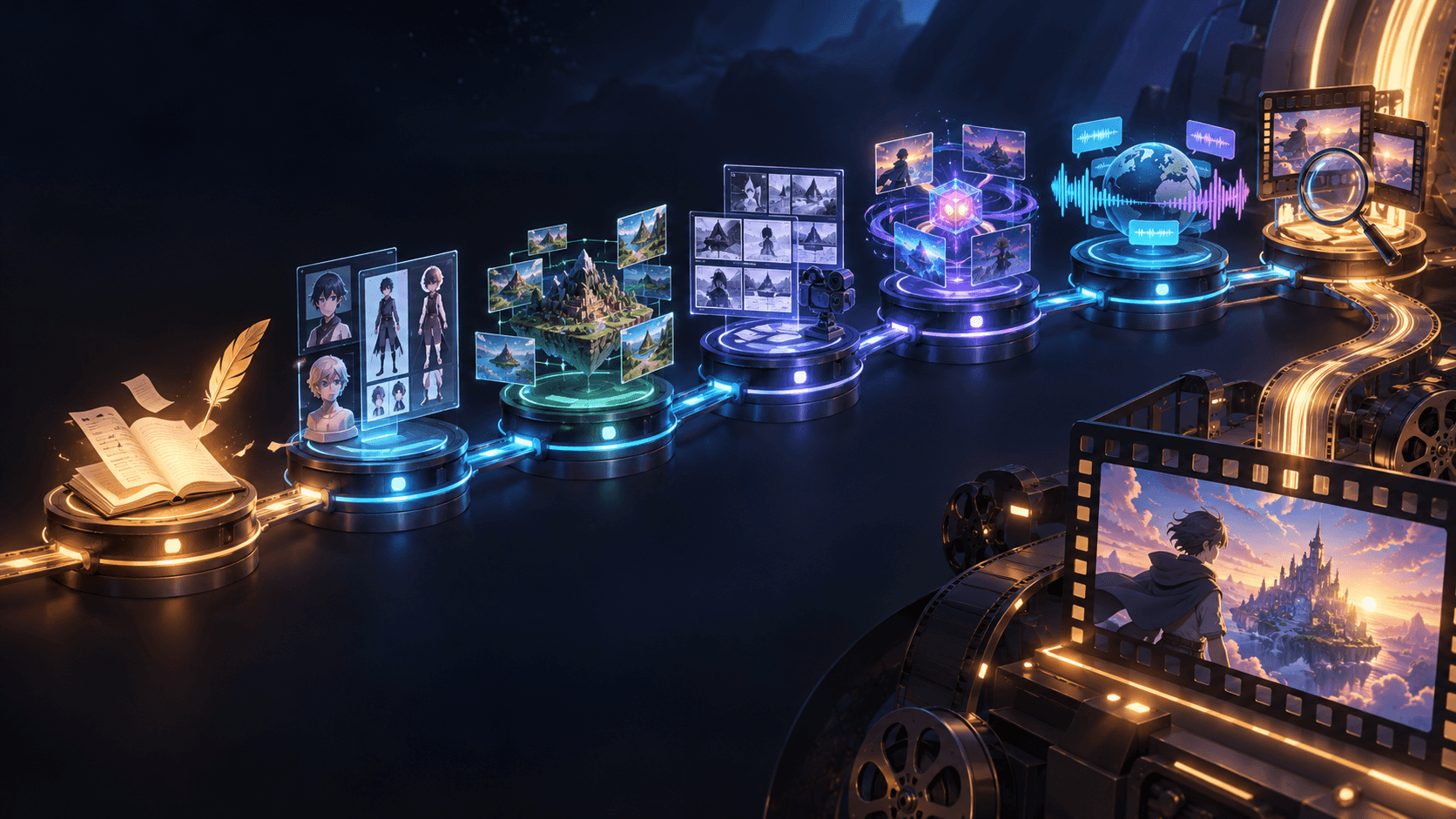
GPT-6 Astra is most valuable before generation, when story decisions are cheap to change. Use it to test the premise, compress the arc, lock the character and produce timed shot cards. Then bring only approved material into Elser AI for storyboarding, visual generation, sound and final assembly.
The result is a controlled script-to-animation pipeline: reasoning first, production second and human judgment at every approval point.