GPT Image 2 Anime Style Prompts That Actually Work (2026 Edition)
Everything looked like a cheap deepfake of Studio Ghibli. The eyes were too big in a creepy way. Hands looked like mutated crab claws. And backgrounds were just watercolor blobs with no depth.
Then GPT Image 2 dropped in April 2026, and something changed.
For the first time, I could generate anime that actually looked hand-drawn. Line art had thickness variation. Screen tones had texture. Hands had five fingers in the right places. And backgrounds – oh my god, the backgrounds – looked like frames from a real movie.
In this guide, I’m sharing the exact prompts that work for different anime styles. I’ve categorized them by genre and art director. I’ll also tell you what doesn’t work, because knowing the traps is half the battle.
Style 1: Makoto Shinkai (Your Name / Weathering With You)
The Shinkai style is all about hyperrealistic skies, god rays, and emotional color palettes. Pastel clouds, overexposed sunsets, and reflections on water.
Prompt template:
“Anime background in the style of Makoto Shinkai. [scene description]. Radiant sky with volumetric clouds and god rays. Soft pastel color palette with warm oranges and cool purples. Hyper-detailed reflections on water. Emotional, cinematic, 4K.”
Example 1 – Train crossing:
“Makoto Shinkai style anime art: a single electric train crossing a curved bridge over a river at sunset. The sky is exploding in orange, pink, and purple clouds. Reflections of the train in the water below. Cherry blossom petals falling. Extremely detailed background, shallow depth of field on foreground flowers.”
Example 2 – Rainy window:
“Anime still in the style of Makoto Shinkai: a close-up of a girl‘s hand pressed against a rain-streaked window. Outside, a glowing city skyline at twilight. Blue and teal color theme. A single tear rolling down the glass. Soft lens flare. Emotional atmosphere.”
Why this works: GPT Image 2 understands “god rays” and “volumetric clouds” as physical phenomena, not just decorative terms. It also handles the balance between realistic skies and anime characters.
Style 2: Studio Ghibli (Soft, Painterly, Magical)
Ghibli is soft textures, muted earth tones, and whimsical detail. Avoid sharp lines and high contrast. Embrace watercolor feels.
Prompt template:
“Studio Ghibli inspired anime illustration. [scene]. Soft watercolor textures, muted and warm earthy color palette. Painterly backgrounds with gentle gradients. Magical realism atmosphere. No harsh lines, no neon colors.”
Example 1 – Forest spirit:
“Studio Ghibli style: a small forest spirit (a white fuzzy creature with a leaf on its head) standing on a mossy log in a sun-dappled forest. Soft green and gold light filtering through trees. A tiny glowing fairy nearby. Warm, nostalgic, hand-painted look.”
Example 2 – Cozy kitchen:
“Ghibli-inspired anime: a cozy rustic kitchen with a giant cauldron over a fire. Steam rising in soft swirls. A grandmother cat wearing an apron stirring the pot with a wooden spoon. Loaves of bread on a wooden table. Warm amber lighting, soft textures.”
Pro tip: Explicitly say “no harsh lines” and “watercolor texture” . Without those, GPT Image 2 defaults to a cleaner digital anime style, which looks wrong for Ghibli.
Style 3: Shonen Action (Attack on Titan / Jujutsu Kaisen)
This is the high-energy, thick line art, dramatic angle style. Think dynamic poses, speed lines, and impact frames.
Prompt template:
“Shonen anime action scene. [character action]. Thick dynamic line art, speed lines, dramatic camera angle (low angle / worm‘s eye). High contrast shading. Sweat and dirt on character. Intense expression. Manga screentones for shadows.”
Example 1 – Sword swing:
“Shonen anime: a teenage boy with spiky black hair, wearing a ripped martial arts gi, mid-swing of a giant katana. His face is screaming with effort. Speed lines behind him. Low angle shot showing the sky. Blood spatter (small amount). Jujutsu Kaisen aesthetic.”
Example 2 – Power-up aura:
“Shonen anime style: a female fighter surrounded by a crackling blue lightning aura. Her eyes glow white. Torn clothes, floating rocks around her. Manga-style impact frame layout with black borders. Extremely dynamic pose, hair floating upward.”
Warning: GPT Image 2 sometimes puts too many speed lines and clutters the image. Add “moderate speed lines” or “clean composition” to keep it readable.
Style 4: Seinen Manga (Berserk / Vagabond – Dark and Textured)
Seinen is gritty, detailed, and often black-and-white. You want ink scratches, crosshatching, and rough textures. Color is fine, but the mood should be mature.
Prompt template:
“Seinen manga style, black and white or muted dark colors. Heavy crosshatching and ink scratches. Realistic proportions (not chibi). Gritty atmosphere. Detailed backgrounds. Emotional or violent subject matter.”
Example 1 – Warrior resting:
“Seinen manga panel: a grizzled older swordsman sitting against a dead tree, holding a broken sword. Heavy rain. Black and white with deep blacks and rough ink textures. Crosshatched shadows on his face. Berserk inspired, Kentaro Miura tribute.”
Example 2 – Cyberpunk noir:
“Seinen manga, dark cyberpunk: a detective with a trench coat and a cybernetic eye, standing in a rainy alley with neon reflection. Muted dark blues and blacks. Grainy screentone texture. Line art with thick outlines and fine detail scratches. Emotionally exhausted expression.”
Key trick: Add “screen tone dots” or “screentone texture” to your prompt. GPT Image 2 knows what those are and will apply a manga-appropriate halftone pattern.
Style 5: Chibi / Kawaii (Cute, Simple, Expressive)
Chibi is all about exaggerated proportions (big head, tiny body), simple lines, and bright pastel colors.
Prompt template:
“Chibi anime style, cute and simple. Very large head, tiny body, big shiny eyes. Pastel colors. Simple backgrounds. Expressive pose, Kawaii aesthetic. Soft shading, no complex details.”
Example – Chibi dragon:
“Chibi style: a tiny green dragon with huge round eyes, blushing cheeks, and stubby wings. It‘s trying to roast a marshmallow but only blows a tiny spark. Pure kawaii. White background, soft pink and green pastels.”
The “No Plastic Face” Rule
The biggest complaint about AI anime is the “plastic skin” – shiny, textureless faces that look like dolls.
To fix this, always add one of the following phrases to your prompt:
- “Matte skin texture, no shine”
- “Hand-drawn appearance with subtle grain”
- “Traditional cel animation look”
- “Pencil texture on lines”
I usually use: “Traditional cel animation look, matte skin, hand-drawn line art with slight roughness.”
It makes a massive difference.
Putting It All Together: A Full Manga Page Prompt
Here’s a prompt I used to generate a full manga page (4 panels) with different anime styles in each panel:
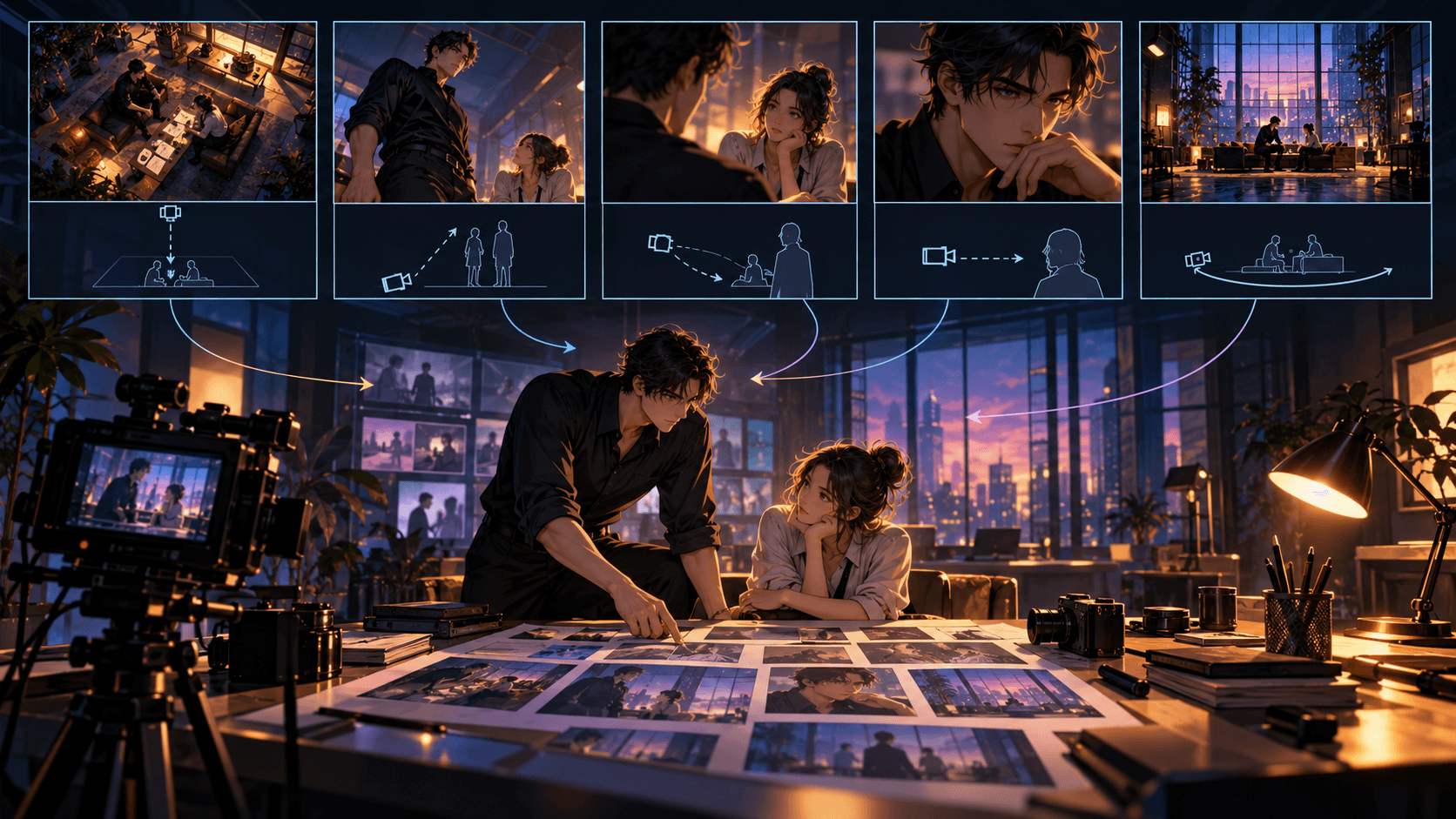
“Generate a 2x2 manga page (4 panels). Panel 1: Makoto Shinkai style – a boy and girl standing on a hill under a glowing sunset sky. Panel 2: Shonen action – the same boy now in a fighting pose, speed lines, energy aura. Panel 3: Seinen black and white – close-up of the girl’s eye with a tear, heavy crosshatching. Panel 4: Chibi comedy – the boy and girl eating ramen, huge smiles, pastel colors. Consistent character design across all panels. Japanese screentone texture overlay.”
GPT Image 2 handled this surprisingly well. The character stayed roughly consistent (not perfect, but close enough for a webcomic). And the style shifts were clear and intentional.
Where to Generate Anime with GPT Image 2
The ChatGPT Plus interface works, but it’s slow for batch generation. I use Elser.ai for three reasons:
1. Aspect ratio presets for manga (vertical 2:3 or 3:4 – perfect for webtoons).
2. Batch generation – I can generate 8 anime variations at once and pick the best.
3. No “content policy” overblock – Elser is more permissive with stylized violence (within reason), while ChatGPT sometimes refuses Shonen action prompts.
They also have an anime upscaler that adds film grain and screentone texture to any output. It’s a one‑click fix for the “too clean” problem.