How to Create YouTube Shorts and TikTok Videos With Grok AI
Grok AI video is well suited to short-form content because it generates brief visual shots rather than complete long-form edits. The key is to stop asking for “a viral video” and instead build a sequence of clear moments: a hook, a reveal, supporting detail, and payoff.
You can create Grok clips through xAI or use a browser workflow such as Grok Imagine Video on Elser AI. In either case, plan for vertical publishing before you generate.
Start with a vertical concept
Use 9:16 composition for YouTube Shorts, TikTok, and Reels. A landscape shot cropped later often loses the subject, hands, product, or important motion.
Vertical frames work best with:
- one clear subject;
- strong foreground-to-background depth;
- movement toward or away from the camera;
- large readable shapes;
- negative space reserved for captions;
- important details kept away from interface overlays.
Do not place critical action at the very bottom or far right, where platform controls may cover it.
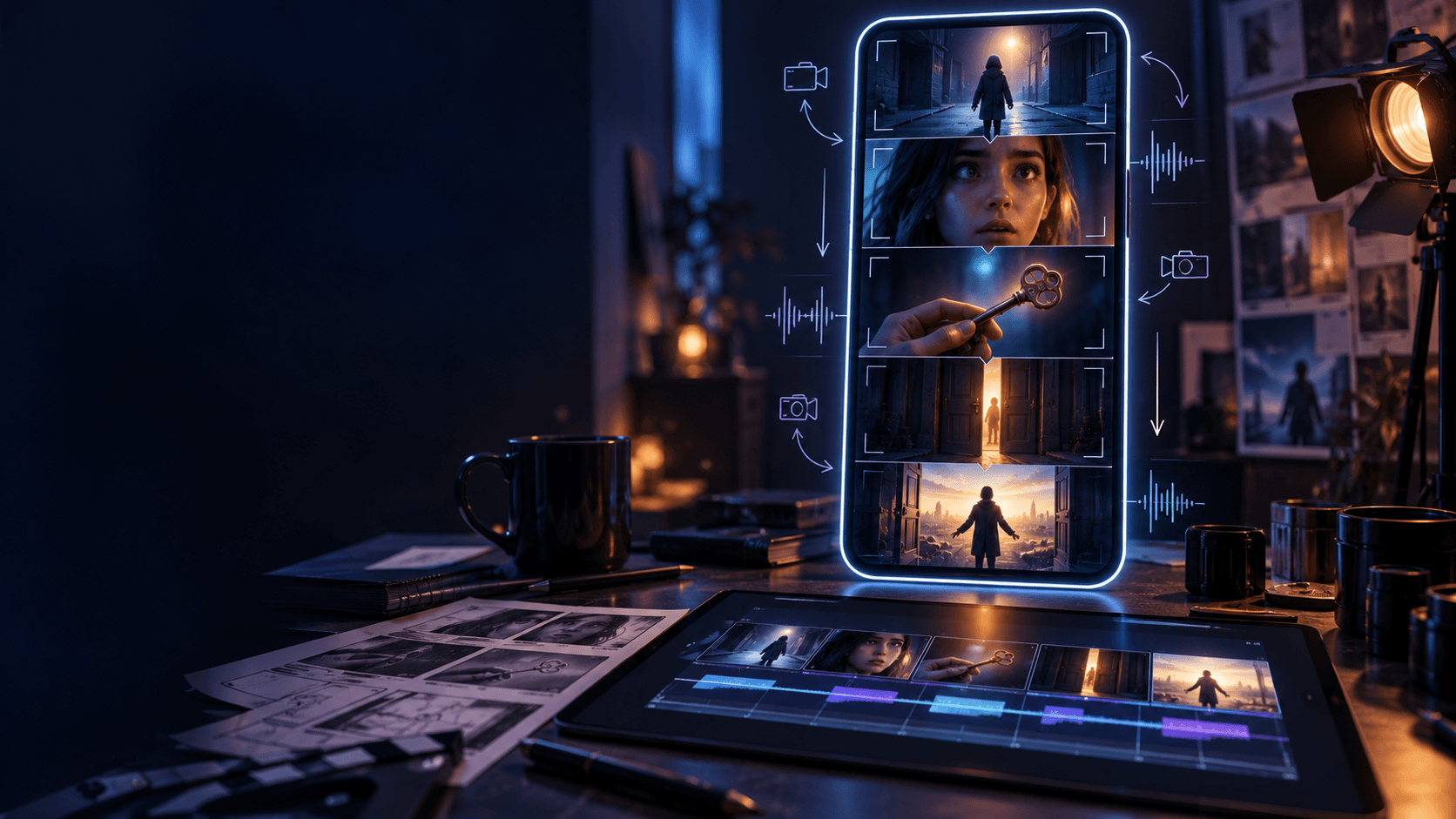
Build a shot list, not one giant prompt
A practical 20-second structure is:
- 0–2 seconds: hook — immediate motion, surprise, or question.
- 2–7 seconds: context — show what is happening.
- 7–14 seconds: transformation or escalation — deliver the visual idea.
- 14–18 seconds: payoff — reveal the result.
- 18–20 seconds: CTA — add in your editor, not inside the generated frame.
Generate each visual beat separately. This gives you cleaner timing and makes it easier to replace a weak shot.
Five short-form prompt templates
Product reveal
Vertical 9:16 shot. A closed matte-black case sits in the center of a dark reflective surface. It opens within the first second as a coral internal light reveals the product. The camera pushes forward smoothly, realistic reflections, premium commercial lighting, no text or logos.
Before-and-after transformation
Locked vertical shot of a plain reading corner. The room transforms in three visually logical stages into a warm modern studio while architecture and camera position remain fixed. Fast but smooth time-lapse, objects appear without warping, no people.
Travel hook
Vertical handheld-style shot following bright red shoes up a narrow coastal staircase. At the top, the camera rises to reveal the ocean at sunset. Immediate movement, natural foot placement, energetic travel-film pacing.
Animated comic panel
Preserve the original comic character, costume, linework, and colors. The character looks toward a sudden off-screen glow as hair and fabric react to wind. Slow push-in, layered parallax, vertical composition, no new speech bubbles.
Looping background
Vertical locked shot of a futuristic café window during rain. Reflections move, steam rises, and distant traffic passes in a subtle loop-friendly rhythm. Calm blue and coral lighting, no central character, no text.
Use audio strategically
Grok Imagine Video 1.5 can generate ambience, effects, dialogue, and better-synchronized speech. For Shorts, sound should reinforce the first visual beat.
However, do not depend on generated audio for every layer. A reliable workflow is:
- keep useful environmental sound;
- replace unclear dialogue;
- add licensed music separately;
- use a deliberate impact sound at the reveal;
- mix for phone speakers;
- include captions for silent viewing.
Edit for retention
AI footage becomes effective short-form content through editing. Trim hesitation from the beginning of every clip. Cut on motion, change scale between shots, and remove frames that do not advance the idea.
Use captions that add meaning rather than repeat the visual. Keep lines short and place them within a safe central area. Add a human voice, opinion, demonstration, or narrative so the video does not feel like a generic model showcase.
Maintain continuity across clips
If the same character or product appears repeatedly:
- use the same source image;
- repeat the same identity or product-lock sentence;
- keep lens and lighting language consistent;
- reuse wardrobe and color descriptions verbatim;
- avoid large changes in camera angle between adjacent shots;
- create cutaways to hide unavoidable continuity shifts.
Elser AI’s Grok page describes text-to-video, image-to-video, and reference-led generation options. Where available, reference images are more dependable than long descriptive paragraphs for recurring visual elements. Explore the current modes at Elser AI’s Grok Imagine workspace.
What to avoid
- Generating titles or captions inside the video frame.
- Reposting a clip without editing or adding original value.
- Using copyrighted characters or unlicensed music.
- Animating a real person without permission.
- Hiding required AI labels or watermarks.
- Treating “viral” as a visual style rather than an audience response.
Publishing checklist
- Export in the platform’s recommended vertical format.
- Check the first frame at thumbnail size.
- Confirm captions are readable and not covered by controls.
- Review every visible hand, face, logo, and product detail.
- Verify music, images, voices, and likenesses are licensed.
- Disclose AI-generated media where law or platform policy requires it.
- Write a platform-native caption rather than copying the prompt.
Grok can provide the visual raw material, but a successful Short still needs an idea, a point of view, and disciplined editing. Start with a single vertical hook inside Grok Imagine Video on Elser AI, then build the final post around the strongest two seconds.