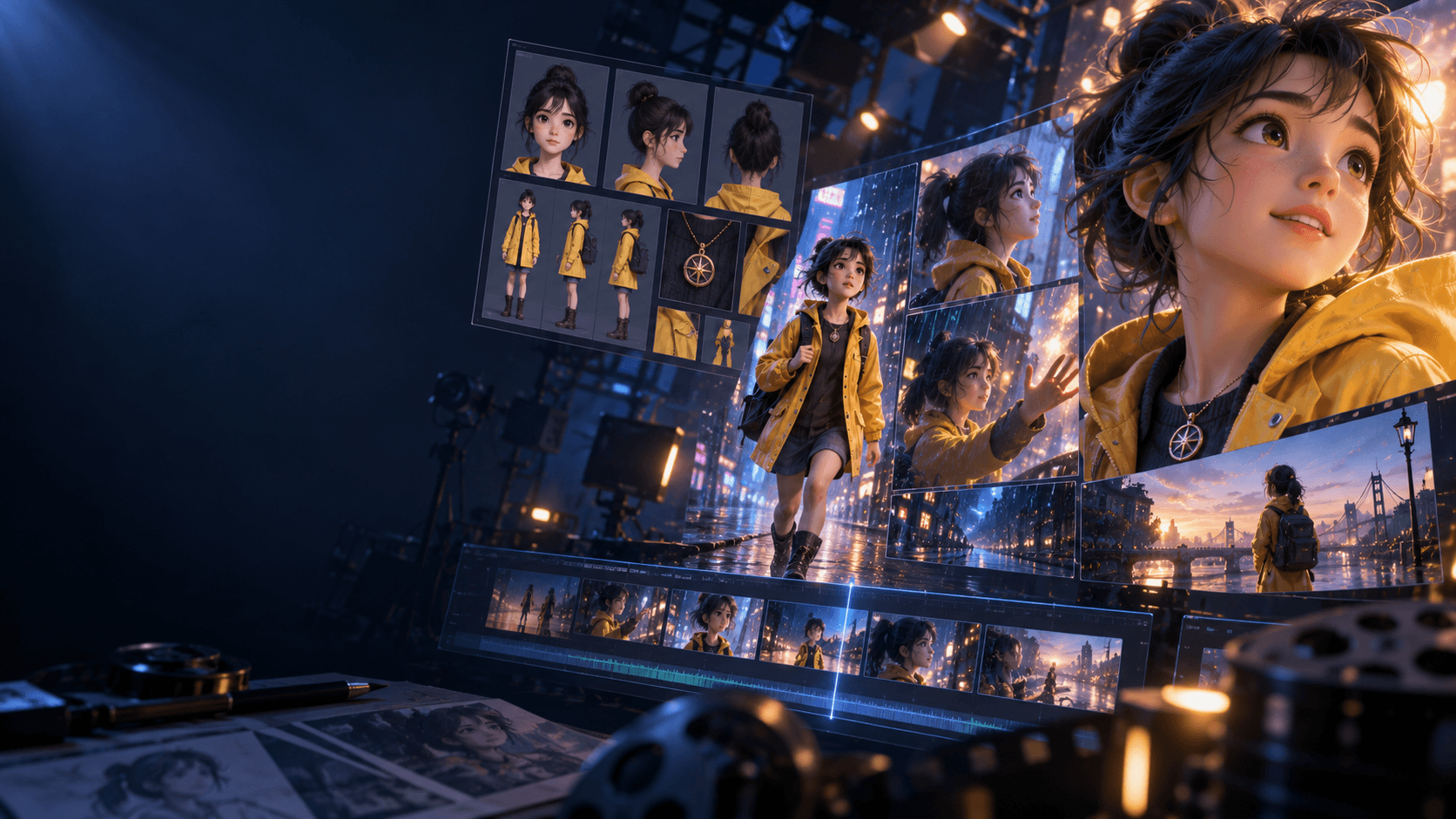
Grok Imagine Video 1.5 Review: Quality, Speed, Audio, and Motion
Grok Imagine Video 1.5 is xAI’s updated video model for creators who need short clips with more stable motion, more believable physics, and sound generated alongside the picture. It is available through Grok and the Imagine API, and creator platforms such as Elser AI provide another browser-based route for testing Grok video workflows.
The important question is not whether Version 1.5 is newer. It is whether the update reduces the practical problems that make AI footage difficult to use: motion that collapses, objects that lose their shape, disconnected audio, and slow iteration.
What changed in Grok Imagine Video 1.5?
xAI highlights four areas:
- improved motion and physical coherence;
- clearer speech and better synchronization;
- native sound effects, ambience, and dialogue;
- faster generation through Video 1.5 Fast.
xAI’s launch post states that the Fast model can produce a six-second 720p clip in about 25 seconds under the conditions used for its announcement. That figure is useful as a benchmark, not a universal promise; generation time varies with demand, interface, model choice, and settings.
The developer release notes also list text-to-video, image-to-video, reference-to-video, optional preset voices, and native resolutions up to 1080p for supported 1.5 API workflows.
Motion and physics
The most meaningful improvement is temporal stability. A beautiful first frame is not enough if a hand melts, a coat changes length, or a product rotates through impossible geometry.
Version 1.5 is better suited to actions with a readable physical arc:
- a person turning and taking a few steps;
- fabric responding to wind;
- a camera orbit around a product;
- an object falling, rolling, or opening;
- a character speaking while maintaining pose and identity.
That does not mean every complex prompt will work. Crowds, multiple interacting hands, transparent objects, rapid fight choreography, and long chains of cause and effect remain difficult. The best results still come from one subject, one principal action, and one intentional camera move.
Native audio and speech
Generating sound in the same pass changes the creative workflow. Instead of adding every effect manually, a creator can ask for rain, mechanical ambience, footsteps, a door impact, or a short spoken line that belongs to the scene.
Native audio is most useful for:
- social clips that need an immediate hook;
- concept trailers;
- character moments with a short line;
- product shots with tactile sound design;
- atmospheric establishing shots.
It is less reliable when the script contains several speakers, precise brand language, complex timing, or a long performance. For those cases, treat generated audio as a draft and replace it with recorded dialogue, licensed music, or a controlled voice workflow during editing.
Image-to-video quality
Image-to-video is where the update is easiest to evaluate because the source image provides a visual contract. Test whether the model preserves:
- facial identity;
- outfit and accessory details;
- product geometry;
- background structure;
- the intended art style.
Use a source image with clean edges, clear subject separation, and enough space for the requested movement. A tightly cropped portrait cannot convincingly become a wide walking shot because the missing body and environment must be invented.
On Elser AI’s Grok Imagine page, creators can choose a generation mode and work from text or images without setting up the xAI API. This is useful for visual testing before a team commits to an automated pipeline.
Resolution, duration, and pricing
xAI’s consumer Grok page describes text-to-video clips up to 15 seconds at 720p. The developer platform evolves separately: current xAI pricing documentation lists Grok Imagine Video 1.5 at different per-second rates for 480p, 720p, and 1080p, with media input charged separately.
Because model capabilities and prices change, verify the current interface or pricing page before publishing a production budget. Calculate cost per usable shot, not merely cost per generation. If one approved clip requires four attempts, the effective cost is four times the displayed single-generation rate.
Strengths
- Fast enough for iterative ideation.
- Strong image-to-video workflow.
- Native audio reduces prototyping time.
- Better motion and weight than earlier versions.
- Useful API path for automated content systems.
- Multiple resolutions and generation modes in the current developer ecosystem.
Limitations
- Short duration encourages shot-based rather than scene-based creation.
- Character consistency can still drift between separate generations.
- Complex interactions remain unpredictable.
- Audio may require replacement for precise dialogue or brand work.
- Consumer and API capabilities are not always identical.
- Costs rise with duration, resolution, and regeneration count.
Who should use Grok Imagine Video 1.5?
It is a practical fit for social creators, designers, previsualization artists, marketing teams, and developers building short-form generation features. It is particularly compelling when you already have a strong starting image and need motion, atmosphere, or a camera move.
It is less suitable as a one-click replacement for a complete editing suite or a long-form animation pipeline. A professional workflow still needs shot selection, continuity planning, audio finishing, captions, and human review.
Verdict
Grok Imagine Video 1.5 is a meaningful production-oriented update. The combination of faster iteration, stronger motion, native audio, and expanded API capabilities makes it more useful than a model that focuses only on isolated visual quality.
The smartest way to evaluate it is with your own content: one portrait, one product, one illustration, and one difficult motion test. Compare identity retention, physical coherence, audio usefulness, generation time, and the number of attempts required. To run that kind of practical test in a creator-facing interface, open Grok Imagine Video on Elser AI.