How to Animate a Manga Panel with AI Without Losing the Original Art
Animating a manga panel is not the same as asking for a new video “in manga style.” The panel already contains composition, line, value, pose and narrative emphasis. Your job is to preserve those decisions while adding only the motion, depth and sound that improve the reading experience.
Confirm You Have the Right to Animate It
Use your own panel, commissioned art with adaptation rights, public-domain material, or work covered by explicit permission. Being able to upload an image does not grant adaptation or commercial rights.
Prepare a Clean Production File
Scan or export at sufficient resolution. Remove speech balloons and captions into separate editable layers. Repair the artwork behind them. Keep an untouched master.
Try it in your own project: Upload only artwork you can lawfully adapt and begin with a low-motion test. Elser AI gives you a practical place to register and test the smallest viable version.
Map the Panel into Depth Planes
Identify foreground effects, character, near background and far background. For parallax, extend hidden edges so movement does not expose empty gaps. Mask hair, sleeves or smoke only when they need independent motion.
Choose a Motion Philosophy
For motion-comic treatment, use restrained parallax, blinking, fabric, particles and timed reframing. For cinematic adaptation, allow a more deliberate camera path but preserve line and tone. Do not animate every line.
Write an Image-to-Video Motion Prompt
Describe primary action, secondary motion, camera, speed and constraints. Example: “Character remains seated; eyes lift toward the doorway; curtain moves softly; 5% push-in; ink lines and monochrome screentone remain stable; no cut, no text, no costume change.”
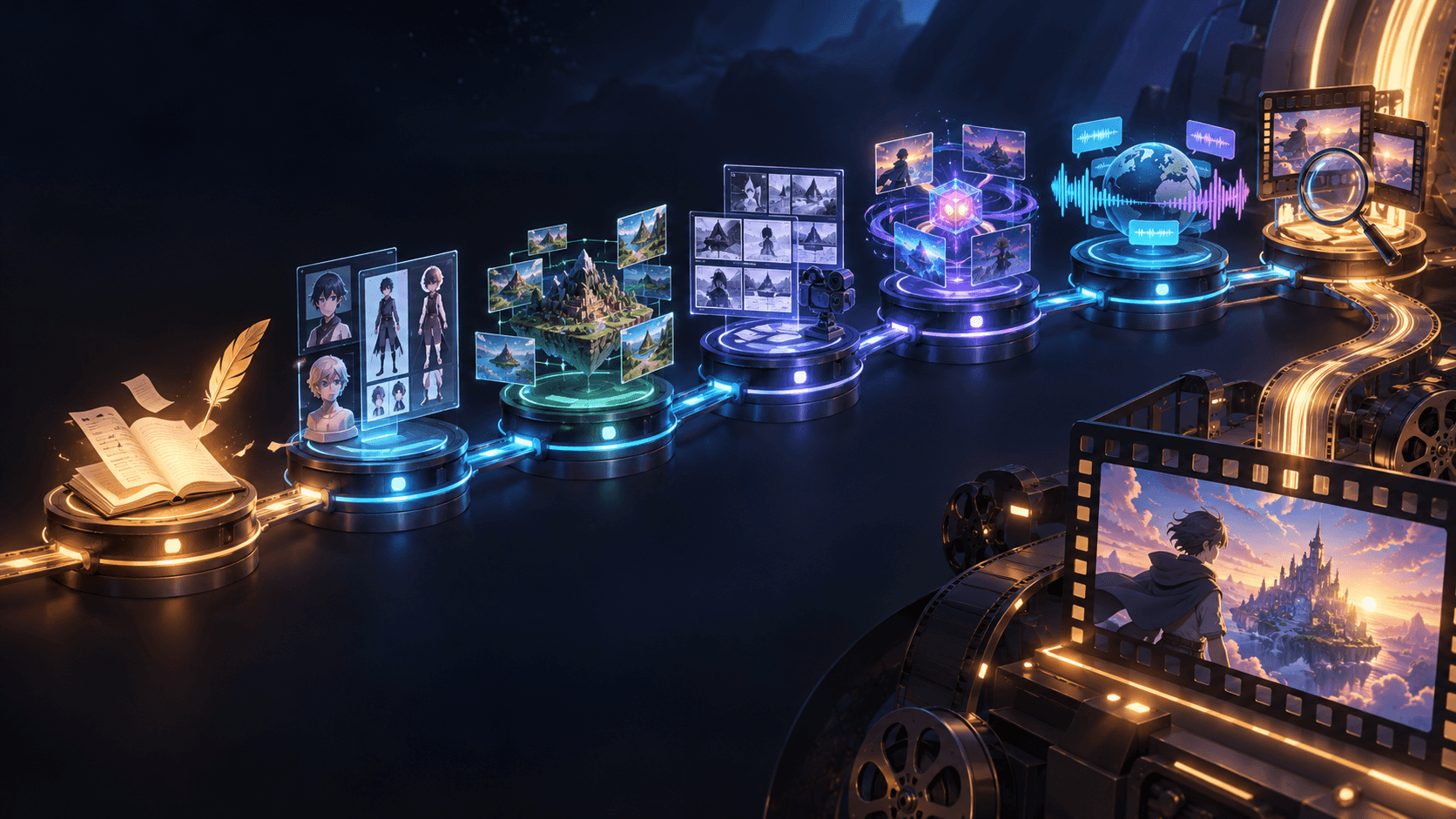
Try it in your own project: Use the storyboard stage to plan how multiple panels become a sequence. Create an account on Elser AI, run the test, and keep only the assets that pass your review.
Protect Faces, Hands and Line Art
Use short tests. If detail melts, reduce motion or camera travel. Keep important hands away from frame edges and avoid asking a frozen pose to become complex choreography.
Rebuild Dialogue and Lettering in Post
Generated text is unreliable and moving balloons often damage readability. Add voice plus subtitles, animated balloons as graphics, or intertitles after motion. Preserve the original reading order.
Design Sound Before Adding More Motion
Room tone, cloth, rain, footsteps or one impact can make a restrained panel feel alive. Let silence support close-ups. Sound should indicate space and cause, not simply fill the track.
Try it in your own project: Assemble voice, subtitles and effects after the picture timing is approved. You can take this checkpoint into Elser AI and compare the result with the brief before moving forward.
Review the Adaptation Against the Source
Compare composition, identity, line quality, value structure and emotional focus. Then review motion continuity, audio, captions and loops. If movement distracts from the panel’s key idea, remove it.
Build a Multi-Panel Sequence
Choose panels that create setup, response and consequence. Use cutaways or graphic transitions between incompatible compositions. Maintain one frame rate, aspect ratio and sound world.
Define Success for manga-panel animation
Before another generation, write three pass conditions for a clean, rights-cleared panel test. Include one story condition, one continuity or technical condition, and one delivery condition. This converts taste into a reviewable decision. A result can be attractive and still fail if a reader familiar with the still composition cannot understand its purpose. Record the reason for rejection so the next attempt answers evidence rather than mood.
Run a Small Representative Test
Choose the shot or asset that contains the normal difficulty of manga-panel animation—not the easiest beauty frame and not the impossible climax. Keep references, format and acceptance criteria fixed. Change one variable, then compare at normal playback size. The test is finished when it produces an approve, revise, redesign or cut decision, not when it produces the largest gallery.
Keep a Decision Log
For a clean, rights-cleared panel test, store the prompt, references, visible model name, settings, output ID and approval note. Add a short defect label such as “unclear silhouette,” “late reaction,” or “audio masks dialogue.” This record lets a collaborator understand why a version won and protects the project when interfaces or model catalogs change.
Budget from Usable Output
For manga-panel animation, estimate cost from attempts per approved asset and usable seconds, not from a single lucky generation. Include design exploration, continuity repairs, alternate edits, captions and delivery formats. Elser’s current pricing information says consumption can vary by model, duration and resolution, so a representative test is more useful than a generic generation count.
Review at Audience Scale
Inspect details closely, then watch a clean, rights-cleared panel test at the size and speed experienced by a reader familiar with the still composition. A tiny texture shift may be irrelevant while a missing reaction, unreadable silhouette or quiet line is decisive. Review once without sound to test visual clarity and once without picture to test dialogue, ambience and rhythm.
Add an Independent Editorial Pass
Give the work to someone who has not seen the prompt. Ask what happened, who mattered, what changed and where attention drifted. Do not explain first. Their answer reveals whether manga-panel animation communicates on screen or survives only in the creator’s notes. Convert confusion into a shot, design or edit action rather than another vague request for “more cinematic” output.
Control Version and File Names
Name files by project, sequence, shot or asset, take and status. Keep working files separate from approved masters, and never overwrite the only clean export. For a clean, rights-cleared panel test, preserve the exact references beside the result. Simple version discipline prevents an attractive but rejected take from returning accidentally during final assembly.
Check Rights and Representation
Confirm ownership or permission for every uploaded image, voice, mark, music cue and recognizable likeness. Avoid using culture, disability, clothing or facial traits as shorthand for morality. If manga-panel animation makes a factual or branded claim, require a named reviewer and source. Generation speed does not reduce legal, ethical or editorial responsibility.
Prefer the Simplest Fix
When a result fails, identify the layer: premise, identity, composition, action, camera, style, physics, audio, text or edit. Repair the smallest responsible layer. A cutaway may solve a handoff better than regenerating a long continuous shot. This prevents using excessive motion that destroys line art and reading emphasis, one of the most expensive failure patterns in manga-panel animation.
Establish a Stop Rule
For manga-panel animation, set a maximum number of attempts before the team must simplify the shot, change coverage or accept a noncritical imperfection. Stop rules protect the project from spending its entire budget on one low-value detail. The target is a coherent audience experience, not mathematical identity between every pixel of every version.
Preserve a Reusable Learning Asset
After approval, save the stable prompt block, reference set, continuity note and one sentence explaining why the result worked. Do not copy accidental wording blindly into the next project. Extract the principle—clear subject priority, restrained motion, consistent identity or motivated sound—so manga-panel animation becomes faster without becoming formulaic.
Frequently Asked Questions
Can I animate any manga panel I find online?
No. You need ownership, a license, permission or another valid legal basis.
Should I remove speech balloons first?
Usually yes. Rebuilding lettering after animation provides better control and readability.
How much motion is enough?
Often a small camera move plus one character action and one environmental motion.
Why does line art wobble?
Large deformation, camera movement or detail can exceed what the generation preserves. Reduce motion and shorten the test.
Can Elser AI help assemble multiple panels?
Its public workflow includes storyboard, sound and editing capabilities; verify the exact controls available in your workspace.
Conclusion
Treat the panel as a directed composition, not raw material. Clear rights, clean layers, restrained motion, rebuilt text and purposeful sound preserve what made the original image work. Elser AI can support the next controlled iteration when you are ready to turn the guidance into an actual project.