How to Create a Talking Anime Character with Elser AI
A believable talking anime character needs more than synchronized lips. Viewers watch the eyes, jaw, pauses, breath, head stability and emotional intention. If the character's identity drifts or the performance has no subtext, technically accurate mouth motion will still feel artificial.
Elser AI combines character creation and reuse with image/video generation, voice workflows and lip sync. The reliable order is: identity first, dialogue second, voice third, visual motion fourth, lip sync fifth and editing last.
Define What the Character Is Doing with the Line
Do not begin with voice style. Begin with intention.
Line:
“You came back.”
Possible intentions:
- accuse someone who broke a promise;
- hide relief;
- confirm a feared prediction;
- welcome a friend;
- delay an intruder.
The words are identical, but performance, expression, pause and camera distance change. Write a line brief:
- previous event;
- listener and relationship;
- immediate objective;
- hidden feeling;
- emotional turn;
- maximum duration.
Example:
She has waited all night but refuses to show relief. Speak quietly to her older brother. Hold composure through “came,” then let a small breath soften “back.” Total 2.2–2.8 seconds.
Create and Save a Stable Character
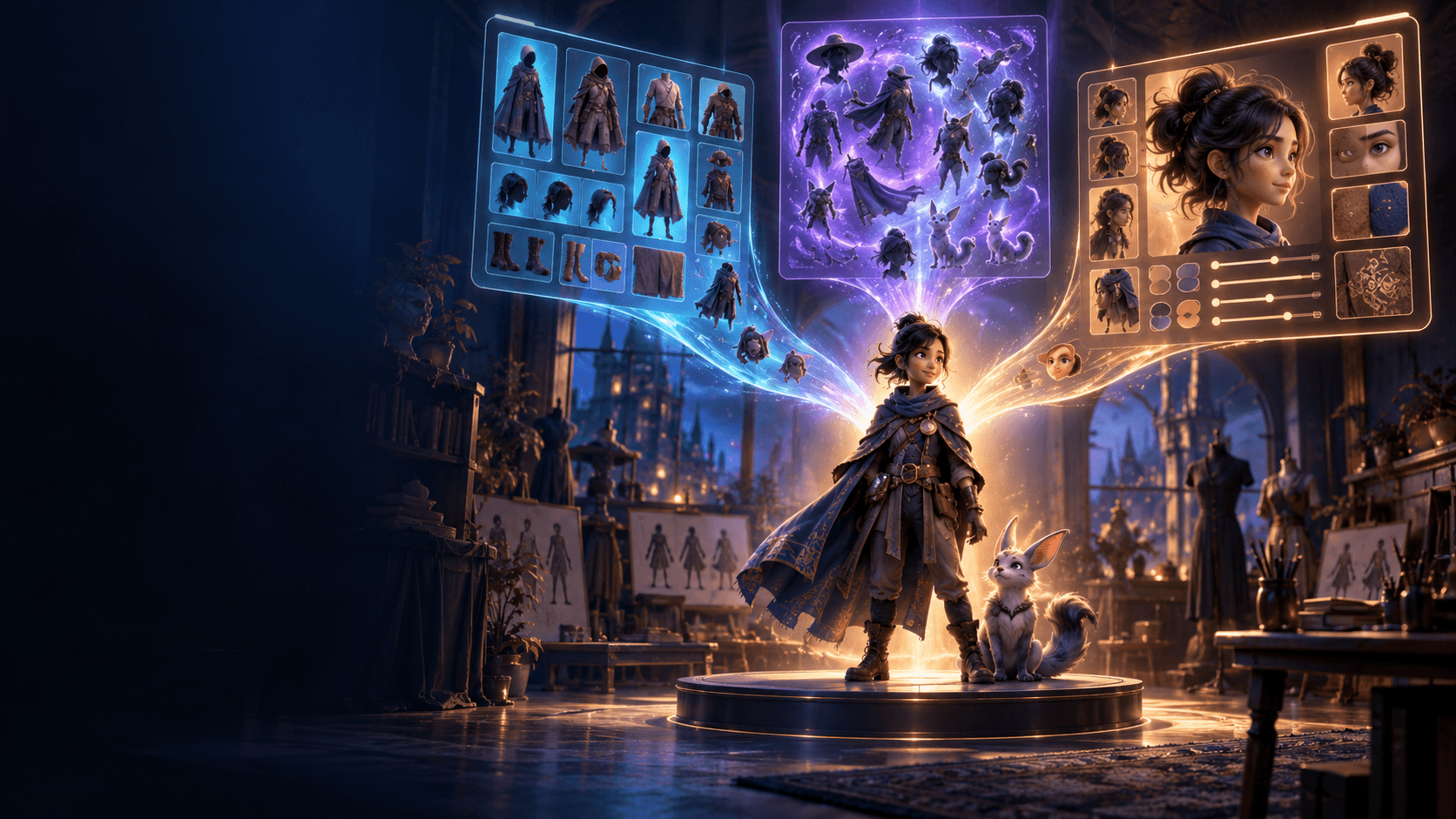
Use Elser AI's character workflow to design the speaker before generating dialogue shots. Define:
- face shape and distinguishing mark;
- hair silhouette and accessory placement;
- eye color and normal eyelid shape;
- outfit construction and collar height;
- neutral mouth design;
- body proportions;
- palette and line/shading style.
Choose an approved reference with a clear face and simple lighting. Save the character for reuse. Test neutral, happy, concerned and angry expressions; extreme expressions can reveal whether the design remains recognizable.
Create one controlled speaking test: Register the character in Elser AI, use one short sentence and approve a stable close-up before producing a conversation or episode.
Design a Lip-Sync-Friendly Shot
Framing
A medium close-up or close-up usually provides enough facial information without magnifying every artifact. Extreme close-ups demand higher mouth and line stability.
Head position
Front or three-quarter views are easier than a fast profile turn. Keep the head mostly stable during the critical line.
Lighting
Use clear face light. Moving shadows across the mouth can look like shape errors.
Occlusion
Avoid hands, hair, cups or props crossing the lips unless the action is essential.
Duration
Include a short lead-in and reaction tail. A clip that begins on the first phoneme and ends on the last feels mechanical and is difficult to edit.
Write Dialogue for Speech
Speak the line at the intended energy. Measure it. Remove introductory phrases and repeated ideas.
Written:
“I just wanted to let you know that I don't think we should open the gate until we understand what happened.”
Spoken:
“Don't open the gate. Not until we know what happened.”
The revision creates an actionable first sentence, a pause and an emotional emphasis. It also provides two edit points.
For animation:
- prefer one thought per sentence;
- use contractions when natural;
- spell unusual names phonetically for the voice workflow;
- avoid tongue-twisting clusters unless character-specific;
- keep interruptions intentional;
- move exposition off-screen when the face adds little.
Create the Voice as a Reusable Performance Asset
Elser AI's public audio page describes voice design, emotional tone, speed controls and voice cloning. Build a voice card:
| Attribute | Approved rule | |---|---| | Register | Mid, light texture | | Pace | 145–155 words per minute in neutral speech | | Energy | Restrained, not flat | | Pauses | Brief before admissions | | Names | Fixed pronunciation list | | Extremes | Anger remains controlled; no shouting by default |
Generate several performances by changing one dimension at a time. If you change pitch, speed, emotion and punctuation together, you will not know what improved the result.
Use voice cloning only with clear permission. Store the approved purpose and restrictions with the voice asset. Do not create deceptive speech or imply endorsement.
Separate Body Motion from Mouth Motion
First produce a stable visual clip. Use restrained movement:
The character holds eye contact, blinks once after one second, takes a small breath and tilts the chin down slightly near the end. Hair tips move gently. Locked camera. Preserve exact face, hairpin, eye shape, collar and cel-shaded style. Mouth remains neutral for later lip sync. No turn, no hand crossing face, no lighting change.
Then apply the approved voice and lip sync. This layered approach reduces the number of variables changing simultaneously.
Some workflows may perform voice and sync together, but the review logic is still the same: isolate whether a failure comes from source image, base motion, audio performance or synchronization.
Review Lip Sync Like an Animator
Watch at normal speed first. If the performance feels wrong, identify the moment. Then inspect:
- mouth closes at pauses and bilabial sounds;
- jaw motion matches energy;
- vowels do not produce excessive mouth shapes;
- eyes support the emotion;
- blinks do not occur randomly on key words;
- head motion does not cause face drift;
- teeth and tongue do not flicker;
- the neutral mouth returns after the line.
Do not chase perfect frame-level phonemes if the overall acting is stiff. Performance timing matters more to most viewers than maximal mouth movement.
Build a Two-Character Conversation as Coverage
Avoid generating one long two-shot where both characters speak. Build:
- establishing two-shot;
- Character A speaking close-up;
- Character B listening reaction;
- Character B speaking close-up;
- Character A reaction;
- insert or environment transition;
- closing two-shot.
The active speaker receives lip sync. The listener can use subtle nonverbal motion. Carry audio across reactions so the conversation feels connected.
Track eyelines and screen position. If A looks right, B generally looks left unless geography changes visibly.
Use Off-Screen Dialogue Strategically
Off-screen speech is valuable when:
- the listener's reaction is more important;
- a complex action must happen;
- the current face angle is poor for lip sync;
- you need to shorten a talking-head section;
- exposition continues while the scene reveals evidence.
This is standard editing language, not a compromise. It makes the scene feel directed.
Add Sound and Music Without Hiding the Voice
Use low, continuous ambience to join shots. Place motivated effects around the line, not on top of it. Reduce music density during speech.
For “You came back”:
- rain bed continues;
- door closes before the line;
- music holds one sustained note;
- the character speaks;
- a breath and coat movement follow;
- music resolves only after the listener reacts.
The pause after the line lets the acting register.
Common Failures and Repairs
| Failure | Likely cause | Repair | | Mouth chatters during silence | Untrimmed/noisy audio | Clean audio and preserve intentional pauses | | Face shape changes | Too much head or camera motion | Use a more stable base clip | | Voice feels generic | No intention or subtext | Rewrite the performance brief | | Dialogue runs past the shot | Line too long | Shorten wording or extend coverage | | Two speakers look confusing | Continuous two-shot | Cut separate speaker and reaction shots | | Character sounds different later | No voice card | Reuse approved voice settings and pronunciation |
FAQ
Can Elser AI make an anime character talk?
Elser AI's public pages describe character creation, voice workflows and lip sync for dialogue, narration or singing.
Do I need an existing anime image?
No. You can create a character first or work from an authorized existing design. Approve a clean reference before the speaking shot.
How long should the first lip-sync test be?
Use one sentence of roughly two to five seconds. A short test isolates identity, voice and synchronization problems before they multiply.
Can I clone my own voice?
The public audio page lists voice cloning. Use only voices you are authorized to clone and follow applicable disclosure, platform and legal requirements.
Why does the mouth look unnatural?
Possible causes include noisy audio, excessive base motion, an unclear face, fast speech or a line with no stable pauses. Fix the earliest failing layer.
Conclusion
A talking anime character becomes convincing when identity, intention and timing agree. Lock the design, write speakable dialogue, direct the voice, generate a stable performance base and apply lip sync only after the audio is approved.
The mouth carries words. The eyes, pauses and edit make the character feel alive.