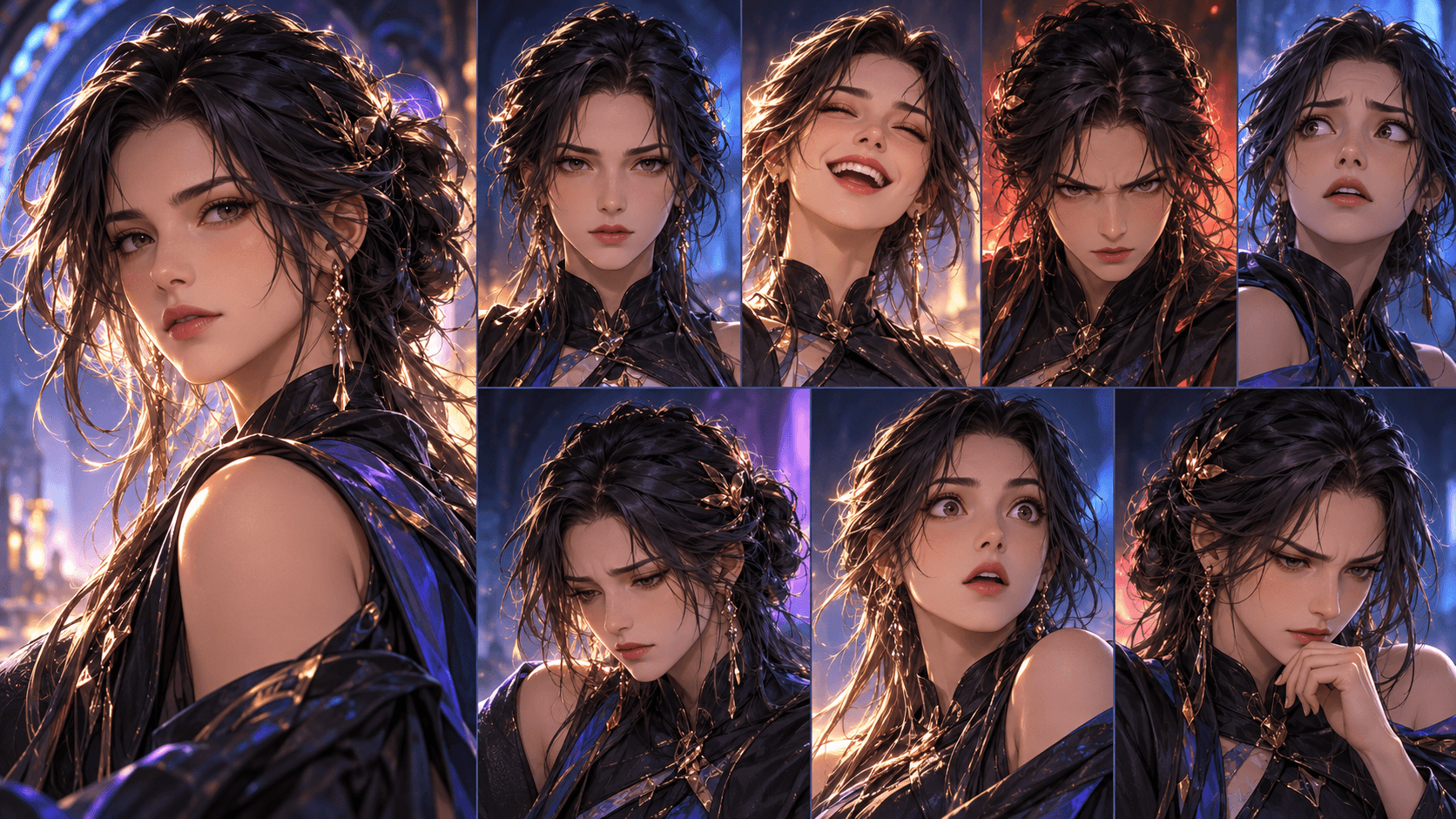
How to Design Alternate Outfits Without Losing Character Identity
How to Design Alternate Outfits Without Losing Character Identity is not solved by adding more prompt adjectives. The real task is to make the outfit variation workflow repeatable, reviewable, and safe to revise. The two highest-leverage controls are specific: mask or describe only the garment region when the tool supports focused editing; then preserve body pose, face, hair, background, and camera before changing style.
Gate One: Mask or describe only the garment region when the tool supports focused
Mask or describe only the garment region when the tool supports focused editing. In AI clothes changer, this is a specification rather than a stylistic preference. The practical value appears at handoff, when another person can reproduce the intent without reconstructing it from chat history or filenames. Create a pass/fail check for this point and attach the outcome to the working record for AI clothes changer.
Gate Two: Preserve body pose, face, hair, background, and camera before changing
Preserve body pose, face, hair, background, and camera before changing style. For the outfit variation workflow, translate the rule into something visible in the file or sequence. Without this constraint, the model or collaborator must invent missing information, and the invention is rarely consistent across a complete project. Ask a reviewer who did not write the prompt to explain what the output communicates and where uncertainty remains.
Pre-Render Check: Specify garment construction, fabric, fit, and layering rather than a
Specify garment construction, fabric, fit, and layering rather than a vague aesthetic. Treat this as a production constraint for “How to Design Alternate Outfits Without Losing Character Identity,” not as optional polish. This decision also creates a useful review boundary: the team can reject a result for a named reason instead of debating whether it merely feels wrong. Create a pass/fail check for this point and attach the outcome to the working record for AI clothes changer.
Post-Render Record: Check hands, straps, collars, and overlaps where clothing edits often
Check hands, straps, collars, and overlaps where clothing edits often break. The rule matters at the moment the outfit variation workflow is reviewed, not only while it is prompted. Documenting the choice once prevents prompt drift, duplicated experiments, and late-stage corrections that cost more than the original generation. Ask a reviewer who did not write the prompt to explain what the output communicates and where uncertainty remains.
What This Looks Like in Production
Consider a solo creator preparing a first public release working on “How to Design Alternate Outfits Without Losing Character Identity.” The required output is an outfit variation workflow. The first attempt fails a concrete condition: specify garment construction, fabric, fit, and layering rather than a vague aesthetic. The reviewer marks the failure at the exact frame or asset state. One controlled revision follows, and the next review asks whether the team did in fact check hands, straps, collars, and overlaps where clothing edits often break. That comparison produces evidence about AI clothes changer; ten unrelated rerolls would produce only more files.
A Brief You Can Actually Use
The brief for “How to Design Alternate Outfits Without Losing Character Identity” should be short enough to review beside the output. Populate these fields with evidence from the current outfit variation workflow:
Outcome: produce an outfit variation workflow
Fixed evidence: Mask or describe only the garment region when the tool supports focused editing
Single variable: Preserve body pose, face, hair, background, and camera before changing style
Approval proof: Check hands, straps, collars, and overlaps where clothing edits often break
Owner: outfit variation workflow reviewer
Ship / Revise / Reject
- Show where the outfit variation workflow satisfies this requirement: Mask or describe only the garment region when the tool supports focused editing.
- Compare the changed version with a baseline that still uses the same approved AI clothes changer inputs.
- Mark the exact frame, layer, field, or file that proves: Specify garment construction, fabric, fit, and layering rather than a vague aesthetic.
- Confirm the handoff owner can apply this rule without extra explanation: Check hands, straps, collars, and overlaps where clothing edits often break.
Where Elser AI and ElserStudio Fit
For “How to Design Alternate Outfits Without Losing Character Identity,” a creator may test the focused AI clothes changer step in Elser AI after registering. If an outfit variation workflow grows into a multi-shot production with scripts, World assets, review states, and composition, it can move to ElserStudio. Choose the product after defining the artifact and continuity burden, not before.
Questions Creators Ask
What must be decided first for “How to Design Alternate Outfits Without Losing Character Identity”?
Decide what a reviewer must be able to observe without reading the creator’s mind. In this case, the first acceptance condition is clear: Mask or describe only the garment region when the tool supports focused editing. Record the chosen reference, owner, destination, and version beside that decision.
What is the cheapest useful test for this AI clothes changer workflow?
Build one low-cost outfit variation workflow that isolates the uncertain variable. Hold the source and all approved settings steady, then apply this topic-specific control: Preserve body pose, face, hair, background, and camera before changing style. Save both attempts and annotate the difference.
What evidence shows that the outfit variation workflow can move forward?
An independent reviewer should be able to reproduce the decision from the handoff package. The decisive evidence for this article is that the team can show it followed this rule: Check hands, straps, collars, and overlaps where clothing edits often break. The package should also retain the approved file, source links, version, and editable elements.
Final Takeaway
The value of “How to Design Alternate Outfits Without Losing Character Identity” is not another pile of variations; it is a defensible selection. Keep the approved baseline, show the changed variable, and preserve the evidence that justified the final outfit variation workflow.