How to Use Elser AI Story Studio: Beginner’s Tutorial
Elser AI Story Studio gives you three ways to enter a writing project: Create, Continue, and Adapt. Choosing the correct one is the first step; the second is treating the result as the beginning of a conversation, not a finished manuscript.
Step 1: Choose the Right Mode
Go to Elser AI Story Studio. Use:
- Create when you have an idea, character, scene, conflict, or mood but no approved draft.
- Continue when you want to extend an existing passage, chapter, or saved project.
- Adapt when you want to transform material—such as changing its viewpoint, tone, genre, scene construction, or ending.
Do not choose Create for a continuation just because you want “fresh” prose. You would make Elser reconstruct facts the manuscript already contains.
Step 2: Give Elser a Working Brief
Story Studio can begin from one sentence, but add a deliverable and boundaries:
Create a fantasy mystery for a 10-chapter web novel.
An apprentice mapmaker finds her missing mentor's handwriting on a map drawn 100 years ago.
The city rearranges its streets at midnight.
Give me three different central conflicts before writing any chapter.
Tone: eerie wonder, not horror. No prophecy or chosen-one reveal.
This uses Create as an ideation partner. Compare directions before prose consumes the project.
Step 3: Develop Setting and Relationships in Conversation
Elser’s page specifically describes generating story settings and character relationships. Ask focused follow-ups:
- What city rule creates daily pressure for the mapmaker?
- Give the mentor and apprentice incompatible definitions of loyalty.
- Which relationship changes most at the midpoint?
- List only facts the protagonist knows in chapter one.
Approve important results and combine them into a story bible. If Elser proposes a detail you reject, say so explicitly.
Step 4: Request a Chapter Structure
Ask Elser for a chapter-by-chapter plan with cause and consequence. Each chapter should contain an objective, opposition, discovery, choice, and exit hook. If chapters can be reordered freely, the structure is not escalating.
Story Studio supports chapter-based development, but “chapter by chapter” should mean controlled expansion. Generate the opening only after approving the outline.
Step 5: Draft Through Dialogue
Draft chapter 1 in close third person, past tense, 1,200–1,500 words.
Begin while Lio is correcting an illegal map. Her goal is to hide the correction.
End when she recognizes her mentor's handwriting. Do not explain why the streets move yet.
Read the response. Ask for observable revisions: shorten the setup; delay a direct answer; preserve events but make dialogue less explicit; replace summary with action. Elser lets you refine plot direction, personality, style, and scenes through conversation.
Step 6: Use Continue for the Next Approved Section
Prepare:
Established facts: ...
Character knowledge: ...
Unresolved promises: ...
Last decision: ...
Next required consequence: ...
Must not be revealed yet: ...
Elser says you can provide a previous story, character description, or style reference. Upload only content you have the right to use and confirm live format limits.
Step 7: Use Adapt Without Destroying the Original
Preserve characters, event order, mystery solution, and final choice.
Adapt chapter 1 from close third person to the mentor's first-person journal.
Change narrative knowledge and voice. Do not add events or solve the mystery early.
Show a change plan first.
Keep the original branch. Adaptation is an experiment until approved.
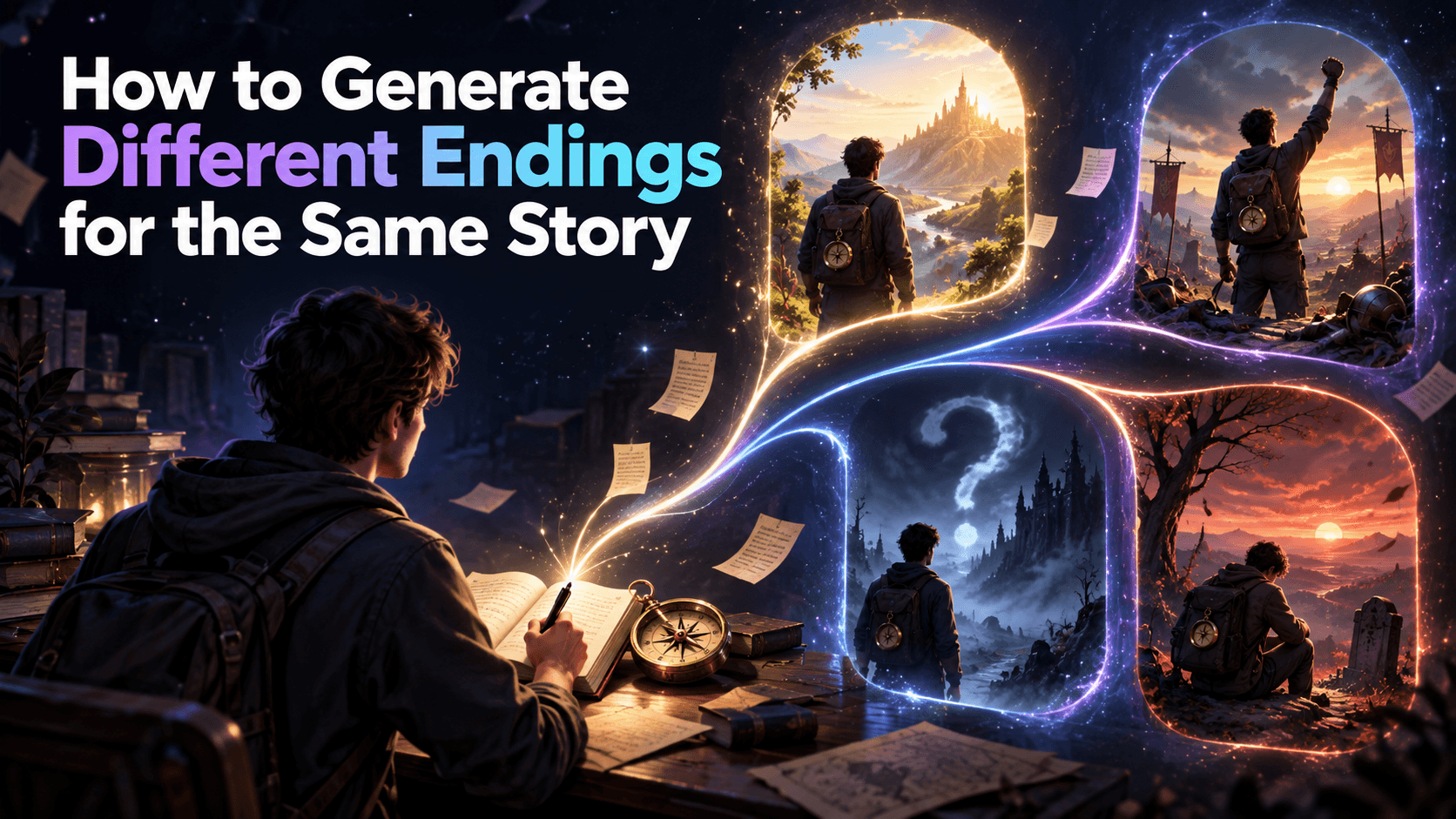
Step 8: Explore Another Ending
Elser supports different-ending exploration. Ask for three outcomes based only on existing setup: success at a cost, failure with growth, and a reversal that changes the meaning of victory. Require a list of earlier chapters that must change for each ending.
Step 9: Save and Extend the Project
Elser says projects remain in the library for future expansion and can lead to exported chapters, character assets, or scene concepts. Before moving on, create a clean approved version and a current continuity sheet.
Beginner QA Checklist
- Did you select the correct mode?
- Is the approved premise recorded?
- Does each chapter cause the next?
- Does every character act on known information?
- Are rejected branches clearly rejected?
- Did you review the output before continuing?
- Are factual and rights-sensitive elements checked?
FAQ
Do I need an outline before using Elser?
No. Create can help build one. Even discovery writers should maintain a factual state sheet once drafting begins.
Can I continue my own story?
Yes, according to Elser’s current page. Provide the relevant text or reference context plus a clear next-scene objective.
Can I rewrite only one scene?
Yes. Name the target and list the facts, viewpoint, or lines that must remain unchanged.
Can I change genre later?
Use Adapt and separate preserved story elements from genre-dependent elements such as imagery, pacing, and threat intensity.
Conclusion
Using Elser Story Studio well means choosing the correct mode, establishing a brief, developing the world through conversation, approving a structure, drafting in bounded sections, and revising deliberately. The interface makes iteration fast; your records keep the story coherent.