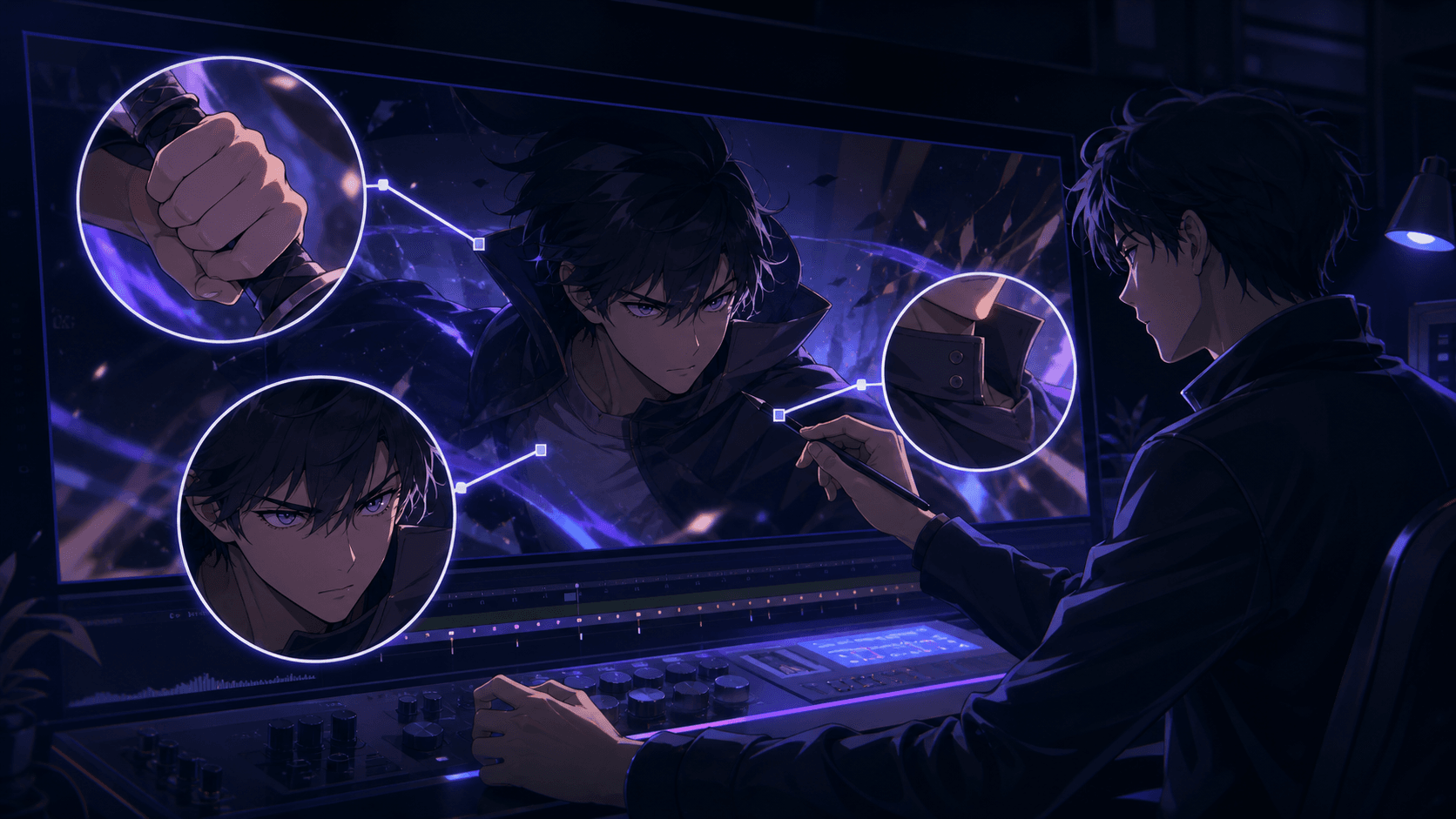
Human + AI: Why the Future of Animated Video Creation Belongs to Creators, Not Algorithms
Every time a new AI model is released, the same question appears across social media, YouTube, and creator communities:
"Will AI replace animators and video creators?"
It's an understandable concern. AI can now write scripts, generate storyboards, create animated scenes, improve voice recordings, remove backgrounds, and even suggest edits. Tasks that once took hours can often be completed in minutes.
But after watching the rapid evolution of AI video over the past few years, one thing has become increasingly clear:
The biggest change isn't that AI is replacing creators. It's changing what creators spend their time doing.
The most successful creators in 2026 aren't producing better work because they rely entirely on AI. They're producing better work because they've stopped using their energy on repetitive production tasks and started investing more of it in storytelling, creative direction, and audience building.
That's a very different future from the one many people imagined.
AI Is Excellent at Execution, Not Original Vision
AI has become remarkably good at turning instructions into content.
Give it a script, and it can generate scenes.
Describe a camera movement, and it can simulate it.
Provide reference images, and it can produce visually consistent sequences.
These capabilities continue to improve across modern AI video platforms.
However, AI still depends on direction.
It doesn't wake up with an original story to tell.
It doesn't understand your audience better than you do.
It doesn't know which product message will resonate with your customers or why one emotional ending feels more satisfying than another.
Those decisions still belong to people.
Think about filmmaking for a moment.
Owning an expensive camera doesn't automatically make someone a great director.
In the same way, access to powerful AI models doesn't automatically produce memorable videos.
Creative judgment remains the deciding factor.
The Creator's Role Is Shifting Upstream
Before AI, creators often spent most of their time producing content.
Writing.
Editing.
Animating.
Rendering.
Correcting mistakes.
Exporting.
Publishing.
Many of those tasks are becoming faster through automation.
As a result, creators are moving upstream.
Instead of asking:
"How do I edit this scene?"
They're asking:
"Should this scene exist at all?"
Instead of spending hours adjusting transitions, they're thinking about pacing, emotional impact, and audience retention.
Instead of manually producing every asset, they're deciding which ideas deserve to become finished projects.
In other words, AI is reducing production effort while increasing the importance of creative decision-making.
That's a positive shift.
The work becomes less mechanical and more strategic.
Audiences Remember Stories, Not Tools
When viewers recommend a video to friends, they almost never mention which software created it.
They remember:
- A funny character.
- A surprising ending.
- A useful tutorial.
- An emotional moment.
- A clever visual idea.
The production process is invisible.
This is why storytelling continues to outperform technology.
Two creators can have access to exactly the same AI tools and produce completely different results.
One creates another forgettable demo.
The other creates a series that people eagerly wait to watch every week.
The difference isn't computing power.
It's creative direction.
As AI becomes more widely available, this difference will only become more important.
Technology becomes easier to access.
Original ideas become more valuable.
Human Creativity Makes AI More Useful
Some people treat AI like a replacement for imagination.
In practice, it's much more effective as a creative partner.
For example, AI can quickly generate five possible story openings.
You choose the strongest one.
AI can suggest dialogue.
You rewrite it so it sounds authentic.
AI can generate several visual styles.
You select the one that matches your brand.
This back-and-forth process is often where the best work happens.
Instead of replacing creativity, AI expands it.
Creators can explore more ideas, reject weak concepts earlier, and spend more time refining the strongest ones.
The result is often higher-quality work produced in less time.
The Best Creators Build Systems, Not Just Videos
One of the biggest differences between hobbyists and professional creators isn't talent.
It's repeatability.
Successful creators rarely approach every project from scratch.
They develop systems.
Those systems might include:
- Script templates
- Character profiles
- Prompt libraries
- Brand guidelines
- Thumbnail styles
- Editing checklists
- Publishing schedules
These resources reduce decision fatigue and allow creators to focus on what actually changes from project to project.
AI fits naturally into this workflow.
Instead of replacing the system, it accelerates it.
A creator with an organized production process will almost always outperform someone relying on random experimentation.
This is one reason integrated AI workflows have become increasingly valuable. When scripting, scene planning, revisions, and production stay organized inside a single environment, creators spend less time managing files and more time improving the content itself. For teams producing videos regularly, platforms like Elser AI help support that structured approach without forcing creators to jump constantly between disconnected tools.
Why Creativity Becomes More Valuable as AI Improves
It may seem counterintuitive, but stronger AI often increases the value of human creativity.
Here's why.
When everyone has access to similar production capabilities, technical quality becomes less of a competitive advantage.
Instead, differentiation comes from:
- Original concepts
- Personal experience
- Humor
- Taste
- Perspective
- Community
- Trust
These qualities are difficult to automate.
A creator who understands their audience deeply can use AI to amplify that understanding.
Someone without a clear point of view simply produces more generic content, only faster.
Technology raises the baseline.
Creativity determines who rises above it.
What This Means for Businesses
The same principle applies beyond individual creators.
Marketing teams are under constant pressure to publish more content across more channels.
AI makes that possible.
But publishing more videos isn't the same as communicating more effectively.
Businesses still need to answer questions like:
- What problem are we solving?
- Who are we speaking to?
- Why should customers trust us?
- What action should viewers take next?
AI helps produce the assets.
People define the strategy.
Companies that combine strong messaging with efficient AI production will move faster than competitors while maintaining consistent quality.
Skills That Will Matter Most in the AI Era
As production becomes easier, the most valuable skills are changing.
Instead of mastering every editing shortcut, creators benefit more from developing abilities that AI can't easily replicate.
These include:
Storytelling
Knowing how to capture attention, build tension, and deliver satisfying conclusions.
Creative Direction
Making decisions about style, pacing, and emotional tone.
Audience Understanding
Recognizing what viewers care about and creating content that answers those interests.
Critical Thinking
Evaluating AI output instead of accepting the first result.
Workflow Design
Building production systems that scale over time.
These skills remain valuable regardless of which AI model becomes popular next year.
The Future Isn't Human or AI—It's Human With AI
The conversation around AI often creates a false choice.
Either humans create.
Or AI creates.
Reality looks very different.
The strongest projects increasingly come from collaboration.
People contribute imagination, judgment, empathy, and experience.
AI contributes speed, automation, and production efficiency.
Together, they make ideas possible that would have been unrealistic for small teams only a few years ago.
Independent creators can now build animated series.
Teachers can produce engaging educational videos.
Startups can launch professional marketing campaigns without traditional production budgets.
Small creative teams can compete with organizations that once had overwhelming resource advantages.
That's the real transformation.
Final Thoughts
The future of animated video production won't be decided by whichever AI model generates the most realistic frames.
It will be shaped by creators who know how to combine technology with meaningful ideas.
AI can generate visuals.
It can assist with editing.
It can accelerate production.
But it still depends on people to define purpose, tell stories, and build emotional connections with audiences.
Rather than asking whether AI will replace creators, a better question is this:
How can creators use AI to spend more time creating and less time producing?
The answers to that question are already reshaping animation, education, marketing, and entertainment.
Creators who embrace AI as a collaborative tool—not a substitute for creativity—will be better positioned to adapt as technology continues to evolve.
The future belongs neither to humans alone nor to AI alone.
It belongs to creators who know how to combine the strengths of both.
Frequently Asked Questions
Will AI replace animation professionals?
AI is changing production workflows, but creative direction, storytelling, and artistic judgment remain human strengths. Most professionals are likely to use AI as part of their workflow rather than be replaced by it.
What's the biggest advantage of AI for creators?
Speed. AI reduces time spent on repetitive production tasks, allowing creators to focus more on ideas, storytelling, and audience engagement.
Should beginners worry about learning traditional creative skills?
No. Skills like storytelling, communication, design thinking, and understanding audiences become even more valuable as AI tools become easier to use.
What's the best way to start using AI for animation?
Begin with a small, repeatable project. Use AI to assist with scripting, scene generation, and editing, then refine the results with your own creative direction. Building a consistent workflow will have a greater long-term impact than chasing every new model release.