What Is a Story World Bible—and Why Does Every AI Film Need One?
An AI model can generate an extraordinary castle in seconds. Ask for the same castle from another angle tomorrow, and it may move the towers, change the season, and replace the gates. The problem is not only generation quality. The project lacks a shared definition of its world.
A story world bible is the source of truth for recurring creative elements. Traditional productions use bibles to coordinate writers, concept artists, costume teams, and editors. AI productions need them for an additional reason: every generation is an opportunity for the model to improvise.
What belongs in a world bible?
A useful bible is not an encyclopedia. It contains decisions that affect production.
Characters
Record canonical appearance, scale, wardrobe, expressions, voice, movement, relationships, and prohibited changes. Separate the default identity from episode-specific states.
Locations
Define layout, entrances, recurring objects, time of day, lighting logic, palette, and camera landmarks. A simple floor plan can prevent impossible screen geography.
Props
Track size, material, color, ownership, function, and state. A sealed letter, broken sword, or illuminated control panel may change over the story; those changes need shot-level records.
Visual language
Describe medium, line quality, texture, contrast, palette, lenses, depth of field, camera movement, and transitions. Use a small set of approved examples rather than a folder of contradictory inspiration.
Sound and voice
Include voice profiles, pronunciation, recurring ambience, musical rules, and signature effects. Visual continuity can survive imperfect frames; inconsistent voices can immediately break identity.
Canonical facts versus scene state
This is the most important distinction. Canonical facts define the world: the hero has a silver mechanical left arm. Scene state records temporary truth: the arm is covered in mud after the tunnel collapse.
If temporary state overwrites the canonical asset, later shots may preserve damage that should have disappeared. If scene state is not recorded, the damage may vanish during the same sequence.
Create a state table by scene or shot. Track clothing, injuries, weather, prop possession, time, and emotional knowledge.
References need hierarchy
Not every image should carry equal authority. Label references:
- Canonical: approved source of truth
- Variant: authorized outfit or condition
- Exploration: idea, not production reference
- Shot-specific: composition or temporary state
- Style-only: visual treatment, not content identity
This prevents an exploratory image from quietly replacing a finalized design.
Keep the bible operational
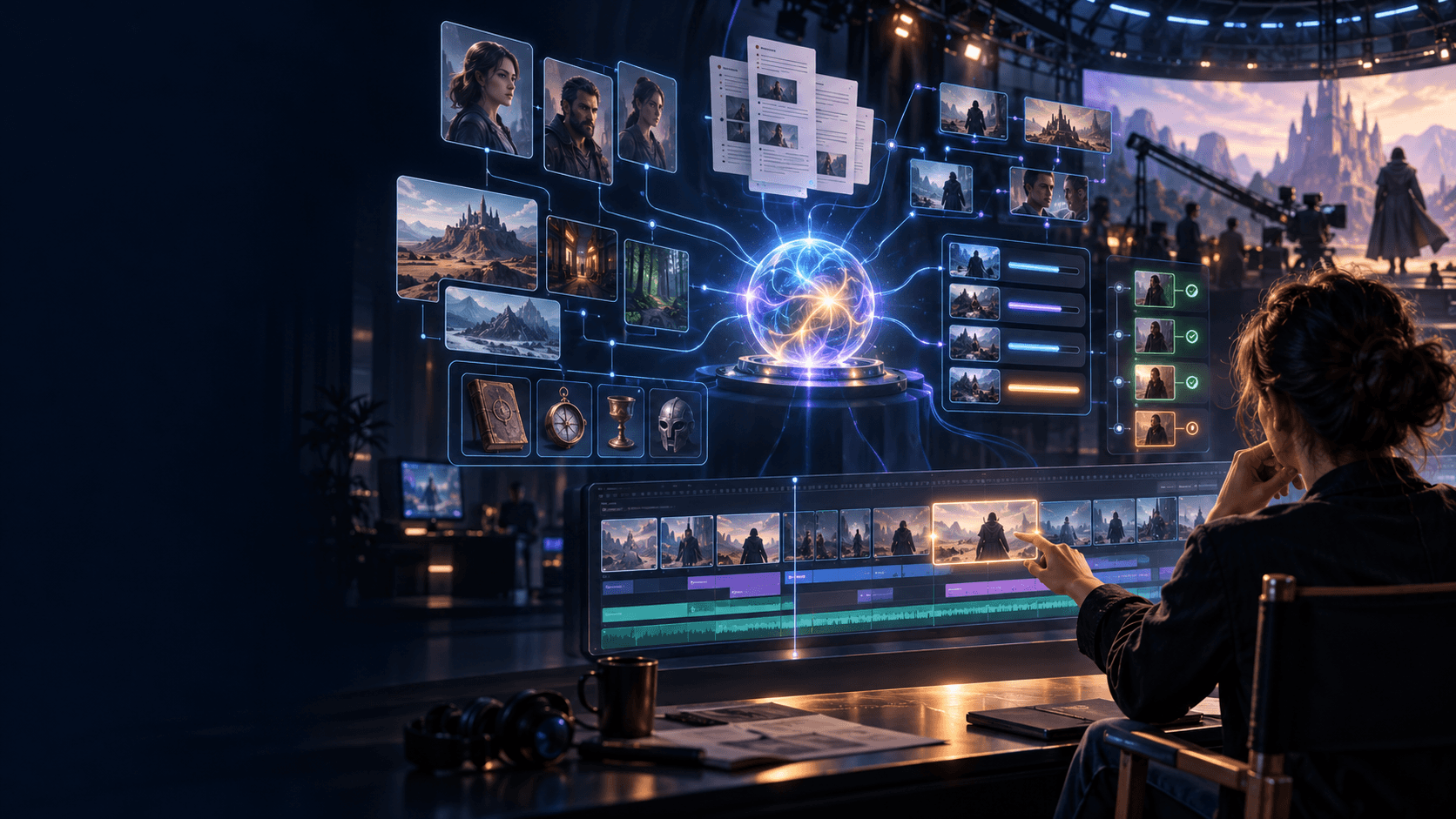
A 100-page PDF that nobody checks is not useful. Put the relevant references near the work. Give assets stable names and version numbers. Link each shot to the characters, locations, and props it uses.
ElserStudio is designed around this idea. Its World assets store reusable characters, locations, props, and voices that scripts and shots can reference on the canvas. The production remains organized around one story rather than scattered prompts.
For early visual exploration, Elser AI can help generate anime characters, locations, comics, and storyboard ideas quickly. Promote only selected results into the canonical World.
A minimum viable world bible
For a short film, begin with:
- One-sentence premise and tone
- Canonical sheet for each recurring character
- One reference and layout note for each location
- Prop list with ownership and state
- Visual style rules
- Voice and pronunciation notes
- Shot continuity table
- Rights and provenance record
Do not delay production until every imaginary detail is documented. Add information when it prevents a real ambiguity.
Use the bible during prompting
Prompts should retrieve only the relevant facts. A kitchen shot does not need the history of the northern kingdom. Provide the canonical character, current outfit state, active prop, location, action, and visual rules.
Too much context can be as harmful as too little. It increases contradictions and makes it difficult to know which instruction guided the result.
Update it through editorial decisions
Generated output is not automatically canon. A surprising detail becomes canon only when the creative team deliberately approves it. Record that decision and update downstream shots.
If an accepted clip shows the hero placing a cup on the left side of the table, the next shot should follow the accepted footage—not the original prompt. The edit is evidence.
FAQ
Is a world bible the same as a character sheet?
No. A character sheet covers one character's visual design. A world bible coordinates characters, locations, props, sound, style, and continuity.
Does a short AI video need one?
Even a one-page bible can prevent drift. The amount of documentation should match the number of recurring elements and shots.
Should generated variations go into the bible?
Keep explorations separate. Promote only approved designs or story facts to canonical status.
Who should maintain the bible?
One person should own consistency, although directors, writers, designers, and editors can contribute. Changes should be visible and versioned.
Conclusion
A world bible converts a collection of prompts into a production. It tells people and models what is fixed, what is temporary, and which references have authority. Start small, keep it close to the shots, and update it through deliberate decisions. Consistency is not a single model feature; it is a managed creative process.