How Much Does It Cost to Make an AI Short Film in 2026?
An AI short film can cost very little as an experiment or far more than expected as a polished production. The difference is rarely the final runtime alone. It is the number of attempts required to obtain usable shots, plus character design, sound, editing, and human time.
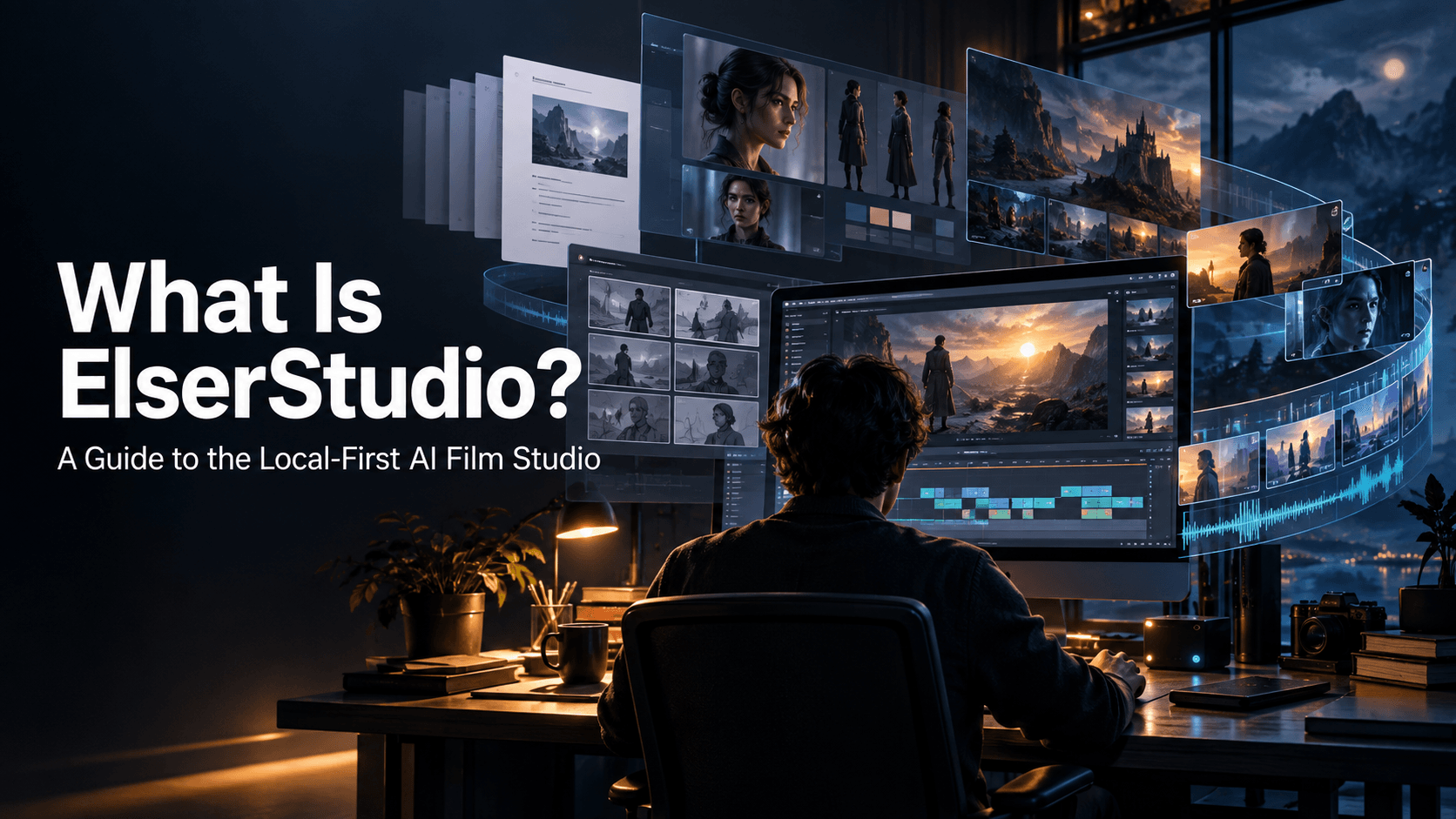
ElserStudio does not turn that uncertainty into a single artificial price. It gives creators a local-first production workspace where stories, reusable assets, shots, generation tasks, and the edit remain connected. That makes it easier to control scope and see where the budget is going.
The cost is based on generated footage, not only finished footage
Imagine a 96-second short built from twelve accepted eight-second shots. If every first attempt works, you generate 96 seconds. If each accepted shot takes an average of 2.5 attempts, you generate 240 seconds.
The finished film did not become longer, but the billable generation volume did.
Your basic video estimate is:
Number of planned shots × average shot duration × expected attempts × provider rate
The provider rate may depend on model, resolution, duration, audio, input media, account plan, or API route. Check current pricing in the provider configured for your ElserStudio project.
An illustrative 2026 calculation
As of this article’s review on September 21, 2026, xAI’s public API pricing lists Grok Imagine Video 1.5 output at $0.14 per second for 720p and $0.25 per second for 1080p. These rates are used only as an external arithmetic example. They are not ElserStudio pricing, do not state which provider your ElserStudio setup uses, and may change.
For 240 generated seconds:
- at $0.14 per second: $33.60;
- at $0.25 per second: $60.00.
That is the raw video-output line only. It excludes any separately billed inputs, images, sound, subscriptions, taxes, labor, and finishing.
Now change the acceptance rate. If the twelve shots average 1.5 attempts, you generate 144 seconds. At the illustrative $0.14 rate, that is $20.16. If they average four attempts, you generate 384 seconds, or $53.76 at the same rate.
The example shows why a pilot is the best budgeting tool. Your own acceptance rate matters more than a generic “price per finished minute.”
Budget the visual World before the shots
A narrative film usually needs character designs, locations, props, and perhaps guide boards before video generation.
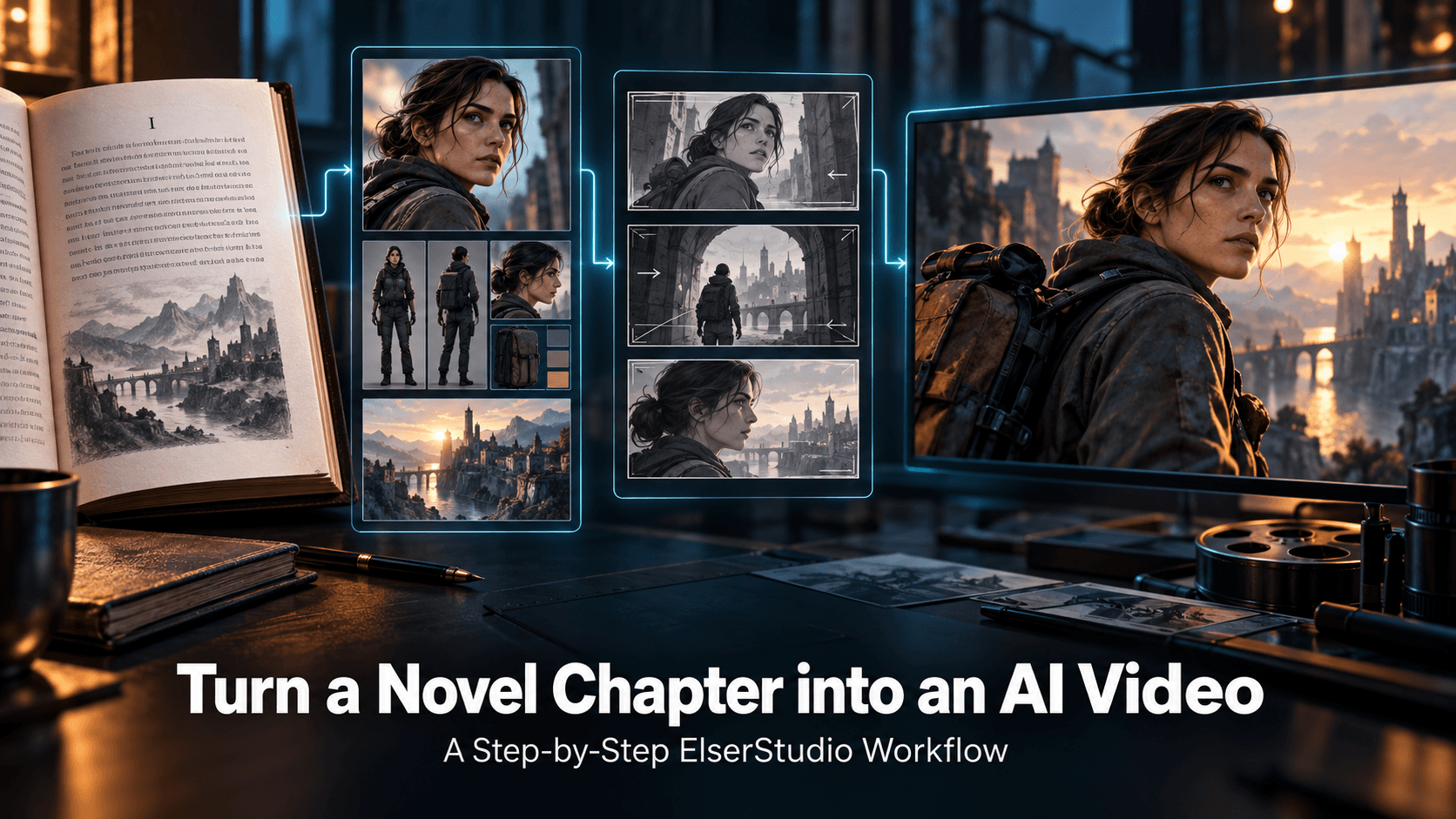
In ElserStudio, those materials live as reusable World assets. This is useful for budgeting because one approved character reference can support many shots. It is far cheaper to correct the character sheet before production than to discover after twenty clips that the costume is wrong.
Estimate:
- concept and reference-image attempts;
- character-sheet creation;
- location and prop references;
- style-development tests;
- revisions before approval.
If you already own suitable artwork, confirm that you have the right to use it as production input.
Include voices, music, and sound effects
A silent generation may look close to finished while still requiring significant audio work.
Budget voice generation or recording, pronunciation fixes, sound effects, ambience, music, and the final mix. Provider capabilities vary; native audio may reduce some steps but does not remove the need to listen critically.
Inside ElserStudio, character assets can include voice profiles, shots can carry sound direction, and completed clips can be reviewed in the project before composition. Keep audio decisions tied to the same characters and scenes rather than rebuilding the voice setup for every shot.
Count editing and human time
The project still needs someone to adapt the story, review assets, write shots, inspect takes, trim clips, solve continuity, and export the film.
If one creator spends ten hours on a 96-second film, those ten hours exist even when software charges are low. At an illustrative internal value of $25 per hour, the labor component is $250. At $75 per hour, it is $750. These figures are examples, not market-rate claims.
ElserStudio can reduce the time lost to disconnected tools by keeping the script, assets, tasks, videos, and timeline on one canvas. It cannot remove the creative judgment required to select a good take.
Use staged budgets inside the workflow
Do not approve the whole film at once.
Stage 1: Planning
Import the story, correct the script, prepare the shot list, and identify required assets. Avoid video generation until the scene makes sense.
Stage 2: World approval
Create and approve the main character, location, prop, and voice assets.
Stage 3: Representative shots
Generate two or three difficult shots. Track generated seconds, accepted seconds, and cost.
Stage 4: Proof-of-concept edit
Connect the accepted clips to a Composition node and finish a 20–40 second sequence locally.
Stage 5: Full production
Use the real pilot data to estimate the remaining film. Keep a contingency for revisions and failed attempts.
This staged approach works especially well in ElserStudio because the project can grow without abandoning the earlier script, World, or shot structure.
Cloud setup versus local BYOK
ElserStudio supports a cloud route and a local BYOK route. With BYOK, generation requests go to the provider configured with your credentials; the official FAQ states that this route does not require ElserStudio platform credits or an ElserStudio account. AI generation still uses the network and follows the selected provider’s pricing.
Always confirm current account, model, and billing information before production. Do not treat the third-party example in this article as a quote for your project.
Want a budget based on your own story rather than averages? Download ElserStudio, generate a small representative scene, and measure the real cost per accepted second.
FAQ
Is an AI short film free to make?
Free trials may support experimentation, but a finished film usually involves generation, retries, assets, sound, editing, and human time.
Is price per generated second the same as price per finished second?
No. Rejected takes and revisions increase the cost per accepted second.
Does ElserStudio charge the example rates in this article?
No such claim is made. The rates are a public third-party API benchmark used to demonstrate the calculation. Your cost depends on the current route and provider you configure.
How can ElserStudio help control cost?
It keeps the story, approved assets, shot instructions, tasks, results, and composition connected. This supports small tests, targeted retries, and reuse instead of repeatedly starting from scratch.
What should I measure during the pilot?
Track generated seconds, accepted seconds, number of attempts, provider charges, image and audio costs, and human editing time.
Conclusion
The real cost of an AI short film is the cost of producing footage you can actually use. ElserStudio helps you plan the film, reuse its World, test difficult shots, review the results, and edit locally before scaling. Start with one representative scene, measure honestly, and let that evidence set the budget.