Can AI Make a Full Movie? The Real Limits of Long-Form AI Video
AI can help make a full movie. It can develop the script, create a visual world, generate footage, support sound, and speed up editing. What it cannot reliably do is turn one sentence into a coherent feature film while remembering every character, prop, location, and story decision automatically.
Long-form AI filmmaking is possible as a production—not as a magic button.
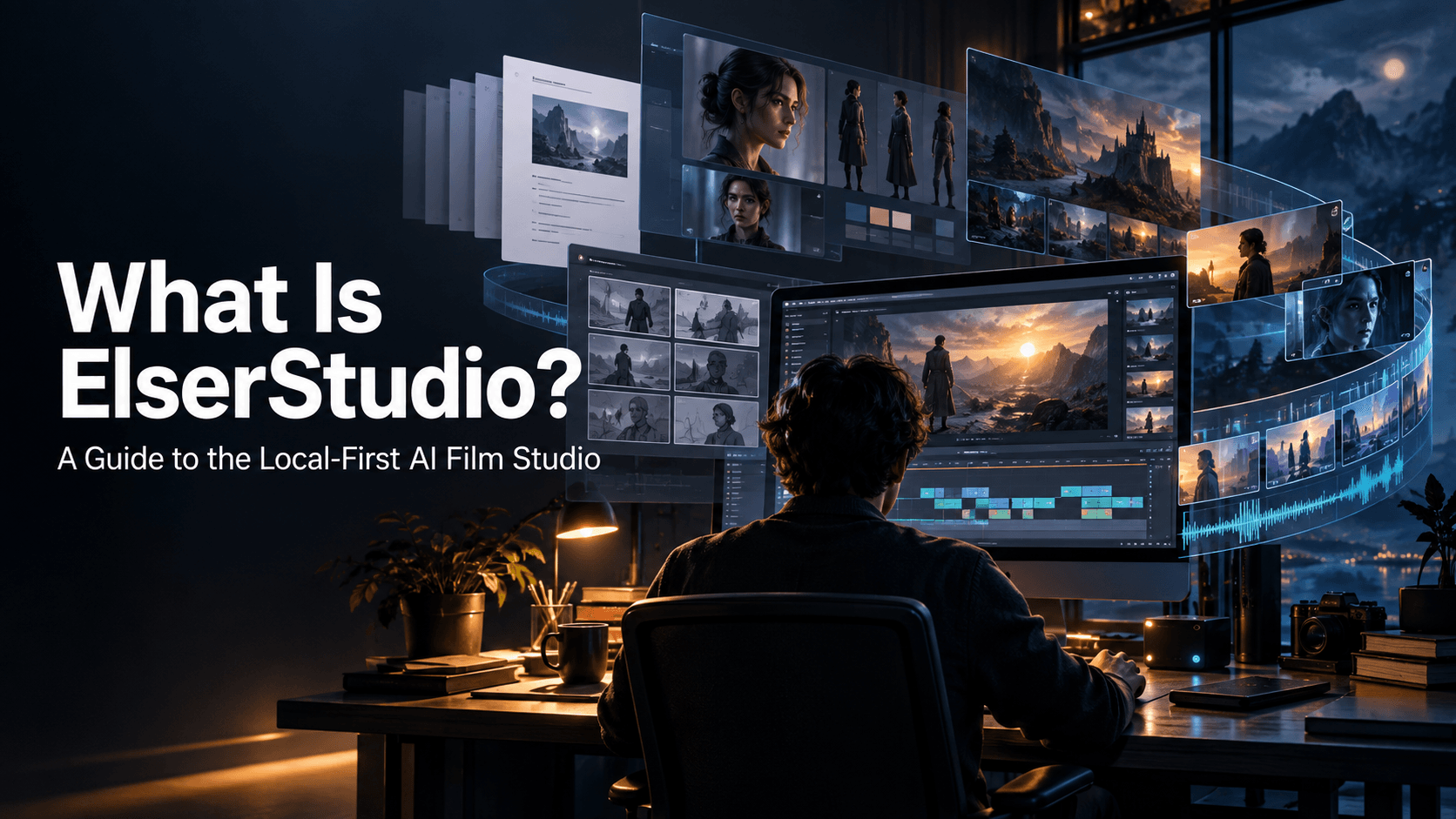
ElserStudio is designed around that distinction. It gives creators a local-first desktop workspace where the film can be organized from source story to final composition, with recurring assets and individual video shots kept on the same visual canvas.
A full movie is a project, not one generation
Current video models usually create relatively short clips. A feature or long short film therefore contains many generated, reviewed, and edited pieces.
The challenge is not simply accumulating enough seconds. Those seconds must belong to the same story. The protagonist should remain recognizable. A door should stay in the same location. A key should remain with the character who picked it up. The emotional consequence of one scene should continue into the next.
This is where project structure becomes as important as visual quality.
Organize the film from story to shot
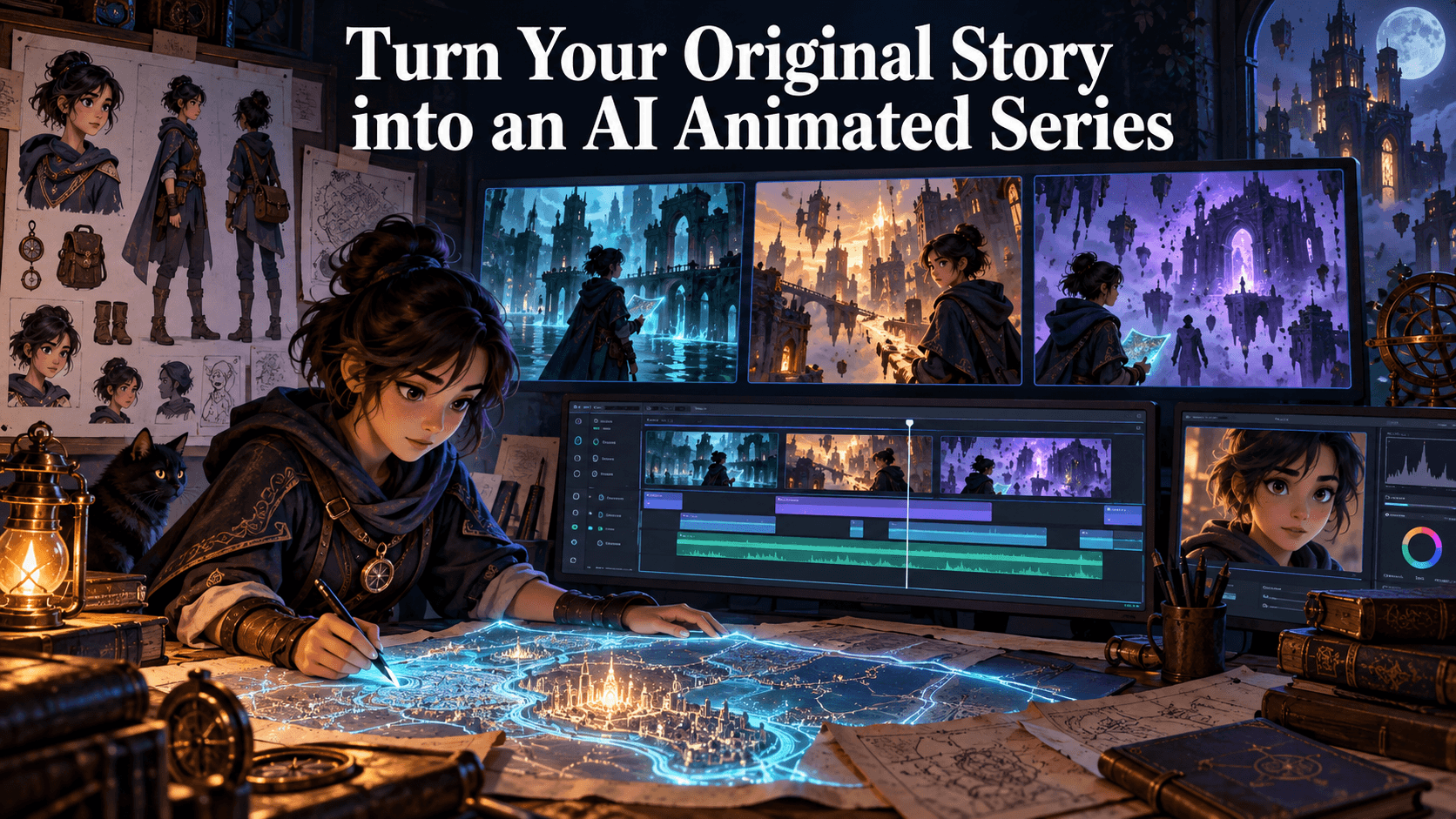
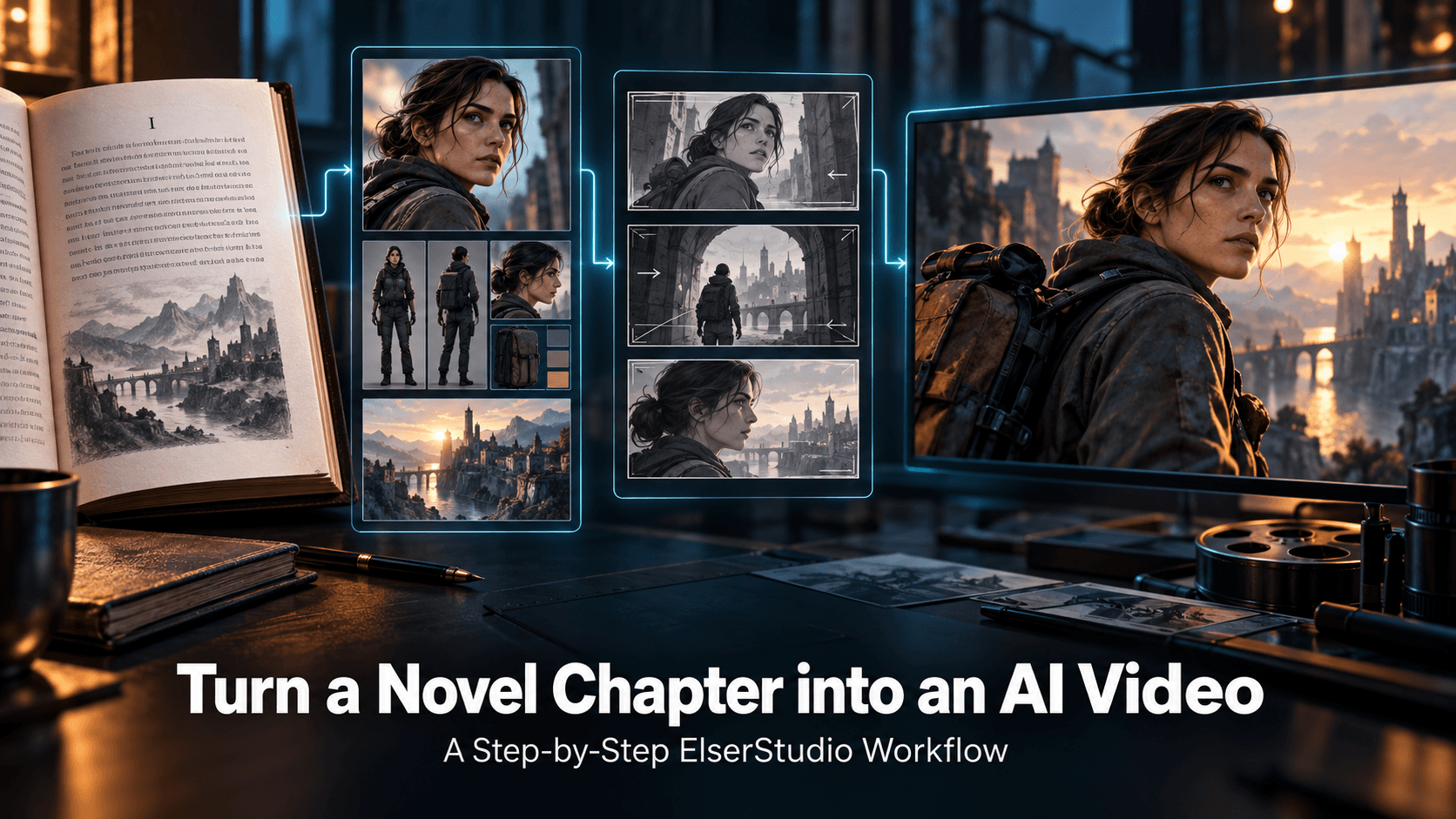
Inside ElserStudio, you can begin with a story, novel, or script. The source is developed into editable scenes, characters, dialogue, locations, props, and shots on the canvas.
For a longer film, work at several levels:
- Film: the complete dramatic arc.
- Sequence: a group of scenes that changes the situation.
- Scene: a local goal and conflict in one time and place.
- Shot: one visible unit with a clear purpose.
Do not send an entire act to a video model. Use the story structure to decide what each shot must communicate, then generate manageable units that can be reviewed and edited.
Build a World that can survive many scenes
ElserStudio stores recurring characters, locations, props, and voices inside a World. These canonical assets can be referenced by scripts and shots throughout the film.
Suppose the protagonist wears a silver ring that opens a locked archive in the final act. The ring should be prepared as a real prop asset, not left as a sentence buried in dozens of prompts. If it changes hands, the project’s continuity notes should change with it.
The same applies to faces, costumes, rooms, vehicles, and voices. Reusable references improve the workflow, while human review catches the variations that models still introduce.
Generate scenes in production-sized groups
Prepare a short sequence and generate two or three representative shots first. Test the most difficult recurring elements, not only easy landscapes.
If the film depends on two characters talking inside a moving train, generate that situation early. A successful exterior shot of the train does not prove the conversation will work.
ElserStudio lets you attach the relevant World assets, action, camera, duration, sound, and optional guide board to each shot. You can generate a small batch, monitor the tasks, and review each video result on the canvas.
If one shot fails, retry it. If the character reference fails across several shots, repair the canonical asset before scaling. This prevents one early mistake from spreading through the film.
Review for continuity before adding polish
When a take returns, check it in this order:
- Does the shot perform its story job?
- Are the characters and props correct?
- Can the beginning and end connect to neighboring shots?
- Is dialogue or sound understandable?
- Does the visual polish support the intended tone?
Creators often reverse that order and approve a beautiful take that damages the story. On a long project, those small compromises accumulate.
Keep accepted takes connected to their shot nodes. Record why a take was chosen and which continuity state it represents. The local canvas becomes a visible map of the film rather than a pile of anonymous video files.
Assemble and refine the movie locally
Connect approved clips to Composition nodes and arrange them on the timeline. Depending on scale, you may create separate compositions for scenes or sequences before assembling a larger cut.
Watch the film for rhythm, not just generation quality. A slightly imperfect shot may work well for two seconds in the edit. A technically impressive ten-second shot may slow the story and need trimming.
ElserStudio provides the local composition stage, but advanced finishing needs vary. Some projects may still use specialized sound, color, effects, or delivery tools after the AI production cut.
The realistic path to a full movie
Use milestones:
- Finish a 20–60 second proof of concept.
- Finish one complete scene.
- Finish a short film or pilot.
- Measure cost, acceptance rate, and editing time.
- Expand only after the workflow repeats reliably.
This path is not less ambitious. It is how you discover whether the intended visual style, cast, provider, and budget can support a longer runtime.
If you are serious about building a multi-shot film rather than collecting clips, download ElserStudio and create the first proof-of-concept sequence locally.
FAQ
Can AI make a feature-length movie automatically?
Not reliably from one prompt. AI can assist throughout production, but long-form coherence still requires human adaptation, direction, continuity review, and editing.
How does ElserStudio help with a long project?
It connects stories, scripts, reusable World assets, shots, generated takes, task history, and compositions on a local-first visual canvas.
Will characters remain perfectly consistent?
No system can guarantee that across every generation. Canonical references and reusable assets help, while shot-by-shot review remains necessary.
Should I generate scenes in story order?
Not always. Test high-risk recurring situations early. You can still organize accepted takes according to the story in the final composition.
Is ElserStudio a complete replacement for professional post-production?
It includes local composition and export, but specialized projects may still require additional tools for advanced sound, color, effects, or delivery.
Conclusion
AI can be part of making a full movie when the production has a memory: a script, a World, controlled shots, approved takes, and an edit. ElserStudio gives those parts one local home. Make one difficult scene work, repeat the process, and let the finished footage—not the promise of a button—determine how far the film can grow.