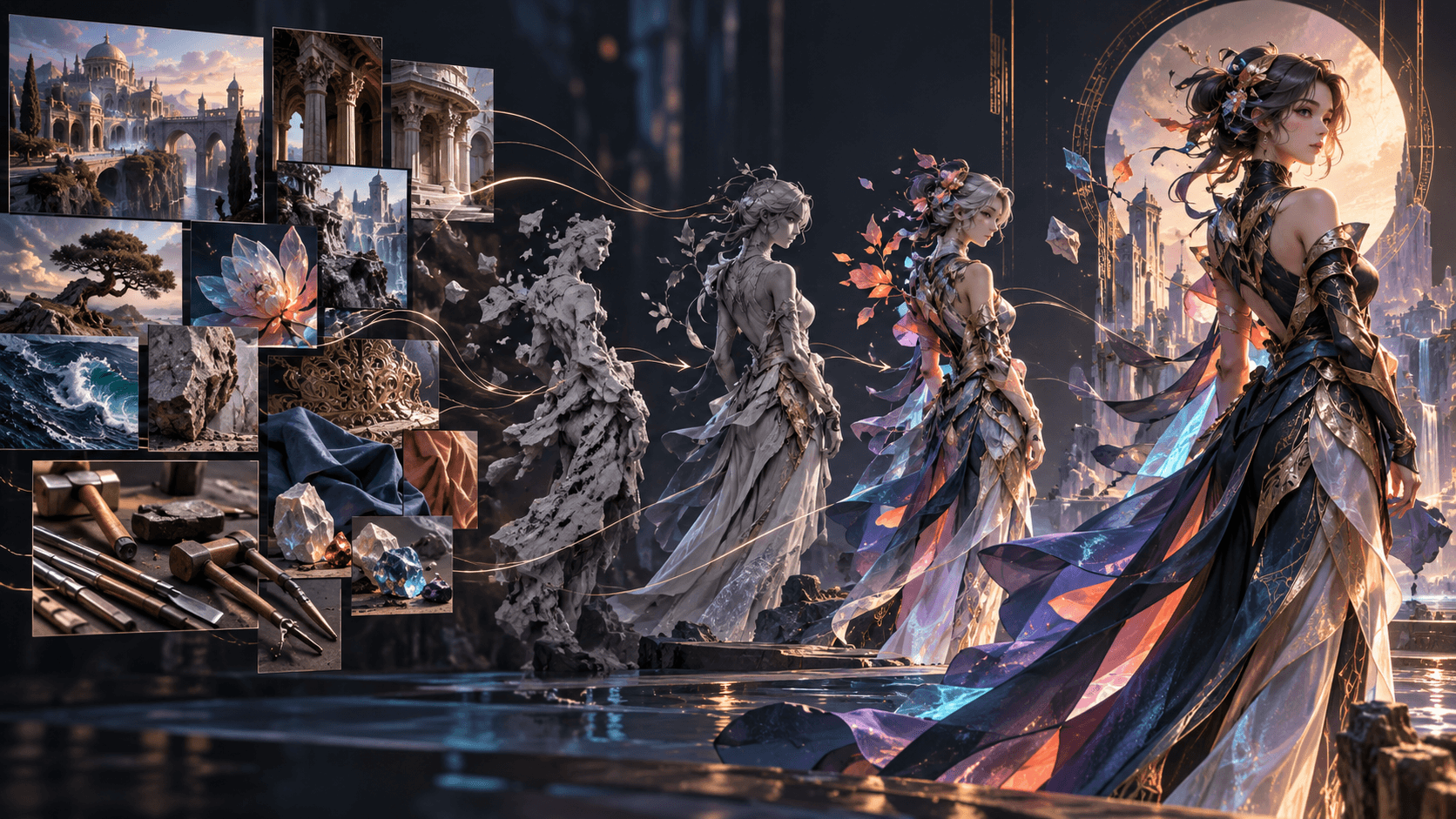
How to Create an OC with AI in 2026
Why 2026 Is the Tipping Point for AI Character Creation
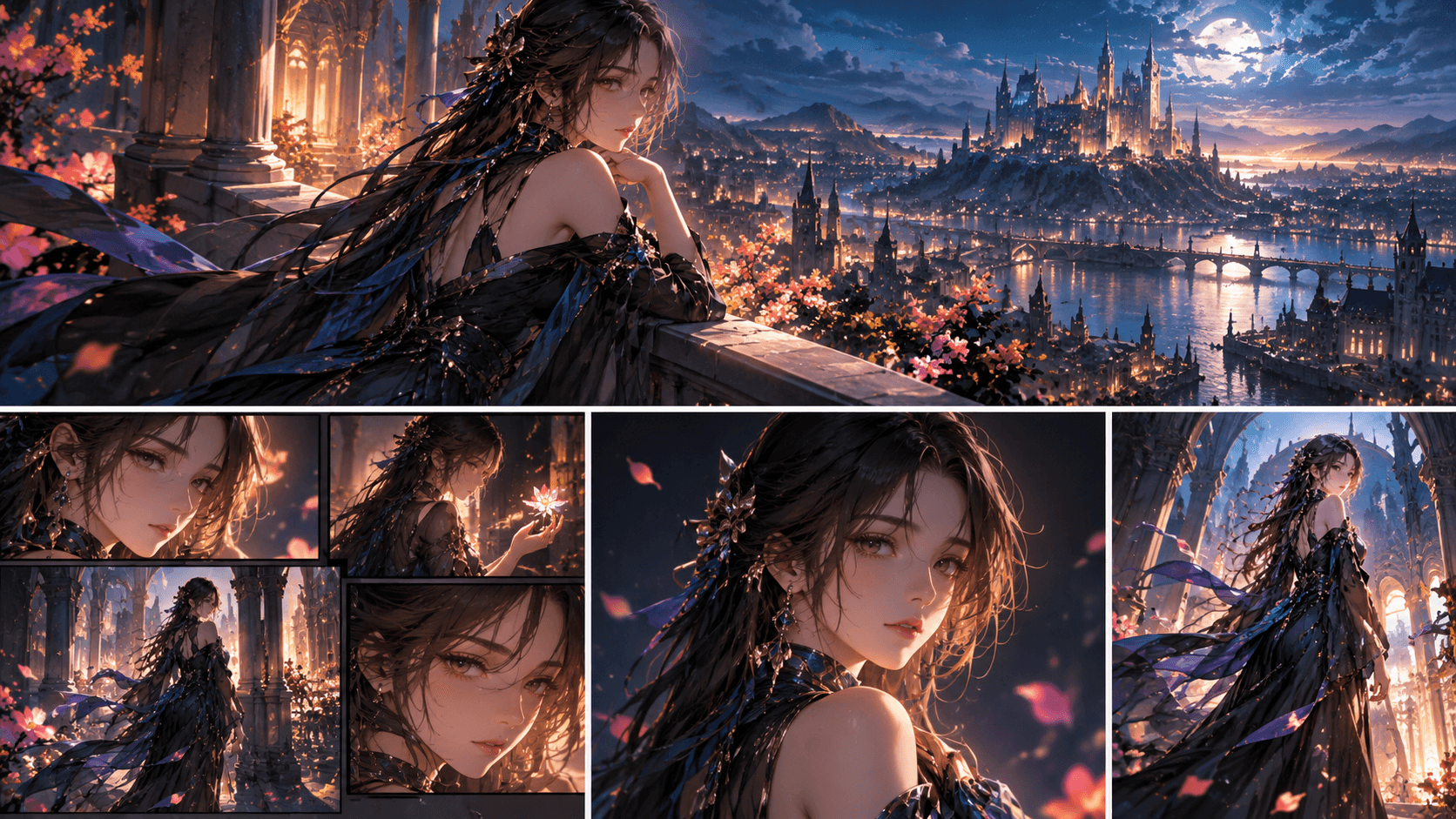
Let me rewind to 2024. If you tried to generate an original character back then, you‘d get beautiful chaos. Amazing single images, sure. But ask the AI to draw the same character from the back? Different nose. Different hairstyle. Different ear shape. The industry called it “face drift,” and it killed any hope of using AI for serious storytelling.
Then 2025 happened. The introduction of character embedding layers changed everything. Instead of treating every generation as an isolated snowflake, AI models started learning a unique “fingerprint” for your OC — the exact bone structure, the specific way their eyebrow arches, the precise placement of that tiny scar.
Now in 2026, the technology has matured further. We have real-time consistency locks, multi-view diffusion, and even personality-to-visual mapping that adjusts art style based on your character‘s emotional state. The models powering platforms like Elser AI (which integrates with the latest GPT-5 vision layer and Claude 4 artistic reasoning) can maintain identity across hundreds of generations, different lighting conditions, different outfits, even different art styles.
But here‘s the catch. The AI is only half the battle. You still need to know what you‘re doing. A Ferrari is useless if you treat the gas pedal like an on/off switch. So let me walk you through the exact methodology I‘ve refined over the last 18 months.
Phase 1: Ideation — From Vague Vibe to Concrete Concept
Most people start wrong. They open an AI tool, type “cool anime girl,” and get angry when the results look like every other generic waifu. You wouldn‘t tell a human artist “draw something cool” and expect a masterpiece. Same rules apply to AI.
Before you touch a single generation button, answer these three questions on paper (or a sticky note):
1. What universe do they belong to? Are they a devil hunter in a Chainsaw Man-style world? A student at a cursed Jujutsu high? A Pokémon trainer on their journey? An intergalactic robot from the Transformers universe? Your answer determines the visual language, proportions, and even the rendering style.
2. What is their core emotional contradiction? The best characters aren‘t one-note. They‘re kind but ruthless. Brave but cowardly. Playful but haunted. This contradiction is what makes them *original*. Write it down in a single sentence.
3. What‘s the one object they always carry? A locket? A broken watch? A specific weapon? Objects ground a design and give AI something concrete to latch onto.
I recently helped a friend build an OC for a Murder Drones OC Maker project. She wanted a disassembly drone with a twist. Instead of just “scary robot,” she defined the contradiction: “protective older sister who acts cold but secretly builds nests for injured worker drones.” She gave it a rusted locket with a photo inside. The AI took that specific input and generated a design that felt genuinely new — not just another edgy robot with claws.
Once you have your concept, it‘s time to choose your template. This is where Elser AI‘s library of over 50 OC maker templates becomes invaluable. You can start with a general Anime OC Maker or go hyper-specific:
- Want a magical girl with dark twists? Yaelokre OC Maker
- Building a fast-paced action parody? Sonic OC Maker
- Creating a pastel pony with trauma? MLP OC Maker
- Designing a titan-shifter with unique marks? Attack on Titan OC Maker
- Need a demon from the Pride ring? Hazbin Hotel OC Maker or Helluva Boss OC Maker
Each template comes pre-loaded with the specific proportions, color palettes, and visual tropes of that universe. This isn‘t just a “filter” — it‘s a deep model adjustment that ensures your OC looks like they could walk into a scene from the original show and nobody would blink.
Phase 2: The First Generation — Getting Your Base Portrait
Now the fun begins. Open your chosen template in Elser AI. You‘ll see a prompt box, but ignore it for a second. Look at the character parameter sliders. This is where the depth lives.
Instead of typing “blue hair,” you can adjust:
- Hue and saturation ranges
- Eye shape (almond, round, droopy, sharp)
- Jaw width and chin sharpness
- Age appearance (child, teen, young adult, mature)
- “Anime-ness” (from realistic to super-deformed)
Why does this matter? Because natural language is ambiguous. “Sharp jaw” means different things to different models. But a slider from 0 to 100 is universal. I always start by setting the base silhouette using these sliders, then write a short prompt to add the specifics: “wears a tattered red scarf, messy black hair with white streaks, carries a broken stopwatch as a necklace.”
Generate 4-6 variations. Don‘t fall in love with the first one. Look at the hands, the eyes, the overall balance. Pick the one that feels 80% right — the one where you can already hear their voice.
Phase 3: The Consistency Lock — The Real Magic
This is the step that separates the amateurs from the pros. In 2026, a decent AI OC generator gives you a nice picture. A great AI OC generator gives you a *character database entry*.
In Elser, after you select your favorite first generation, you click the “Register Character” button. The system analyzes not just the pixels, but the geometric relationships — the distance between the eyes, the curve of the nose bridge, the specific angle of the cheekbone shadow. It creates a mathematical embedding, a unique ID that represents your OC.
Now, here‘s where it gets wild. With that character locked, you can generate new images in completely different contexts, and the face stays the same. I tested this recently with a One Piece OC Maker character. I generated him:
- Eating a devil fruit
- Fighting a sea king
- Sleeping in a hammock
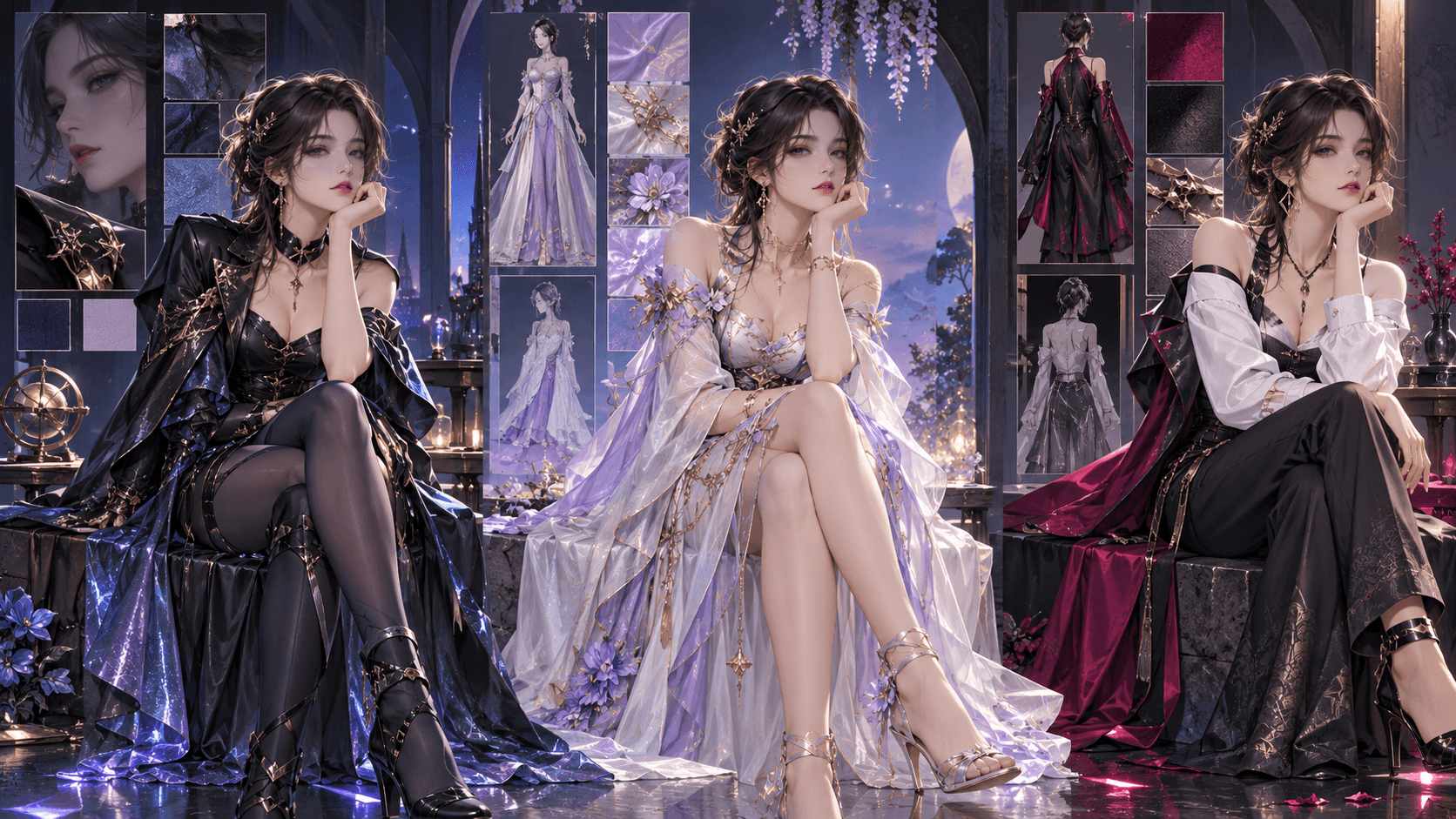
- Wearing a marine uniform (different outfit entirely)
In every single image, the jawline, the eye shape, and the distinctive scar above his left brow remained identical. The only things that changed were the pose, the clothing, and the expression. That‘s the power of a true AI OC generator with consistent characters.
Phase 4: Building Your Character Sheet
A single floating head isn‘t a character sheet. You need:
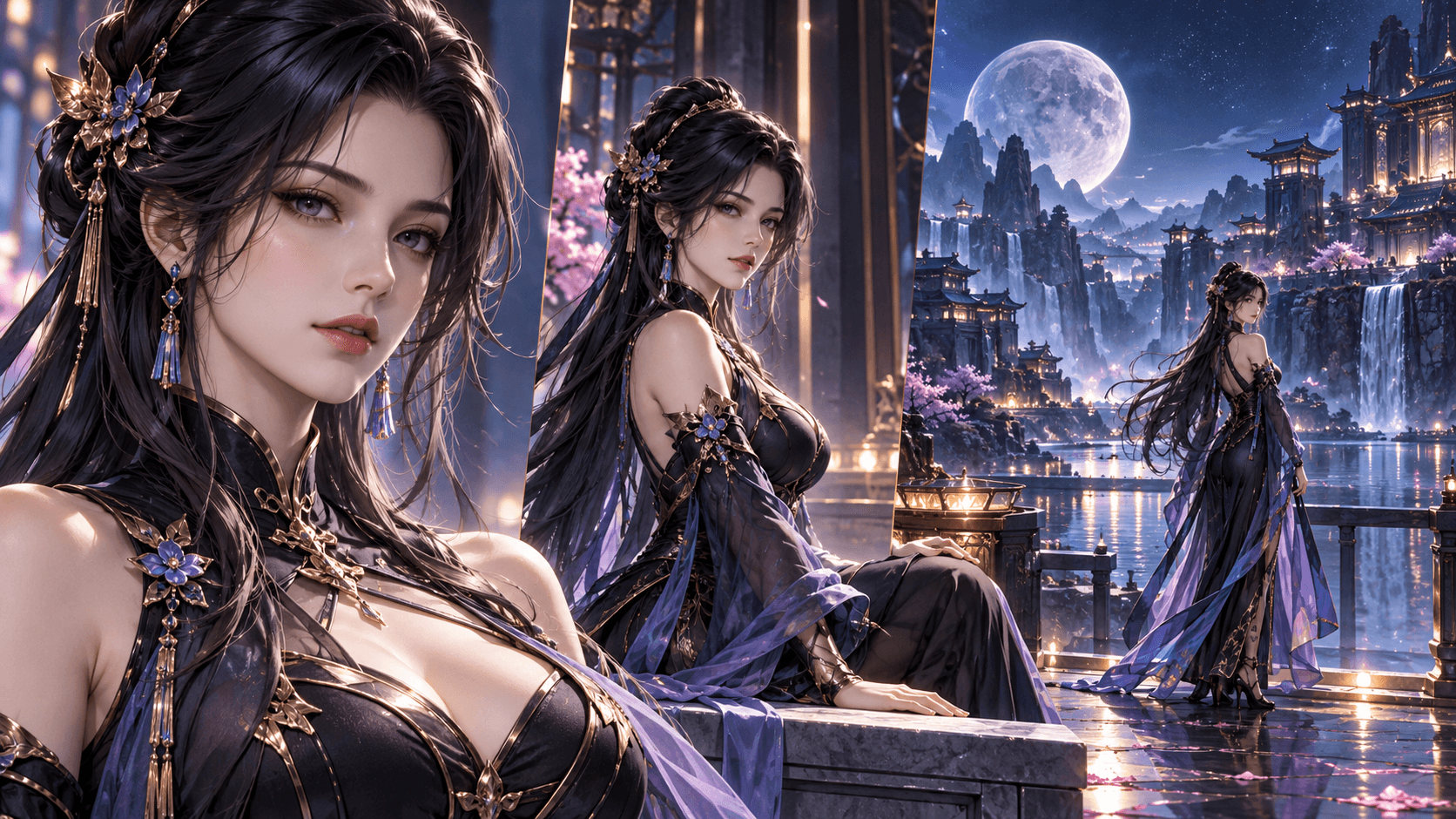
- Front full-body view
- Back full-body view
- 3/4 left and right views
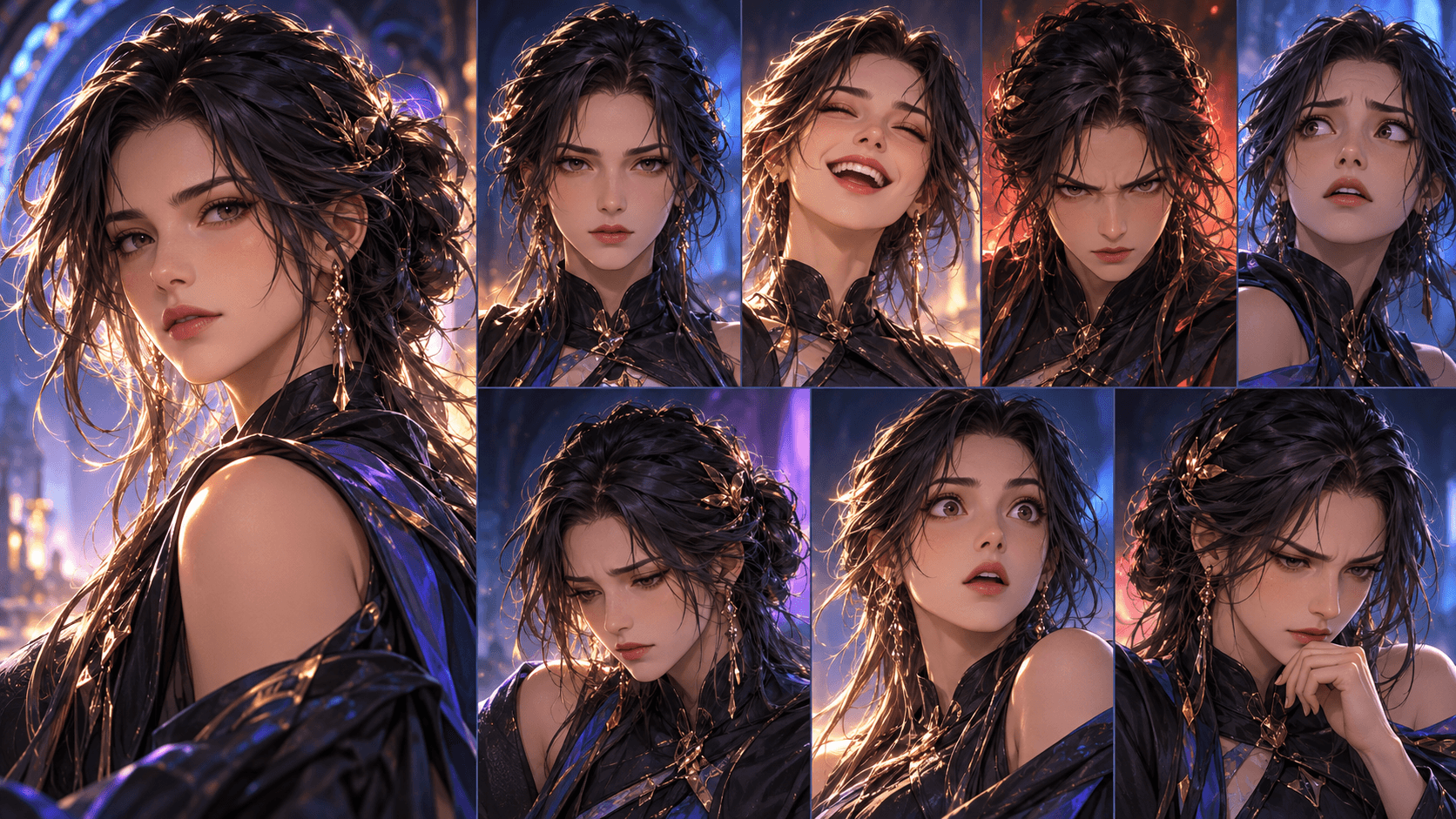
- Close-up of face (neutral, angry, sad, happy, surprised)
- Hand(s) detail (if they have unique gloves, rings, or claws)
- Signature accessory or weapon
In the old days, this meant hiring an artist for $300-$800. Today, with a consistent character locked, I can generate all of these in under 30 minutes.
Start with the front view. Use the pose control feature — you can drag a simple skeleton or even upload a crude stick figure drawing. The AI respects your rough pose while keeping your character‘s locked identity.
Then generate the back view. This is historically the hardest for AI because the face isn‘t visible to anchor the identity. But because you have the embedding, the AI understands the proportions of the skull, the hair parting, the shoulder width, and even the way the ears peek out from the side.
For expression sheets, Elser has a one-click “Expression Matrix” that generates 9 standard emotions in a single grid. I‘ve used this for Pokemon OC Maker characters (where expressions need to be readable even on small sprites) and for Genshin OC Maker characters (where the eyes need to convey elemental affinity).
Phase 5: Fleshing Out the Backstory with AI
Here‘s something most tutorials skip. Visuals are only half of an OC. The other half is who they are — their history, their fears, their relationships.
After I lock in the visuals, I switch to Elser‘s narrative AI module (powered by the latest fine-tuned GPT model specifically for character lore). I feed it the visual traits and the one-sentence contradiction I wrote earlier. Then I ask it to generate:
- A 500-word backstory with a clear inciting incident
- Three secrets (one they hide, one they don‘t know about themselves, one someone else keeps from them)
- Two character flaws and one hidden strength
- A short list of mannerisms (e.g., “taps fingers when lying, avoids eye contact when vulnerable”)
The AI doesn‘t replace your imagination — it expands it. I‘ve gotten plot twists from the AI that I never would have thought of on my own. For a Danganronpa OC Maker character (a survivor of a killing game), the AI suggested that her “ultimate talent” (superhuman luck) was actually a curse that killed anyone who got too close to her. I ran with that and wrote a 40-page fanfic script.
Phase 6: Putting Your OC to Work
Now you have a fully realized character — visuals, sheet, backstory, expressions. What do you do with it?
- For comic artists: Use the character lock to generate panel after panel of consistent art. I‘ve seen solo creators produce 20-page manga chapters in a week using this workflow.
- For VTubers: Export your character in Live2D-ready layers. Elser‘s VTuber OC Creator mode automatically cuts the eyes, mouth, and eyebrows into separate PSD layers. You can rig it in under an hour.
- For TTRPG players: Generate your D&D character from multiple angles, plus a token for VTT. The DnD Character Maker OC Maker template even includes alignment-based color suggestions.
- For writers: Keep a visual reference folder of your characters‘ different moods. It helps you write more consistent dialogue when you can see their face scrunching up in disgust.
Real Talk: Common Mistakes (And How to Avoid Them)
Mistake 1: Generating at low resolution and never upscaling. AI output looks great on your phone, but printed or published, artifacts show. Always run your final images through a 4x upscaler with detail recovery.
Mistake 2: Relying entirely on the AI for anatomy. Even the best 2026 models occasionally mess up hands, feet, or overlapping limbs. Learn basic anatomy checking. If a hand has six fingers, use the inpainting brush to fix it. Don‘t just accept the error.
Mistake 3: Ignoring the “negative prompt” field. This is where you tell the AI what not to do. For a Helluva Boss OC Maker character, you might put “no halos, no wings, no pastel colors” to keep it in the show‘s grimy aesthetic. For a Bluey OC Maker character (yes, adults make Bluey OCs for their kids‘ stories), you‘d put “no sharp edges, no realistic shading, no pupils.”
Mistake 4: Forgetting to iterate. Your first generation is rarely your final design. Generate variations. Mix traits from two different generations using the blend tool. Tweak the sliders incrementally. Great OCs are *crafted*, not discovered.
The 2026 AI Models Behind the Magic
You might be wondering what‘s actually running under the hood. Elser AI doesn‘t just use a single model — it integrates multiple state-of-the-art systems
This multi-model approach is why Elser consistently outperforms generic tools like Midjourney or Leonardo for character work. Those tools are built for beautiful single images. Elser is built for *continuity*.
Your First Project: A 30-Minute Challenge
I want you to try something. Set a timer for 30 minutes. Open Elser AI. Choose any template — maybe Jujutsu Kaisen OC Maker if you like dark sorcery, or Cookie Run Kingdom OC Maker if you want something cute. Define your one-sentence contradiction. Generate a base portrait. Lock the character. Generate a front and back view. Write a three-paragraph backstory using the narrative AI.
If you do this honestly, you‘ll have a real, usable OC before your coffee gets cold. And you‘ll understand why I haven‘t commissioned a human artist (for my personal projects) in over a year. Not because AI is “better” than human art — but because AI let me be the artist without spending a decade learning anatomy.
Ready to Build Your Multiverse?
Look, I‘ve tested every character tool on the market. Perchance, Picrew, the open-source SDXL character trainers, even the niche Perchance AI OC Maker community forks. None of them offer the combination of fandom-specific templates (over 50 and counting), true character consistency locking, and integrated narrative AI that Elser provides.
And the best part? You don‘t need to be a prompt engineer. You don‘t need a $2,000 graphics card. You don‘t need to understand LoRAs or embeddings or diffusion schedules. You just need an idea and five minutes to sign up.
Stop letting the lack of drawing skills hold your stories hostage. Head over to https://www.elser.ai/ and create your first consistent OC today. Whether you‘re making a Sonic OC, a Fursona, a FNAF animatronic, or a Genshin Impact original character — Elser has the template and the AI power to bring them to life. Sign up now and get 50 free generations to start your journey.