How to Make an AI Comic Drama from a Story Idea
You do not need a finished novel to begin an AI comic drama. You need a story idea that can create decisions, reversals, and a reason to watch the next episode.
ElserStudio gives that idea somewhere to grow. On its desktop canvas, you can develop the story, organize a script, build a reusable cast and world, create shot references, generate video, and assemble the episode locally.
Here is a practical way to create the first pilot.
Turn the premise into a repeatable story engine
Suppose your idea is:
A novelist wakes inside the unfinished fantasy world she abandoned years ago.
That is an attractive premise, but it needs a rule and a goal. Perhaps the novelist knows the planned ending, but every time she reveals the future, the world rewrites another memory. She wants to prevent the prince’s assassination without forgetting why he matters.
Now the idea can produce episodes. Each attempt to change the story creates a new cost.
Write four short lines before generating anything:
- What does the protagonist want?
- What rule makes it difficult?
- What choice must she make in the pilot?
- What changes at the end?
This gives the visual production a reason to exist.
Bring the story into ElserStudio
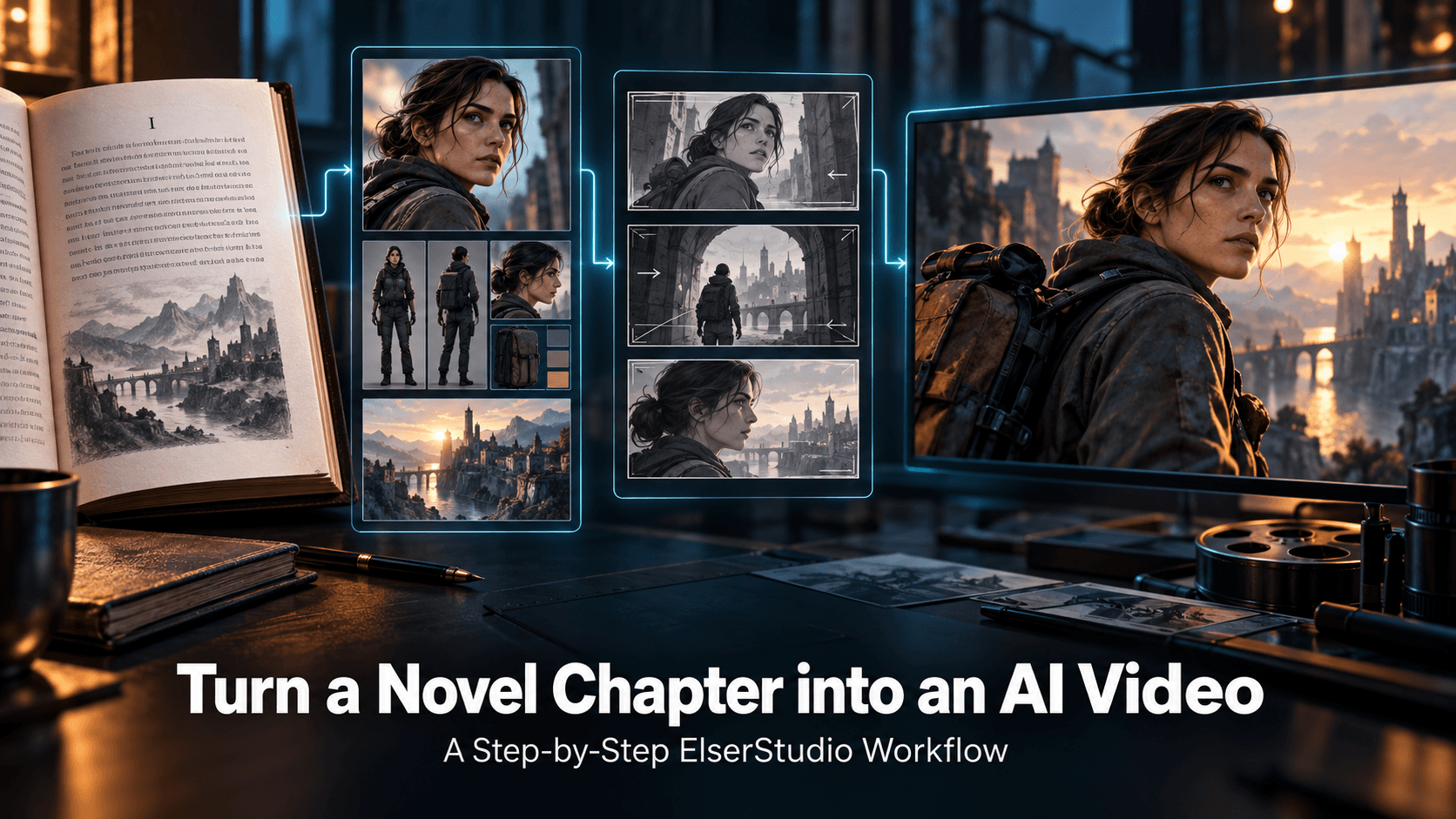
Write a short outline or pilot scene, then paste it into the Story Script action on the ElserStudio canvas. The product can turn the material into an editable script and identify the characters, locations, props, dialogue, and shots needed for production.
Review the result like a writer. Keep the pilot focused. You may need only the novelist, the prince, a palace library, and a magical manuscript. A crowded cast makes consistency harder before the central relationship is established.
The canvas lets the story remain beside the production elements it creates, so you can see how a line in the outline becomes an asset or shot.
Create a visual World for the series
Prepare the recurring assets inside a World:
- the protagonist and prince;
- the palace library;
- the magical manuscript;
- their voice profiles;
- any recurring symbol that signals memory loss.
Approve the character sheets before creating a full episode. Define recognizable silhouettes, color accents, clothing, and expressions. Choose a visual style that can be repeated, whether it resembles animated illustration, motion comics, or cinematic fantasy.
The World becomes the project’s source of truth. Later shots and episodes can reference the same assets instead of rebuilding them from text.
Plan a pilot that proves the idea
A compact pilot might contain five beats:
- The novelist wakes in the palace library.
- She recognizes a passage from her abandoned manuscript.
- The prince enters and asks whether they have met.
- She warns him about the assassination.
- Her memory of his name disappears from the page.
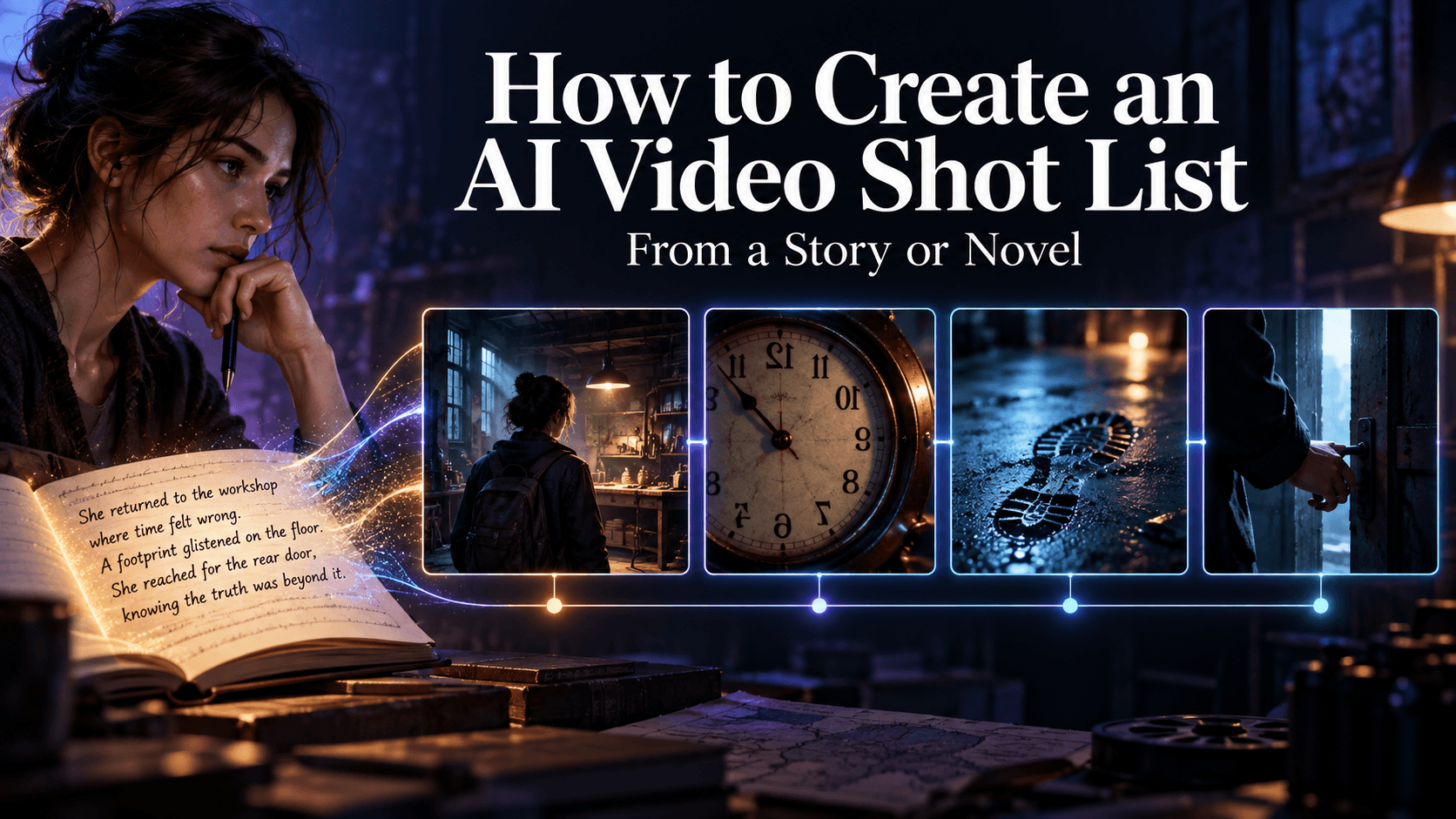
Each beat can become one or more focused shots. Give every shot a visible action and end point. Attach the characters, location, and manuscript references. Add camera and sound direction. Use a guide board where the framing or magical effect needs stronger control.
Do not ask one generation to perform the entire pilot. A close-up of the disappearing name and the protagonist’s reaction will be easier to direct as separate shots.
Generate and review on the same canvas
Generate two or three representative shots before completing the episode. Test a character close-up, a two-character composition, and the magical manuscript effect.
When results return, ElserStudio keeps them as video nodes connected to the project. Check identity, action, dialogue, and continuity. If the prince’s design changes in the two-character shot, adjust that shot without losing the accepted close-up.
The goal is not simply to find the prettiest take. It is to find the take that performs the correct story beat and can join the next clip.
Assemble a real episode, not a demo reel
Connect approved clips to a Composition node and arrange them on the local timeline. Add or refine dialogue, voice, music, and sound effects. Let the audience understand the world rule before the final reversal.
Watch the pilot without explaining the premise. Can a new viewer answer three questions?
- Who is the protagonist?
- What did she try to do?
- What did it cost her?
If the answers are unclear, fix the missing beat in the script or edit. Another spectacular establishing shot will not solve it.
Build episode two from what worked
Reuse the approved World and keep a continuity record. The manuscript has changed. The protagonist no longer remembers the prince’s name. Those states should carry into the next episode.
Over time, the same local canvas can hold the developing story, shared cast, shot videos, and episode compositions. That makes a serialized production easier to understand than a growing collection of unrelated generation histories.
Have an original comic-drama premise? Download ElserStudio and turn it into a small, complete pilot on your desktop.
FAQ
Do I need a complete script before starting?
No. A short outline or pilot scene is enough to test the concept. You should know the protagonist’s goal, the world rule, and the pilot’s ending.
Can I make an illustrated or anime-style comic drama?
Yes. The selected references, visual prompts, guide boards, and generation provider shape the project’s look.
How does ElserStudio help with recurring characters?
Characters can be stored as canonical World assets and reused by multiple scripts and shots. Generated takes still require review.
Can ElserStudio add voices and sound?
Character assets can bind voice profiles, shots can include sound direction, and generated clips can be reviewed and assembled in a composition. Available generation capabilities depend on the configured provider.
How long should the first pilot be?
Long enough to demonstrate the protagonist, rule, and reversal. A 20–60 second proof of concept can reveal more than an unfinished multi-episode plan.
Conclusion
An AI comic drama grows from a repeatable story engine and a repeatable production workflow. ElserStudio keeps both visible: the story becomes a World, the World becomes shots, and the shots become an edited pilot. Start small enough to finish—and interesting enough to make the next episode necessary.