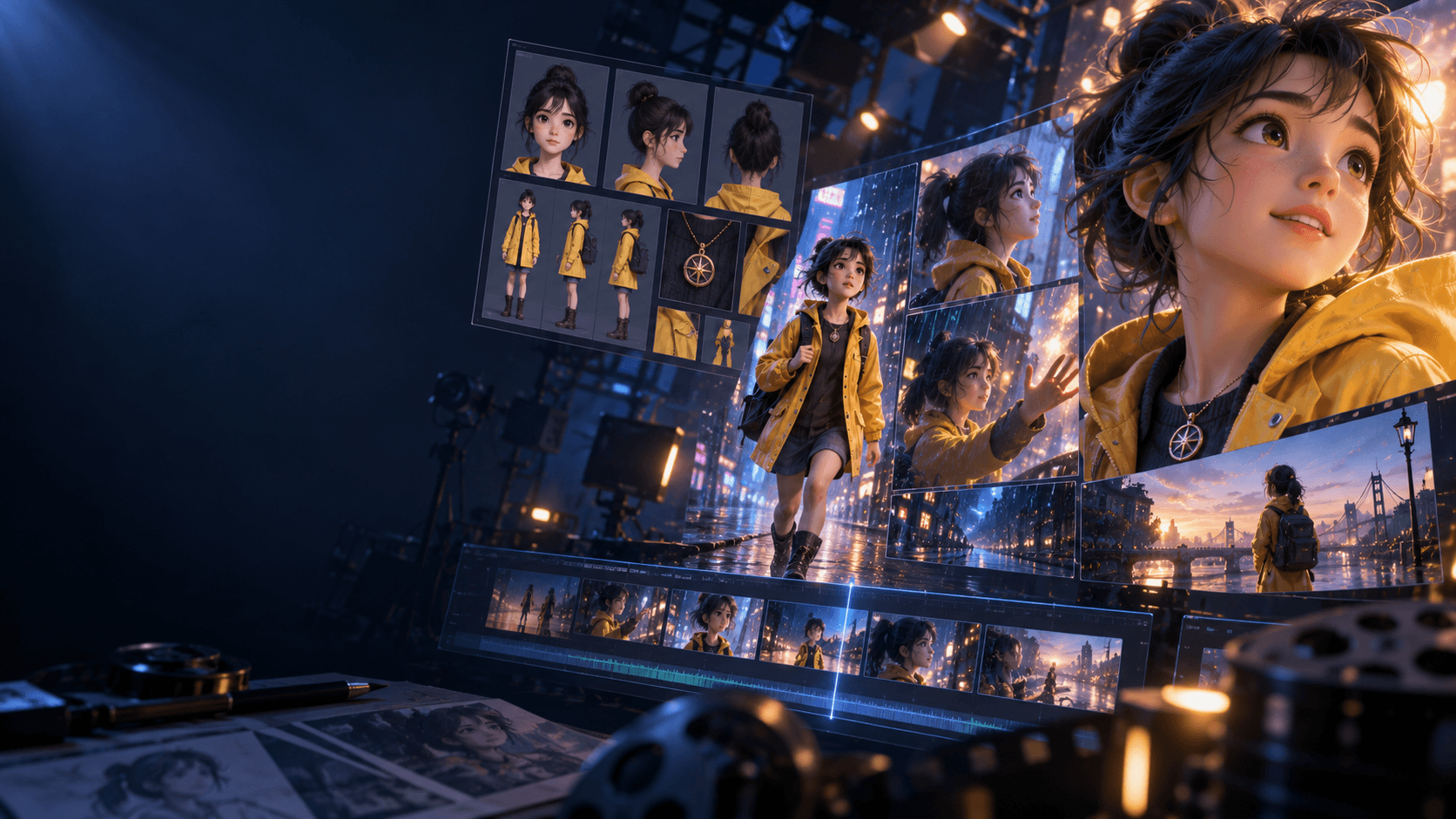
Wie man kostenlos KI-Videos erstellt: Methoden, die wirklich funktionieren
Wenn du kostenlos KI-Videos erstellen möchtest, musst du zunächst verstehen, dass "kostenlos" selten unbegrenzt bedeutet. Es bedeutet in der Regel eine der folgenden drei Optionen: ein kleines kostenloses Kontingent, eine kurze Testversion oder ein Workflow, der aus mehreren Tools mit unterschiedlichen Einschränkungen besteht. Das ist wichtig, weil viele Kreative Zeit damit verschwenden, nach der perfekten kostenlosen Lösung zu suchen, anstatt einen praktikablen Prozess aufzubauen.
Kurze Antwort
Die besten kostenlosen KI-Video-Workflows sind in der Regel:
1. Halten Sie das Projekt kurz
2. Testen Sie zuerst eine visuelle Idee
3. Erzeuge nur die Frames, die du wirklich brauchst
4. Experimentieren Sie mit kostenlosen Tools, anstatt endlos zu ändern
5. Sobald du weißt, was funktioniert, wechsle zu einem stärkeren Workflow
Wofür sich kostenlose Workflows eignen
Kostenlose KI-Videoerstellung eignet sich am besten für:
- Vorschauausschnitt
- Konzeptnachweisszenario
- Stiltest
- Hinweisexperiment
- Kurzvideo-Social-Clipping
Für die folgenden Fälle ist die Wirkung schlechter:
-
Lange, mehrszenige Geschichte
-
Schwerfälliger Überarbeitungszyklus
-
Konsistenz der Charaktere in mehreren Aufnahmen
Schritt 1: Halten Sie den Bereich extrem klein
Wenn dein Projekt kostenlos priorisiert ist, ziele nicht von Anfang an auf einen dreiminütigen Kurzfilm. Sichere dir zuerst eine brauchbare Szene, einen Konzepttest oder einen verfeinerten Ausschnitt. Ein kleiner Umfang macht den kostenlosen Workflow erst realistisch umsetzbar.
Dies bedeutet in der Regel einen der folgenden Fälle:
- Ein 5 bis 15 Sekunden langer Trailer
- Einmalige Konvertierungsaufnahme
- eine Charaktervorstellung
- Ein Umgebungsatmosphären-Fragment
Diese Formate helfen dir zu verstehen, welche Methoden funktionieren, bevor du Zeit in den Aufbau größerer Strukturen investierst.
Schritt 2: Erstellen Sie zuerst ein starkes Bild
Free systems punish waste. That is why it is better to generate one strong source frame than five weak ones. If you already know your direction, you can move into a simple [AI image animator] workflow later instead of gambling all your free tries on random motion.
Der Grund dafür ist einfach: Kostenlose Workflows scheitern oft an Verschwendung, nicht an fehlenden Möglichkeiten. Sobald du nicht mehr nach Quantität strebst, sondern nach qualitativ hochwertigeren Quellbildern, kann das gleiche begrenzte Kontingent eine größere Wirkung entfalten.
Schritt 3: Test- und Produktionsumgebung trennen
Beantworten Sie Fragen mit kostenlosen Tools:
- Welcher Stil sieht am besten aus?
- Welche Kameraeinstellung ergibt eine bessere Bildkomposition?
- Welches Fach lässt sich am einfachsten als Animation umsetzen?
Once you know the answer, then decide whether the free path is still worth it. If the answer is no, it is often smarter to continue the project in a more structured environment like Elser AI.
Schritt 4: Erwarten Sie Einschränkungen der Kontrolle, nicht nur Punkte
Die größte Schwäche kostenloser Video-Workflows ist oft nicht die Rohqualität, sondern die Kontrolle. Exportbeschränkungen, schwächere Einstellungen, weniger Wiederholungsversuche und instabiles Sequenzmanagement können mehr Kopfschmerzen bereiten als das kostenlose Preisschild selbst.
Deshalb wird „kostenlos“ in der Regel am besten als Forschungsphase betrachtet, nicht als endgültige Produktionsphase.
Antworten mit kostenlosen Tools:
- Ist diese visuelle Richtung machbar?
- Ist dieses Thema leicht zu animieren?
- Ist die Lesbarkeit der Szene ausreichend, um spätere Erweiterungen zu ermöglichen?
Falls ja, dann entscheiden Sie, ob das Projekt eine stabilere Umgebung verdient.
Schritt 5: Nur bei Unterbrechung des Prozesses aktualisieren
If you are only experimenting, free tools may be enough. If you need cleaner story flow, better motion control, or a repeatable pipeline, it makes sense to move into a more complete [AI video generator] workflow.
Dinge, die mit "kostenlos" normalerweise nicht gut funktionieren
Kostenlose Workflows haben meist in folgenden Bereichen die größten Schwierigkeiten:
-
Kontinuität der langen Einstellung
-
Wiederholungszeichenkontrolle
-
Hochrevisionsprojekt
- Mehrere Szenen-Erzählungen
- Produktionsreife Verfeinerung
Das macht sie nicht nutzlos. Es bedeutet nur, dass sie besser für die Entdeckung geeignet sind als für die Skalierung.
Häufig gestellte Fragen
Kann ich wirklich kostenlos KI-Videos erstellen?
Ja, aber normalerweise im Rahmen von Testversionen, kostenlosen Guthabensystemen oder Multi-Tool-Setups, nicht in einem vollständig uneingeschränkten kostenlosen Workflow.
Was ist das Einfachste, das man kostenlos herstellen kann?
Kurze Trailer, Konzepttests und einmalige emotionale Szenen sind die realistischsten kostenlosen Projekte.
Wann sollte ich aufhören, den kostenlosen Workflow zu verwenden?
Wenn Kontrolle, Wiederholungsversuche oder Szenarien-Konsistenz wichtiger sind als Kosteneinsparungen.
If you already know your concept and want a stronger production path, move from free experimentation into [Elser AI] and build the next version with a more structured workflow.