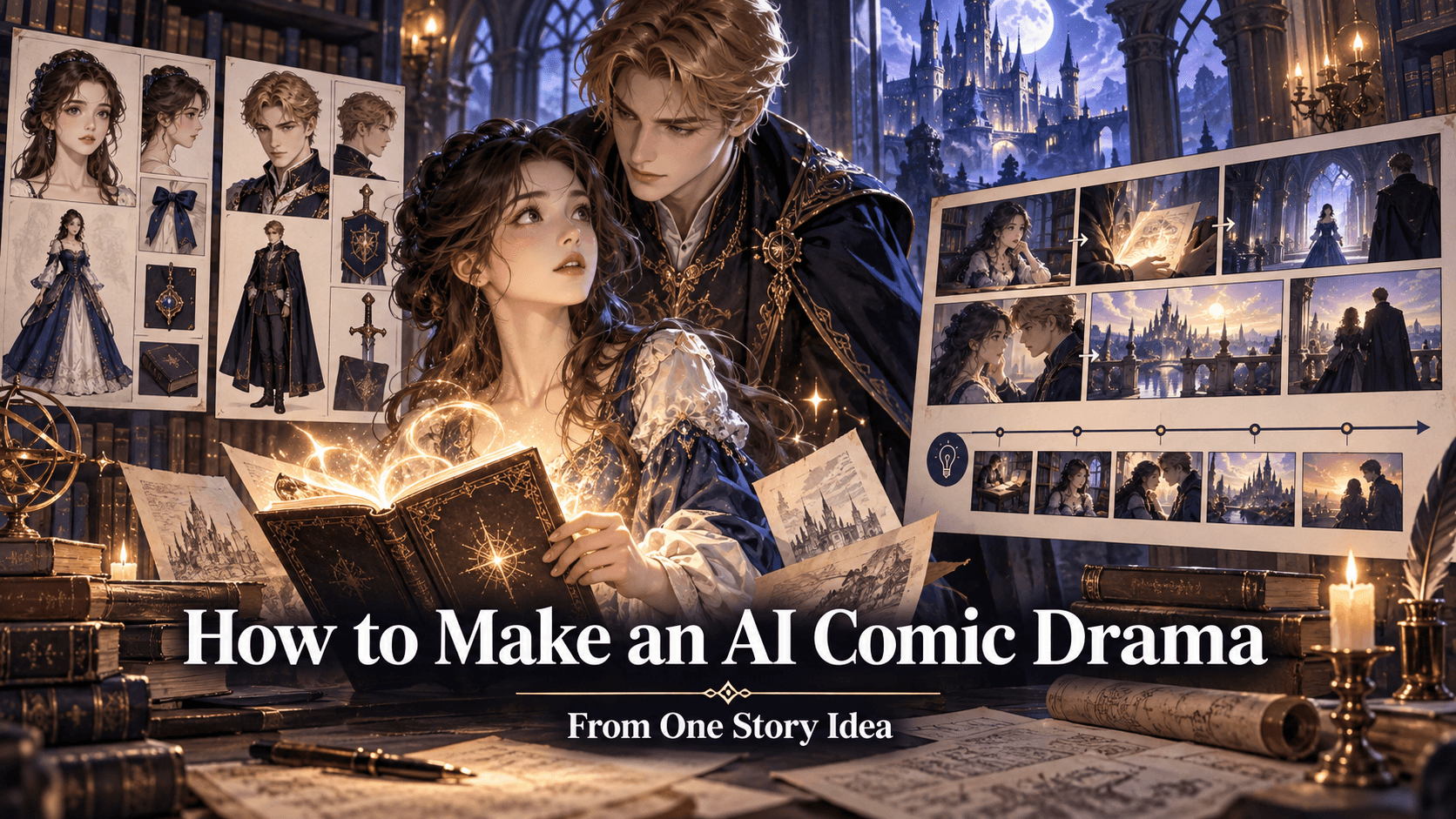
AI Story Generator vs AI Storyboard Generator: Which One Do You Actually Need in 2026?
Let's clear something up right now: an AI Story Generator and an AI Storyboard Generator are not the same thing. I know, the names sound similar. Both have "AI" and "Story" in the title. But if you're shopping for creative tools in 2026 and you think these are interchangeable, you're going to end up very confused—and probably pretty frustrated.
So let's break this down. No jargon, no marketing fluff. Just a straight-up comparison of what each tool does, when you need one versus the other, and why the smartest creators in 2026 are using both.
What Is an AI Story Generator?
An AI Story Generator is exactly what it sounds like: a tool that generates stories. Text. Narrative. Plot. Characters. Dialogue. The actual words that make up your story.
Think of it as your co-writer. You give it a premise, a genre, maybe some character descriptions, and it generates prose. Some AI Story Generators can produce entire novels. Others focus on specific formats like short stories, scripts, or interactive narratives.
The best AI Story Generators in 2026 don't just spit out generic text. They understand narrative structure. They maintain character consistency across chapters. They can generate dialogue that sounds like it's coming from a specific character, not a generic AI voice.
When do you need an AI Story Generator? When you're stuck on writer's block. When you need to generate a first draft quickly. When you're brainstorming plot possibilities and want to see where different choices lead. When you're a novelist, screenwriter, or content creator who needs to produce a lot of narrative text efficiently.
What Is an AI Storyboard Generator?
An AI Storyboard Generator is a different beast entirely. Instead of generating *text*, it generates *visual sequences*—shot-by-shot breakdowns of how a story will look on screen.
Feed an AI Storyboard Generator a script or a concept, and it returns illustrated panels with shot directions, framing, and sometimes even character consistency across scenes. It's the pre-production tool that turns your written story into a visual plan
The top AI storyboard generators in 2026 can generate convincing video concepts, scripts, and AI images almost instantly. They help you visualize scenes before you start filming or animating, saving you massive amounts of time and money in production.
When do you need an AI Storyboard Generator? When you're a filmmaker, animator, or video creator who needs to plan visual sequences. When you're pitching a project and need visual references. When you're coordinating a production team and need everyone on the same page about what each scene looks like.
Here's the thing that most tool comparisons miss: in 2026, the most successful creators aren't choosing between an AI Story Generator and an AI Storyboard Generator. They're using both—and more importantly, they're using platforms that integrate both seamlessly.
Think about the creative workflow for a moment. You start with an idea. You develop that idea into a story. You refine the story into a script or treatment. Then you visualize that script through storyboards. Then you produce the final content.
If your AI Story Generator and your AI Storyboard Generator are separate tools that don't talk to each other, you're constantly switching platforms, re-entering information, and praying that the visual interpretation matches what you wrote.
But when they're integrated? Magic happens.
What to Look For in 2026
The AI story generator market has exploded. The AI storyboard generator market has exploded too. But here's what I'm seeing among the most sophisticated creators in 2026:
They're looking for integration. They want tools that handle the entire creative pipeline, not just one isolated step.
Recent industry developments point in this direction. Adobe's Firefly now includes storyboard creation and video generation from storyboards. Cascade, an AI-native production platform that launched in open beta in June 2026, offers end-to-end production from idea to delivery. These platforms understand that creators don't want to juggle a dozen different tools.
And honestly? The standalone tools are starting to show their limits. Generic AI image tools like Midjourney or DALL-E aren't designed for storyboarding—you get a different person nearly every frame. The character continuity problem is a deal-breaker for serious projects.
How Elser.ai Bridges the Gap
This is where Elser.ai comes in.
Elser.ai isn't just an AI Story Generator. It isn't just an AI Storyboard Generator. It's an integrated creative ecosystem that handles both—plus everything in between.
Here's how it works:
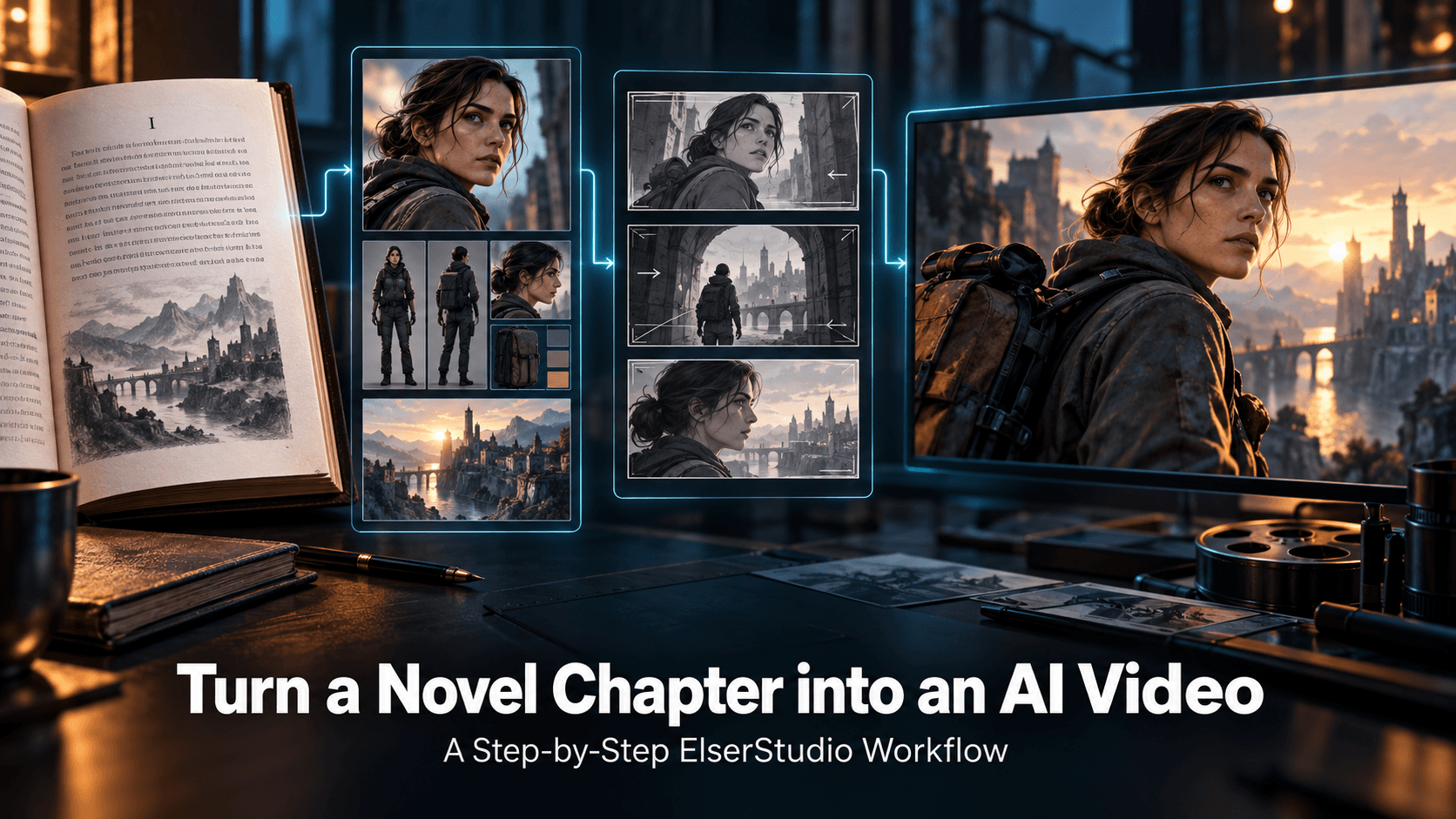
Step 1: Use Elser.ai's Story Architect agent to develop your narrative. Generate plot outlines, character profiles, dialogue, and full scenes. Your story takes shape in text form.
Step 2: The same platform lets you transition seamlessly to visual planning. Your story's scenes become the foundation for storyboards. Characters you've already defined maintain visual consistency across every panel.
Step 3: Everything stays connected. When you refine your story, your storyboards update automatically. When you adjust a character's description, their visual representation evolves accordingly.
The result? No more switching between tools. No more re-entering the same information five times. No more praying that your storyboard generator actually understood what you wrote.
The Bottom Line
Here's my honest take: if you're a writer who only needs text, an AI Story Generator might be enough. If you're a filmmaker who only needs visuals, an AI Storyboard Generator might be enough.
But if you're a creator—someone who builds worlds, develops characters, and tells stories across multiple formats—you need a platform that does both. You need integration. You need consistency. You need a system where your story and your visuals are two sides of the same creative coin.
That's what Elser.ai delivers.
The industry is moving toward integrated creative platforms. The standalone tools are becoming obsolete. The question isn't whether you should use an AI Story Generator or an AI Storyboard Generator—it's whether you're ready to move beyond both and into the future of integrated creative AI.
Ready to see what integrated storytelling looks like? Visit Elser.ai and start your free trial today. Your story (and your storyboards) will thank you.