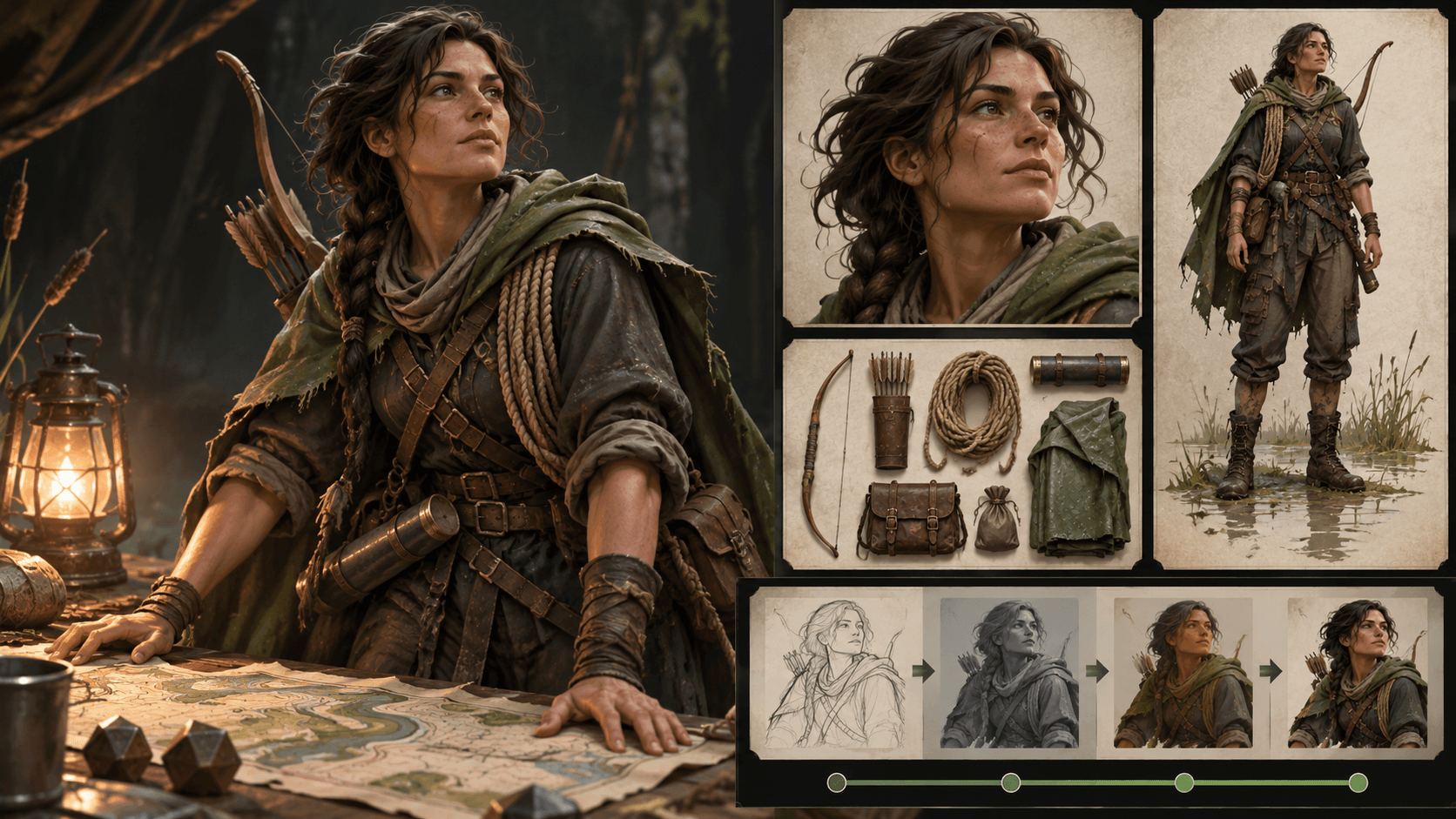
How to Create a Pokémon Trainer OC and Matching Partner Concept
To create a Pokémon Trainer OC, define the trainer’s region, everyday role, goal, travel habits, outfit, and relationship with a partner Pokémon. Choose the partner for story and behavior—not because it is simply powerful or popular. The trainer and partner should look like two individuals who have learned to work together.
Elser AI OC Maker can help visualize an original trainer-like fan character. It should not be used to reproduce official character art, copy an existing Trainer, or imply that Elser AI is an official Pokémon product.
Unofficial fan-use notice: Elser AI is not affiliated with or endorsed by The Pokémon Company, Nintendo, Game Freak, or their partners. Pokémon and related characters and marks belong to their respective owners. Check current fan-content and commercial-use rules before publication.
Give the Trainer a life beyond battling
A Trainer becomes memorable when they have work, responsibilities, preferences, and relationships outside a list of Pokémon. They might map safe mountain routes, run a small clinic, document urban habitats, repair bicycles, cook for traveling groups, or study performance traditions.
Write one primary task and one personal goal. Then identify how Pokémon companionship helps, complicates, or changes that task. “Wants to be Champion” can exist, but it needs present-day choices to become a story.
Anchor the design in a region and activity
Decide whether the OC belongs in an official-region fan setting, an alternate universe, or an entirely original creature-training world. Research climate, travel, architecture, and known institutions if using an established region. Do not invent facts and present them as canon.
The outfit should support activity. A field researcher needs weather protection, specimen or note storage, and safe movement. A performer needs stage readability and costume change logic. A courier needs weight distribution and quick access.
Use OC Outfit Design Guide to separate functional clothing from personal modification. Avoid copying the exact silhouette and palette of an official Trainer.
Choose a partner through relationship logic
Ask why these two stay together. Their relationship may begin through rescue, shared work, family history, chance, rivalry, or mutual need. The partner’s abilities can support the Trainer’s life, but personality contrast often creates a stronger story.
A cautious night courier may work with an energetic partner whose light helps navigation but whose curiosity causes delays. A confident performer may rely on a shy partner whose precise timing becomes the act’s strength. Neither needs to be the most powerful possible choice.
Verify official species traits and capabilities using current official sources. Do not invent moves, evolution requirements, or game mechanics and present them as factual.
Create visual links without matching costumes
Trainer and partner can share a motif through color proportion, shape, practical equipment, or a repeated object. Avoid dressing the partner as a miniature copy unless the story supports it.
Subtle links include:
- a safety color repeated on one bag clasp and one partner accessory;
- compatible rain protection designed for their different bodies;
- a circular navigation motif used on a map case and tag;
- complementary silhouettes that create a clear pair at thumbnail size.
The partner remains a distinct creature, not a fashion accessory. Design how the pair moves and communicates.
Plan the Trainer’s carrying system
Travel-focused characters need believable storage. Decide where capture devices, medicine, food, water, map, communication tools, and role-specific equipment are carried. Keep hands free for the actions the character performs most often.
Do not display every inventory item. Choose the two or three objects that communicate the Trainer’s current role. Image generators can merge bags, straps, hands, and small spheres, so inspect the result carefully.
Write a focused Trainer OC prompt
Because the goal is an original fan character, describe the person without requesting an official artist’s style:
Original adult traveling creature-care volunteer; compact practical silhouette, sun-protective cropped jacket over breathable field layers, reinforced walking shorts, weathered trail shoes; soft cream and moss palette with one coral emergency accent; cross-body treatment pouch and foldable water bowl; attentive kneeling pose, looking toward an off-frame small companion; clean full-body character concept, no logos, text, official characters, or copied costume.
Use Elser AI OC Maker to establish the Trainer first. If you create a partner image, keep it separate so anatomy and scale can be reviewed. Composite the pair later rather than accepting merged limbs or unclear interaction.
Write a relationship sheet for the pair
Record:
- how they met;
- why they remain together;
- one routine they perform well;
- one recurring misunderstanding;
- how each responds to stress;
- signals, gestures, or sounds used to communicate;
- what each wants that the other cannot simply provide;
- how the relationship changes during the story.
Build a team only after the lead relationship works
If the OC has a full team, assign each member a relationship and narrative function rather than selecting six favorites without context. Consider care needs, travel constraints, conflicting temperaments, and how often each appears.
The visual design of the Trainer should not attempt to reference every team member through colors and symbols. Preserve a clean focal hierarchy. A profile can list the team; the main portrait should communicate the Trainer.
Test the pair in ordinary and stressful scenes
Design credibility comes from interaction, not a lineup alone. Write three short scenes: preparing food or equipment, solving a travel problem, and disagreeing under pressure. Note who initiates action, how signals work, and what each misunderstands.
Then create simple thumbnails. Keep the partner’s official scale and anatomy in mind, and do not force a humanlike pose onto every species. Check whether the Trainer’s bag, clothing, and movement still work when caring for or traveling with the partner.
Ordinary scenes also prevent the relationship from becoming battle-only. A companion with environmental or care needs changes routes, schedules, and equipment. Those consequences give the Trainer more original visual evidence than matching colors alone.
Maintain a canon and source checklist
Create a small table for region, time period, species, known behavior, scale, abilities, and terminology. Link each factual element to a current official source and place your inventions in a separate column. This makes it easier to update the fan profile when games or official materials change.
Do not use fan wikis, search snippets, or generated text as the sole authority for important mechanics. They can help locate a question, but confirm it against official game information where possible. If sources disagree or the setting leaves something unspecified, write the idea as your interpretation rather than a fact.
The checklist also prevents visual errors: a partner’s size, anatomy, and movement should not change merely to fit a preferred composition. Adjust the framing and Trainer pose instead.
Check originality and fan-content boundaries
Do not claim the OC, region, partner form, or story is official. Clearly label fan-made concepts. Commercial use requires separate rights review; creating a new Trainer does not grant rights to Pokémon species, names, marks, or world elements.
Create the first pair concept
Write the Trainer’s role, region, movement, outfit function, and one relationship contrast. Explore the Trainer in Elser AI OC Maker, then document the partner separately using verified official information and your own relationship sheet.
Frequently asked questions
Should I choose the partner Pokémon first or the Trainer first?
Either can inspire the project, but develop the relationship together. The final choice should support story, behavior, and setting rather than popularity alone.
Can my Trainer OC have a legendary Pokémon?
Fan fiction can explore many premises, but extraordinary partnerships need narrative consequences and clear fan-made labeling. Avoid using rarity as a substitute for character development.
How do I make the Trainer look original?
Design from work, environment, movement, resources, and personality. Compare the complete silhouette and costume against official characters, not only individual colors.
Can I sell art of my Pokémon Trainer OC?
The OC may contain protected franchise elements. Review current rights-holder policies and applicable law before commercial use; generating original clothing does not grant rights to the Pokémon brand or creatures.