OC Maker vs OC Generator: What’s the Difference?
“OC maker” and “OC generator” are often used interchangeably, but users may expect different levels of control. Maker suggests construction and customization; generator suggests an output created from inputs. Modern AI products frequently do both.
Four Common Tool Types
Part-based avatar maker
You select fixed hair, eyes, clothing, and accessories. It offers reliable repeatability but limited combinations.
Random character generator
It produces names, traits, classes, powers, or prompts. Useful for ideation, but may not create art.
AI image generator
It converts free-form text into images. Range is broad, while repeated identity and local edits may be difficult.
Structured AI OC maker
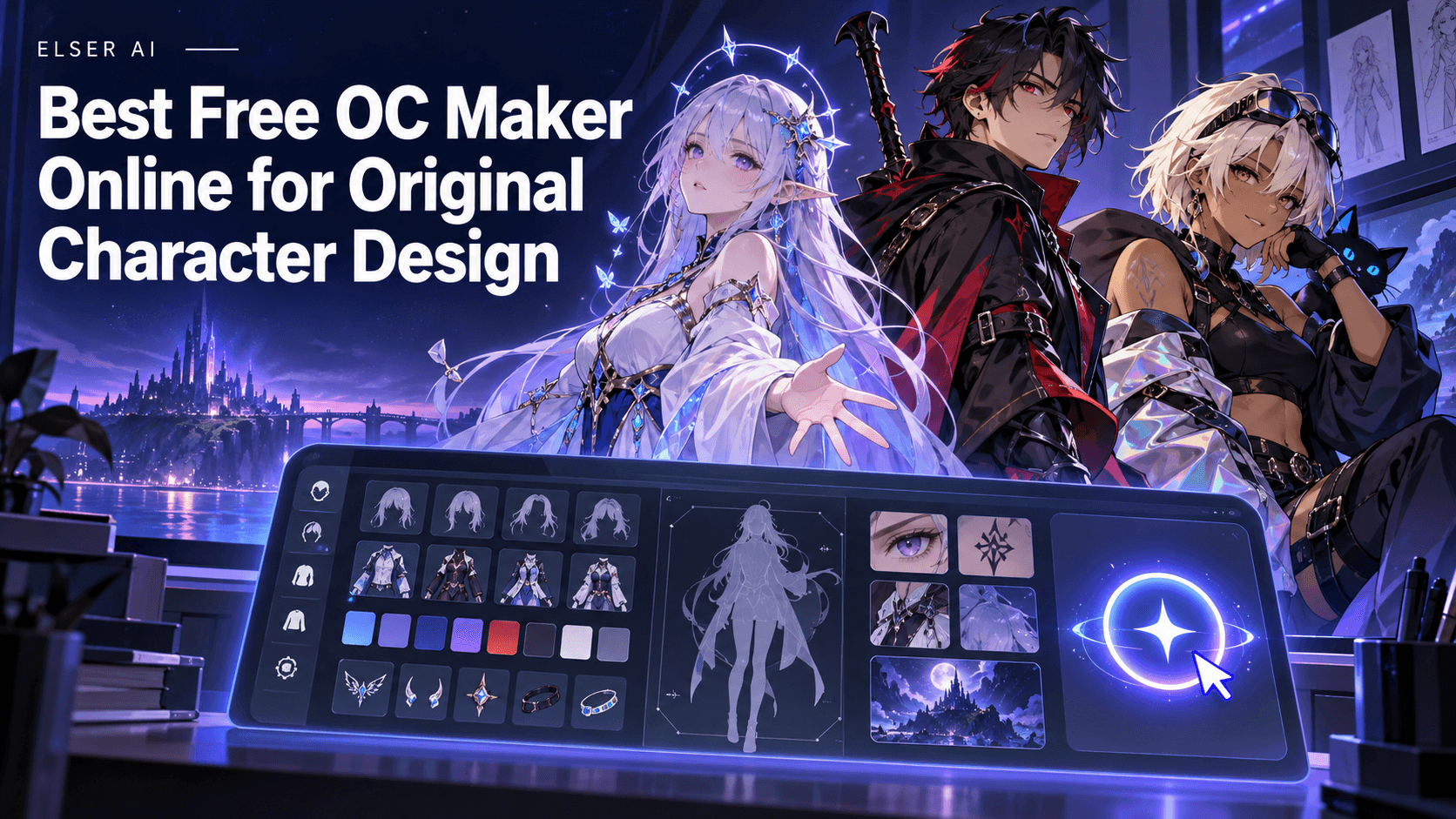
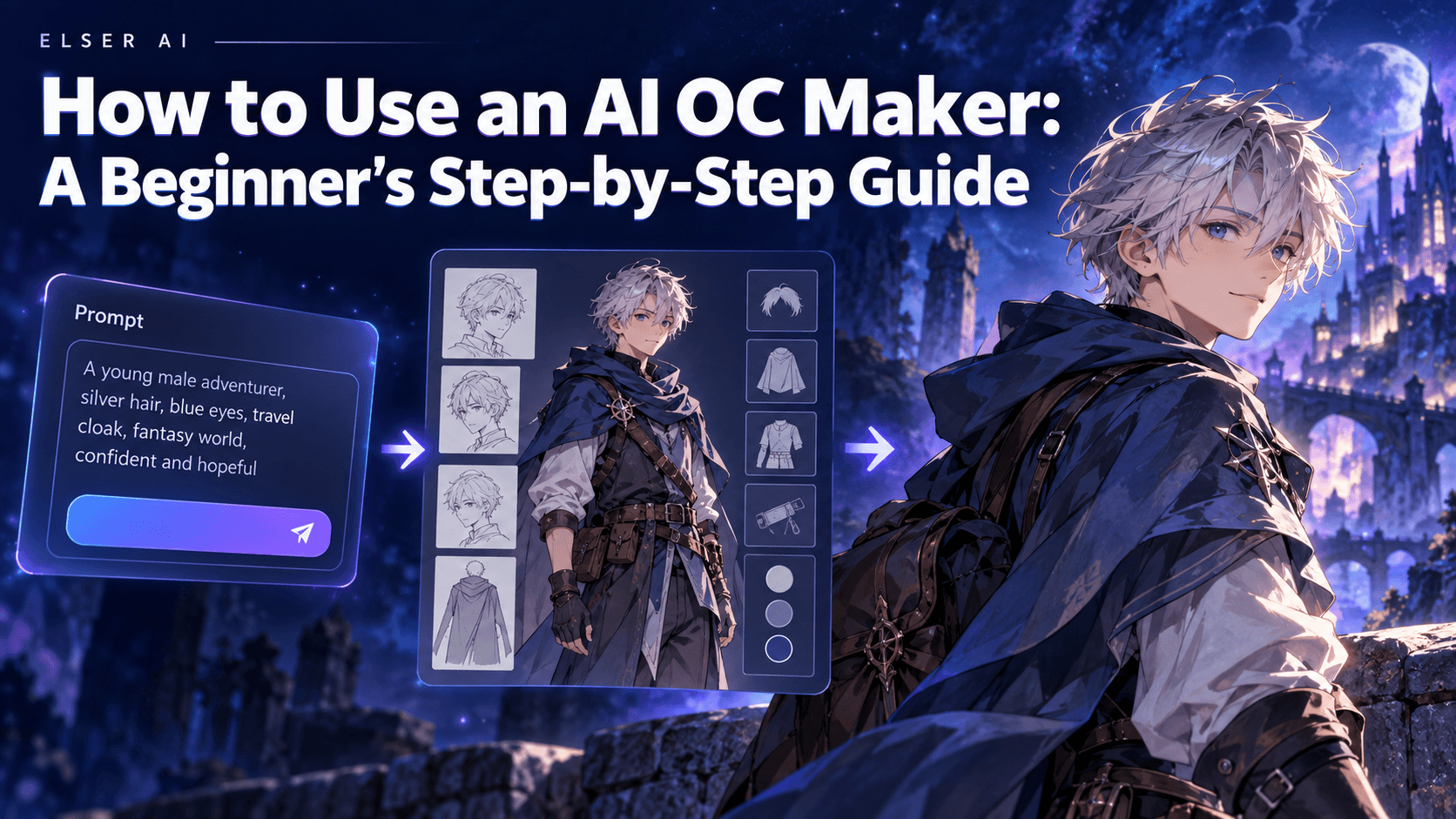
It combines prompting, attribute controls, references, and format settings. Elser’s OC Maker pages fit this hybrid pattern: a prompt, visual tags, optional upload, and aspect-ratio selection.
Comparison
| Need | Fixed maker | Random generator | AI generator | Structured AI maker | | Exact part repeatability | Strong | N/A | Variable | Variable | | Visual originality | Limited | Concept only | Broad | Broad with guidance | | Beginner control | Strong | Strong | Moderate | Stronger when tags help | | Unusual anatomy/outfits | Limited | Descriptive | Broad | Broad | | Consistency across scenes | Fixed within assets | N/A | Must be tested | Must be tested |
Which Should You Choose?
Use a fixed maker for quick avatars and exact preset reuse. Use a random generator when you need inspiration. Use a general image generator for open visual exploration. Use a structured AI maker when you want prompt freedom with explicit character attributes and references.
Compare the Workflows on One Brief
Marketing examples are difficult to compare because every product showcases a different character. Instead, write one original brief and run it through each type of tool:
Adult railway botanist, broad pear-shaped silhouette, oval face, shaved head,
mustard field coat with dark green reinforced shoulders, folding plant press worn
like a backpack, muddy flat-soled boots, neutral full-body pose, plain background.
In a fixed maker, record how closely available parts represent the silhouette and equipment. In a random generator, evaluate whether the written traits add useful ideas or generic contradictions. In an AI generator, count how many attempts preserve age, body, coat construction, and the plant press. In a structured maker, note whether tags accelerate the setup or conflict with the written brief.
Measure time to the first accepted design and time to a corrected second view. The second number is often more revealing. A tool can create a compelling portrait quickly but become expensive when the same character must appear from the side.
Maker and Generator Can Be One Pipeline
The categories do not have to compete. A creator might use a random generator for occupation and personality prompts, a structured AI OC maker for concept art, and a fixed sprite builder for a game-ready avatar. What matters is preserving a clear source of truth as the character moves between tools.
Keep a small transfer package:
- approved front and side reference;
- identity anchors;
- palette values;
- outfit and prop notes;
- allowed variants;
- file and usage-rights information.
Without that package, each tool silently redesigns the character.
Questions to Ask Before Signing Up
Can you upload references? Which formats and sizes are accepted? Can you choose framing or ratio? Are prior results saved? Can one attribute be changed without restarting? What does the free tier actually include today? What resolution is exported? How are uploads handled? What rights apply to input and output?
Answers can change, so confirm them on the live product rather than relying on an old comparison table.
Test the Output, Not the Name
Create one character in a portrait, full body, profile, and action setup. Check age, face, silhouette, palette, clothing, and prop. Ask whether you can correct one detail, export the required resolution, and understand usage terms.
FAQ
Is an OC generator random?
Not always. Many current products generate from detailed prompts and references.
Is an OC maker better for beginners?
Structured options can reduce blank-page difficulty, but the best interface depends on whether you want fixed parts or generative freedom.
Which is better for consistent characters?
Fixed assets are inherently repeatable. AI workflows require references, anchors, controlled changes, and review.
Conclusion
The distinction is about workflow more than terminology. Choose the system that matches your destination, then test control and reuse with a real character—not a marketing label.