What Is an OC Maker? How to Create Your Own Original Character
An OC maker is a tool for designing an original character—often called an OC—for art, fiction, roleplay, games, comics, or personal creative projects. Traditional makers assemble preset parts. AI OC makers can interpret written descriptions and reference images, making a wider range of bodies, outfits, materials, moods, and visual styles possible.
The output is still a design proposal. Originality comes from your decisions, not from pressing Generate.
What an OC Maker Can Define
A useful design covers more than hair color:
- silhouette and body proportions;
- age presentation and facial structure;
- hair shape, eyes, skin, and distinguishing marks;
- clothing construction and material;
- accessories and signature objects;
- color hierarchy;
- expression, posture, and role;
- visual style and intended use.
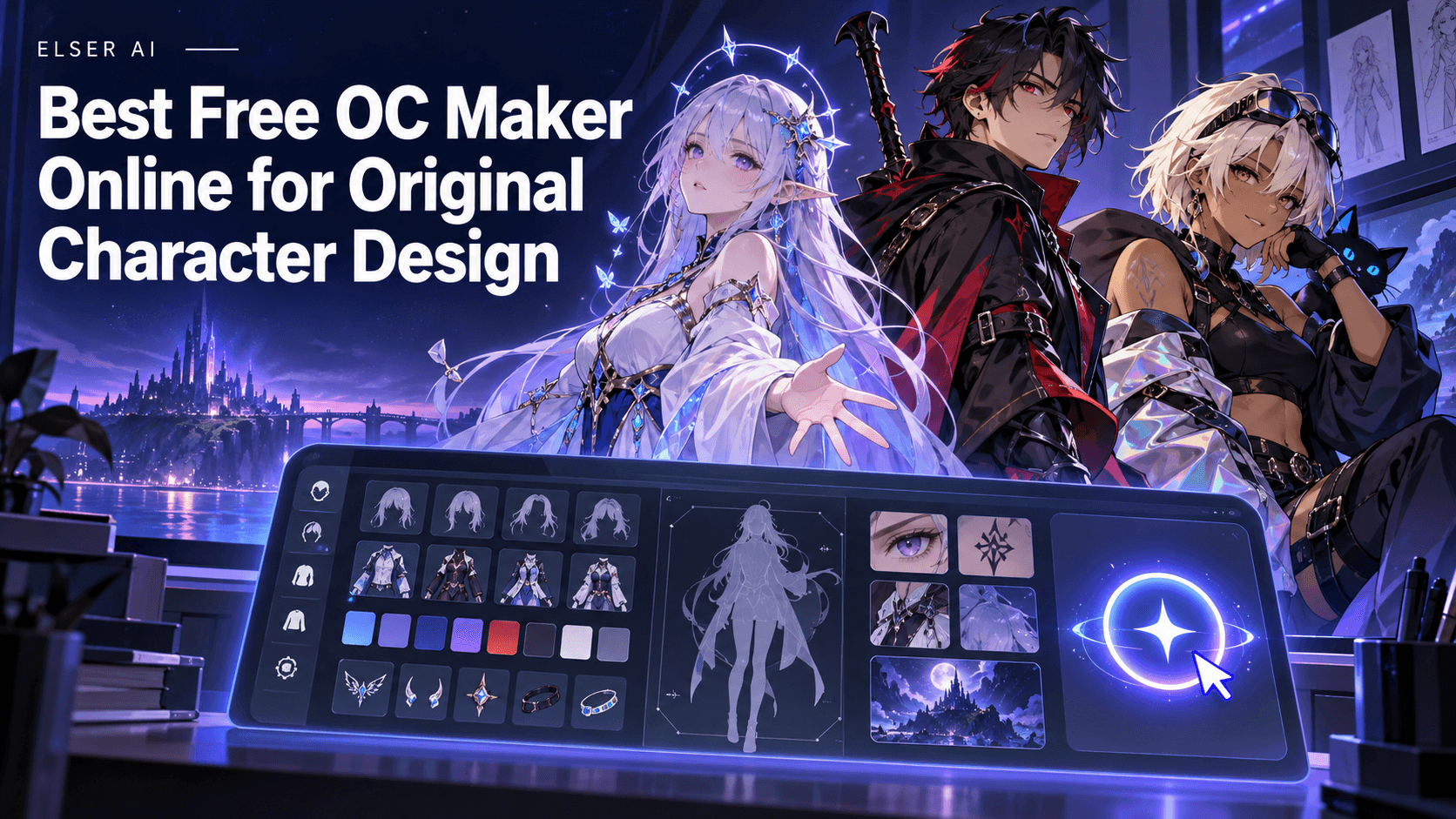
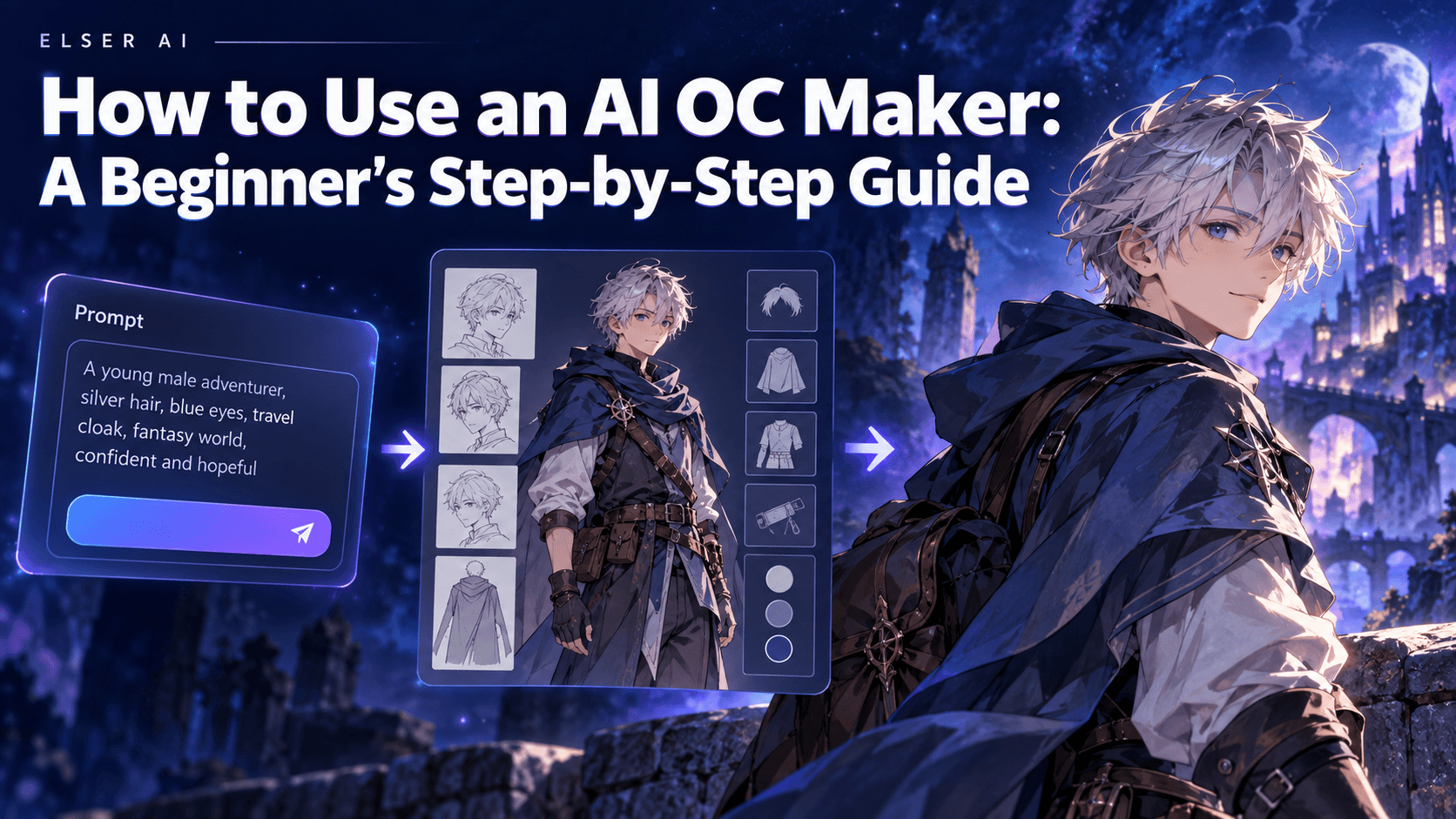
Elser’s OC Maker interface combines a written prompt with selectable tags such as gender, style, age, body, hair, eyes, face, skin, clothing, material, and accessories. It also accepts an optional reference image and aspect-ratio choice. Those controls are helpful when a user knows some visual decisions but cannot describe everything fluently.
AI OC Maker vs Avatar Maker
An avatar maker uses a fixed library of parts. Results are predictable and repeatable, but limited to available assets. An AI maker has greater range but can vary details between generations. Neither is universally better: choose fixed parts for exact repeatability and text/reference generation for exploratory design.
Start with a Character Engine
Before visual prompting, define:
Role: municipal storm inspector
Want: earn permission to reopen an abandoned sky port
Contradiction: fearless in emergencies, anxious during ordinary conversation
Limitation: can hear weather changes but cannot identify their direction
Signature object: brass tuning fork used to test wind pressure
Now visual details can express a person. A cropped weatherproof coat, directional stitching, ear protection, worn boots, and a tuning-fork case all have reasons to exist.
Write a Visual Brief
Separate immutable anchors from flexible styling:
Adult woman, short sturdy silhouette, broad oval face, tightly curled dark hair
in a high puff, pale gray eyes, moss-green utility coat with transparent pockets,
yellow gloves clipped at the belt, brass tuning-fork case. Neutral full-body design,
front three-quarter view, readable construction, simple studio background.
Use tags to reinforce relevant choices. Avoid selecting every option; conflicting instructions reduce control.
Generate, Compare, and Refine
Compare several versions on silhouette, face, age, outfit logic, color separation, and match to role. Choose the most usable design, not the most dramatic lighting.
Revise one group of variables at a time. If the coat is wrong, protect face, hair, body, pose, and palette while changing coat length and material. Save approved images and prompts.
Test Whether the Character Is Reusable
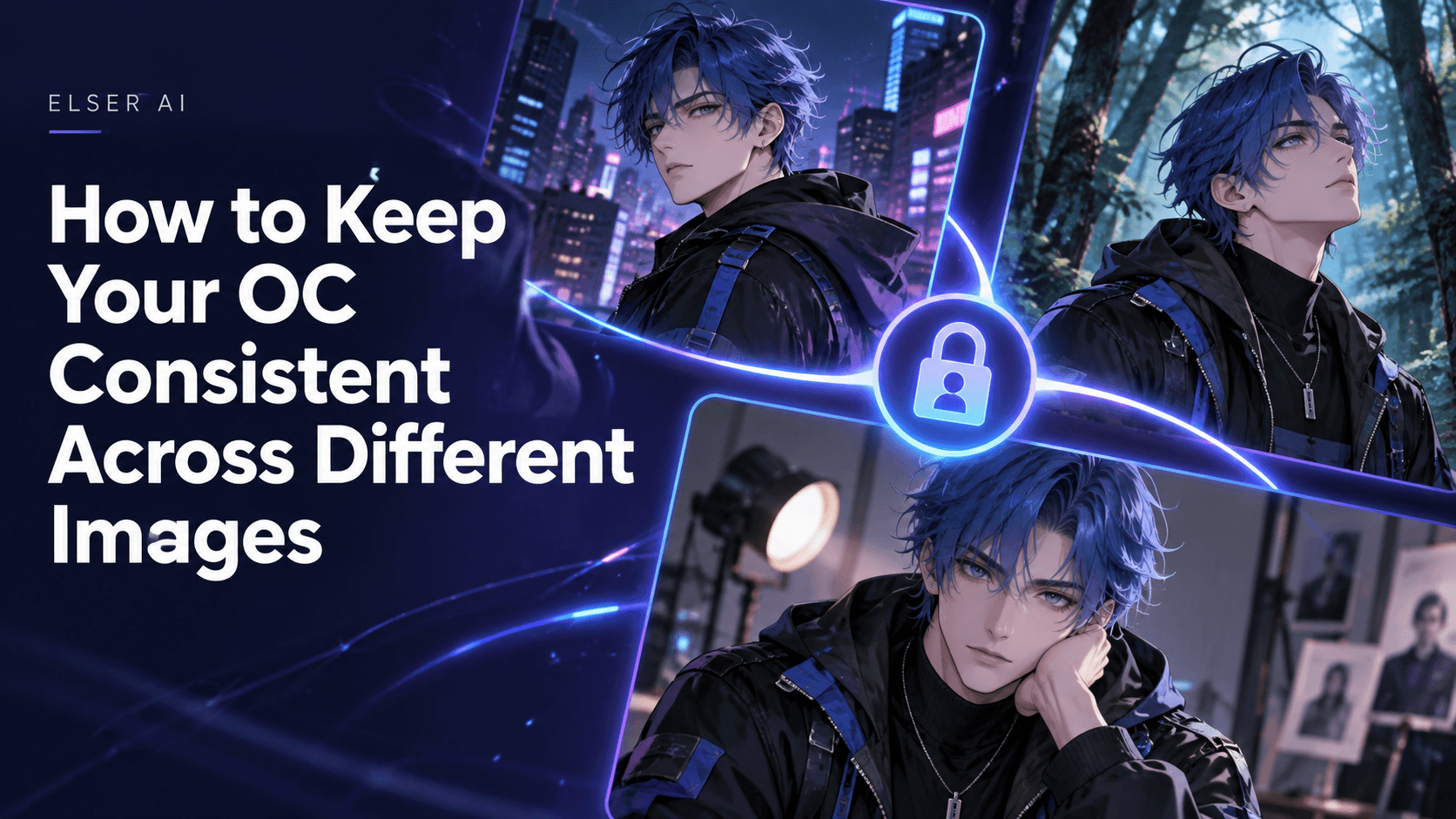
Create a neutral portrait, full body, profile, three expressions, work pose, and simplified distant view. AI can drift, so do not promise perfect consistency. A reference sheet, repeated identity anchors, controlled changes, and human review improve reliability.
Originality and Rights
Do not ask for a near-copy of an existing character or a living artist’s signature style. Describe shapes, medium, palette, line, lighting, and genre instead. For commercial projects, check current platform terms, input rights, local law, and accidental similarity. Fan-created characters inside protected franchises may carry additional restrictions.
FAQ
What does OC mean?
OC means original character: a character created by a fan, writer, artist, player, or other creator rather than an existing official character.
Can I make an OC without drawing?
Yes. Prompt-based and reference-based tools can create visual drafts, but selection, direction, correction, and documentation remain creative work.
What makes an OC memorable?
A readable silhouette, motivated design details, a contradiction, a limitation, and relationships that place the character under pressure.
Can an OC maker keep the character identical?
Generative tools may vary details. Use a canonical reference, consistent anchors, limited edits, and careful review.
Conclusion
An OC maker turns character decisions into visual possibilities. Begin with role and contradiction, translate them into a disciplined brief, compare outputs, and build a reference set. The goal is not merely an attractive portrait; it is a character you understand and can keep developing.