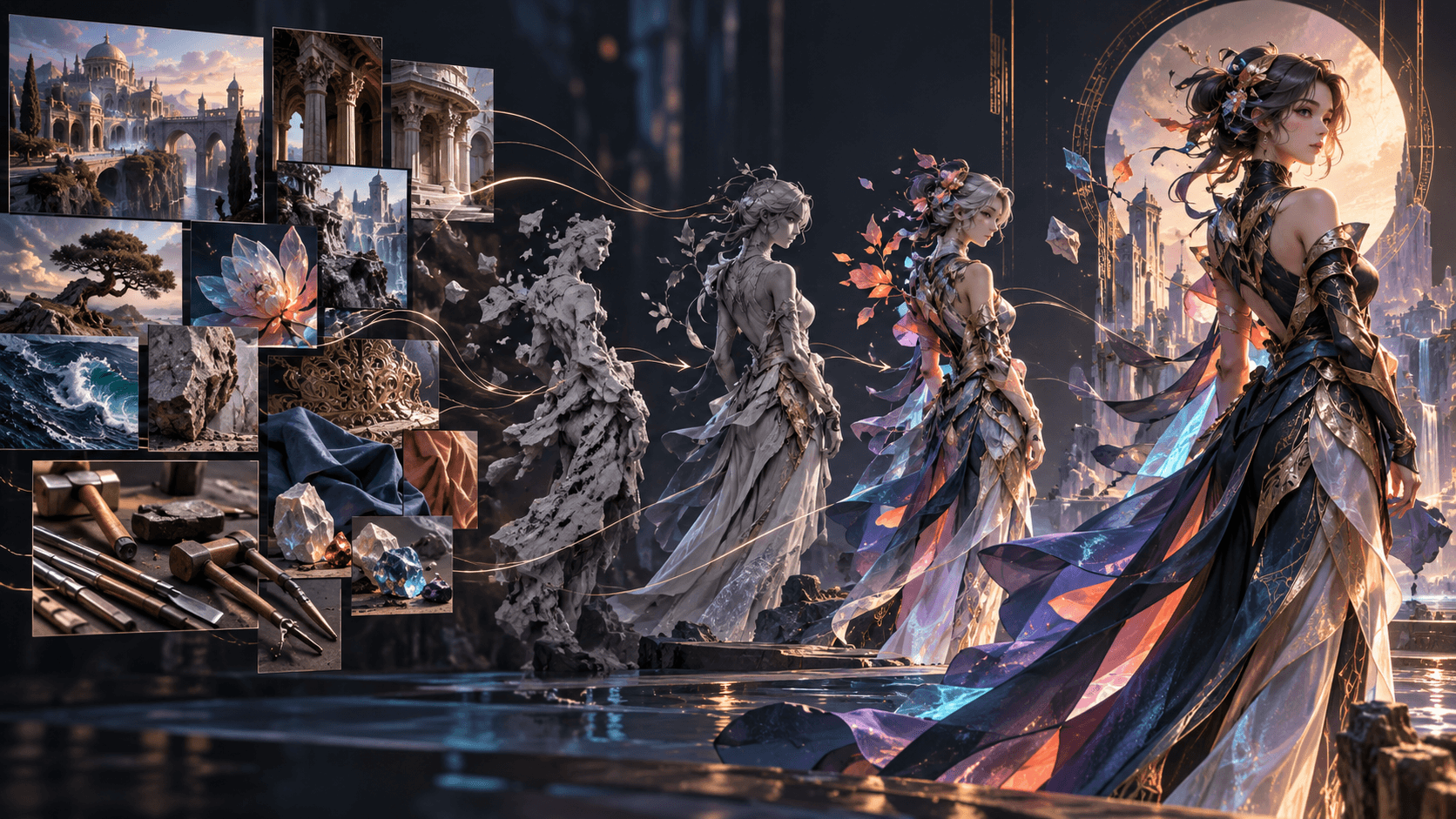
AI OC Generator with Consistent Characters: No More Face Drift in 2026
I almost gave up on AI for comics in 2024. I had a great story, a protagonist I loved, and a shiny new Midjourney subscription. I generated page one — perfect. Page two — different eye shape, but okay, maybe the angle. Page three — she looked like her own evil twin. By page four, my protagonist had changed ethnicity, hair color, and age. I deleted everything and went back to drawing stick figures.
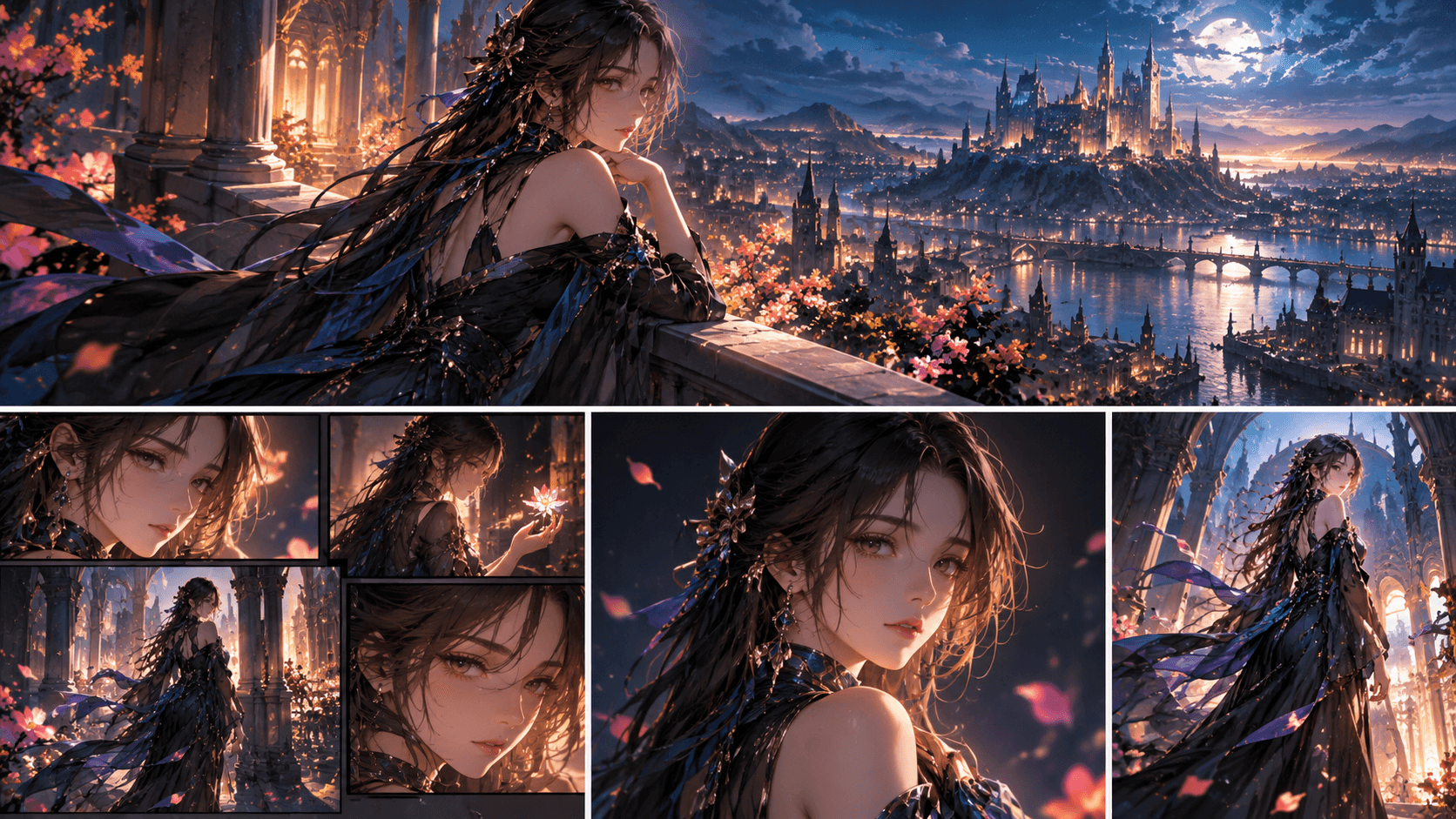
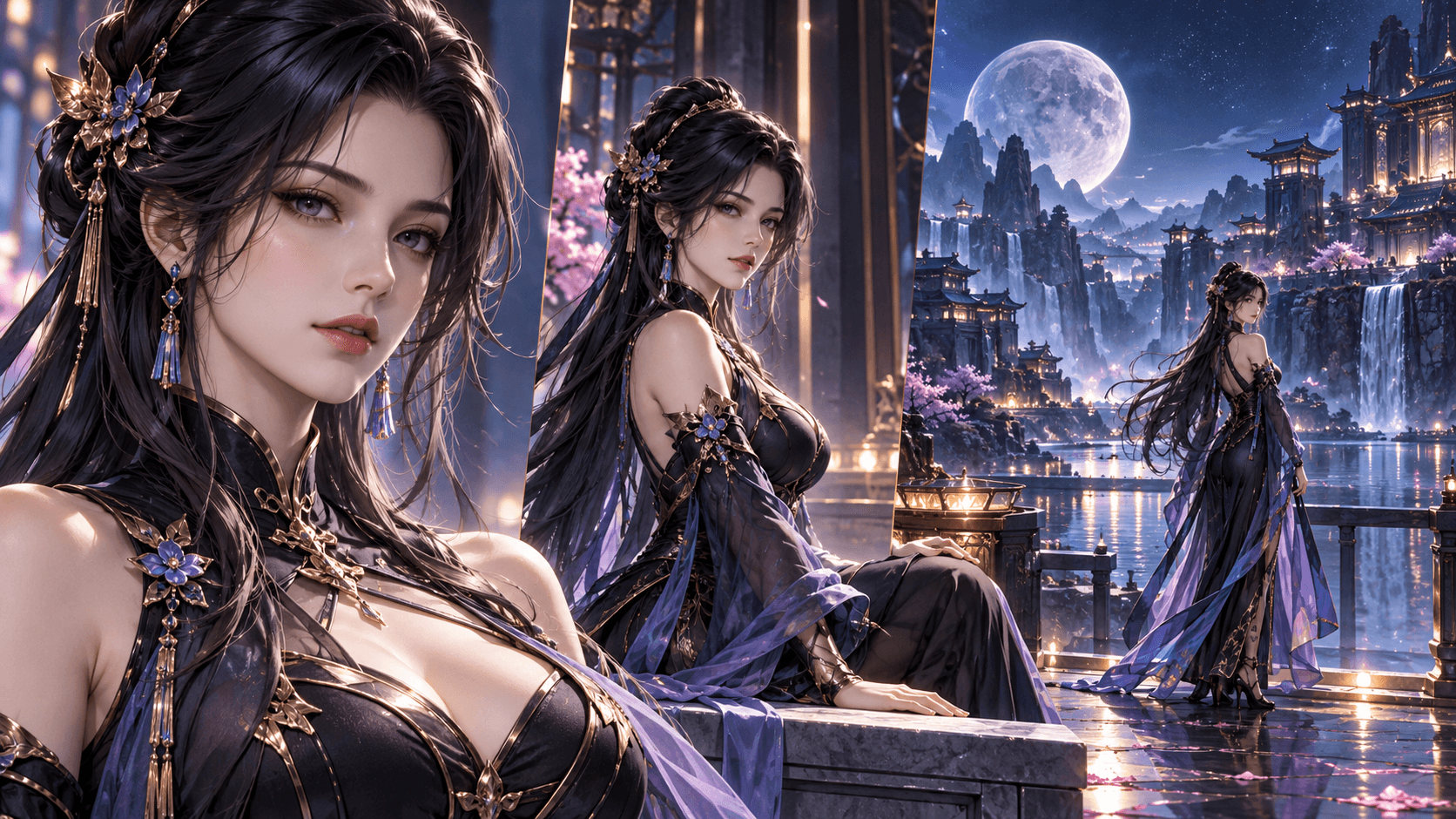
Fast forward to 2026, and I‘ve just finished a 60-page manga chapter using AI. How? I found an AI OC generator with consistent characters that actually works. No face drift. No identity crises. My protagonist looks the same on page 60 as she did on page 1.
Today, I‘m going to show you exactly how this technology works, why most tools still fail, and the specific workflow I use to lock characters across hundreds of generations. If you‘ve ever tried to make a webcomic, an animation, or even just a consistent set of character references, this guide will save you months of frustration.
The Science of Face Drift (Why AI Forgets Your OC)
To understand why consistency is hard, you need to understand how AI image generation works under the hood. I‘ll keep it non-technical, but this matters.
Most AI models (including Midjourney, Stable Diffusion, and DALL-E) are denoising diffusion models. They start with random noise and gradually refine it into an image based on your prompt. Every time you hit generate, the AI starts from scratch. It has no memory of previous images unless you explicitly feed them in as references.
Even when you feed references, the AI doesn‘t “know” that the left eye should be 2mm higher than the right. It just sees patterns and approximates. That‘s why you get drift — the AI approximates differently each time.
The breakthrough came in late 2025 with character embedding layers. Instead of describing your OC every time (“scar on left cheek, green eyes, freckles”), you train a tiny model (an “embedding”) that captures the specific geometry of your character‘s face. This embedding acts like a barcode — a unique identifier that the AI can inject into any generation.
An AI OC generator with consistent characters isn‘t just a prompt box. It‘s a system that lets you save, store, and reuse these embeddings across all your projects.
The Gold Standard: How Elser AI Solves Consistency
After testing six tools claiming “consistent characters,” only two passed my test. Elser AI was the clear winner. Here‘s why.
Feature 1: One-Click Character Registration
After generating a base portrait you like, you click “Register Character.” The system analyzes 47 different facial landmarks — not just pixel colors but geometric relationships. The distance between pupils relative to face width. The angle of the eyebrow arch. The specific curve of the Cupid‘s bow. It creates a mathematical fingerprint.
I‘ve registered over 30 characters in Elser. Even characters with unusual features (a cyborg eye, a missing ear, a facial tattoo) are captured accurately.
Feature 2: Pose-Aware Consistency
Here‘s where Elser beats everyone. Most consistency tools fail when the head rotates because the embedding is trained on front-facing images. Elser uses a 3D-aware embedding that understands how facial features move in 3D space.
I tested this brutally. I registered a character from a straight-on portrait. Then I generated the same character:
- Looking 45 degrees left
- Looking 90 degrees right (profile)
- Looking up at the sky
- Looking down at their feet
- Upside down (hanging from a rope)
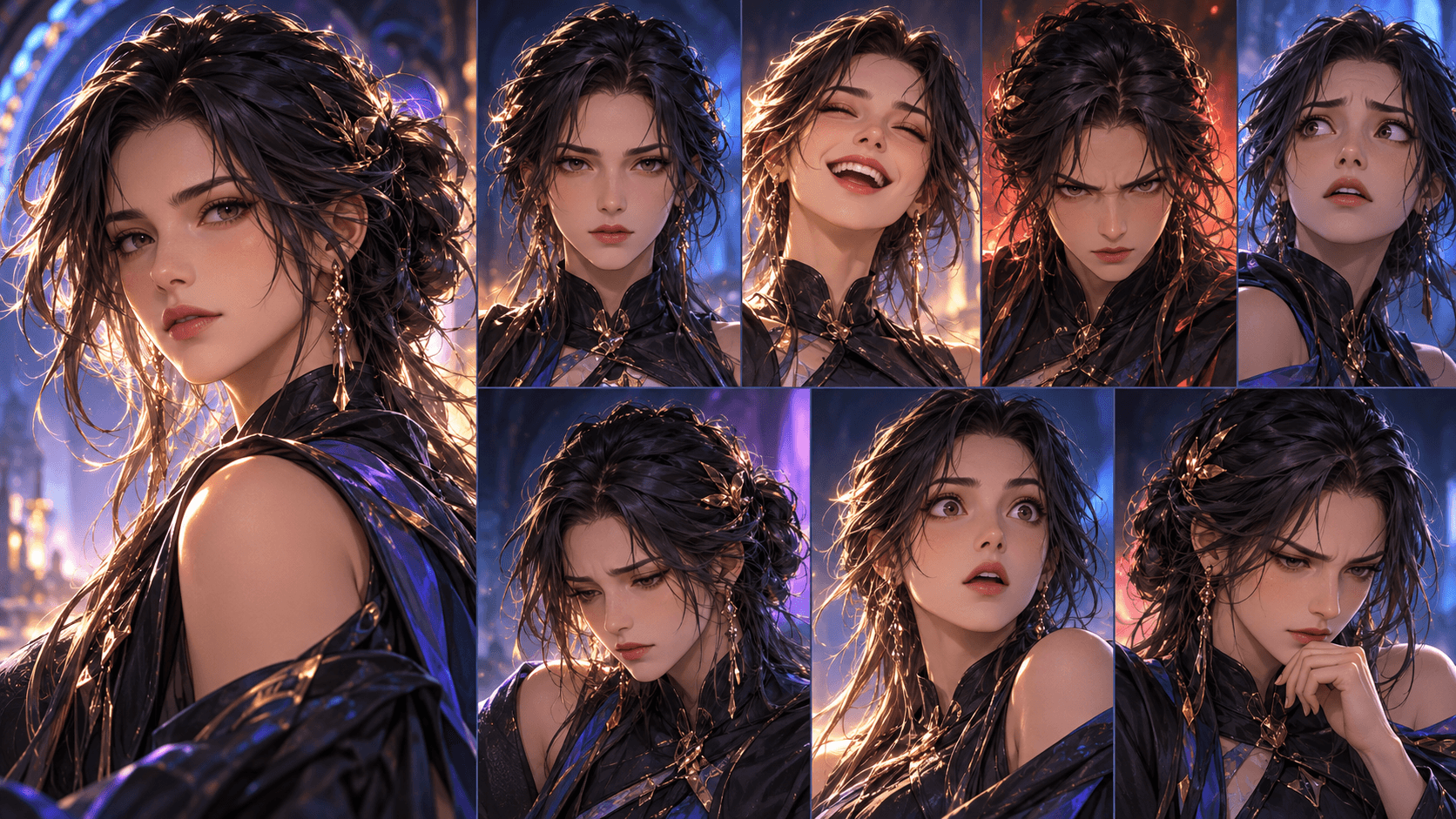
In every single generation, the nose shape, eye spacing, and distinctive mole under the left eye remained correct. The only differences were the natural changes of perspective.
Feature 3: Outfit Isolation
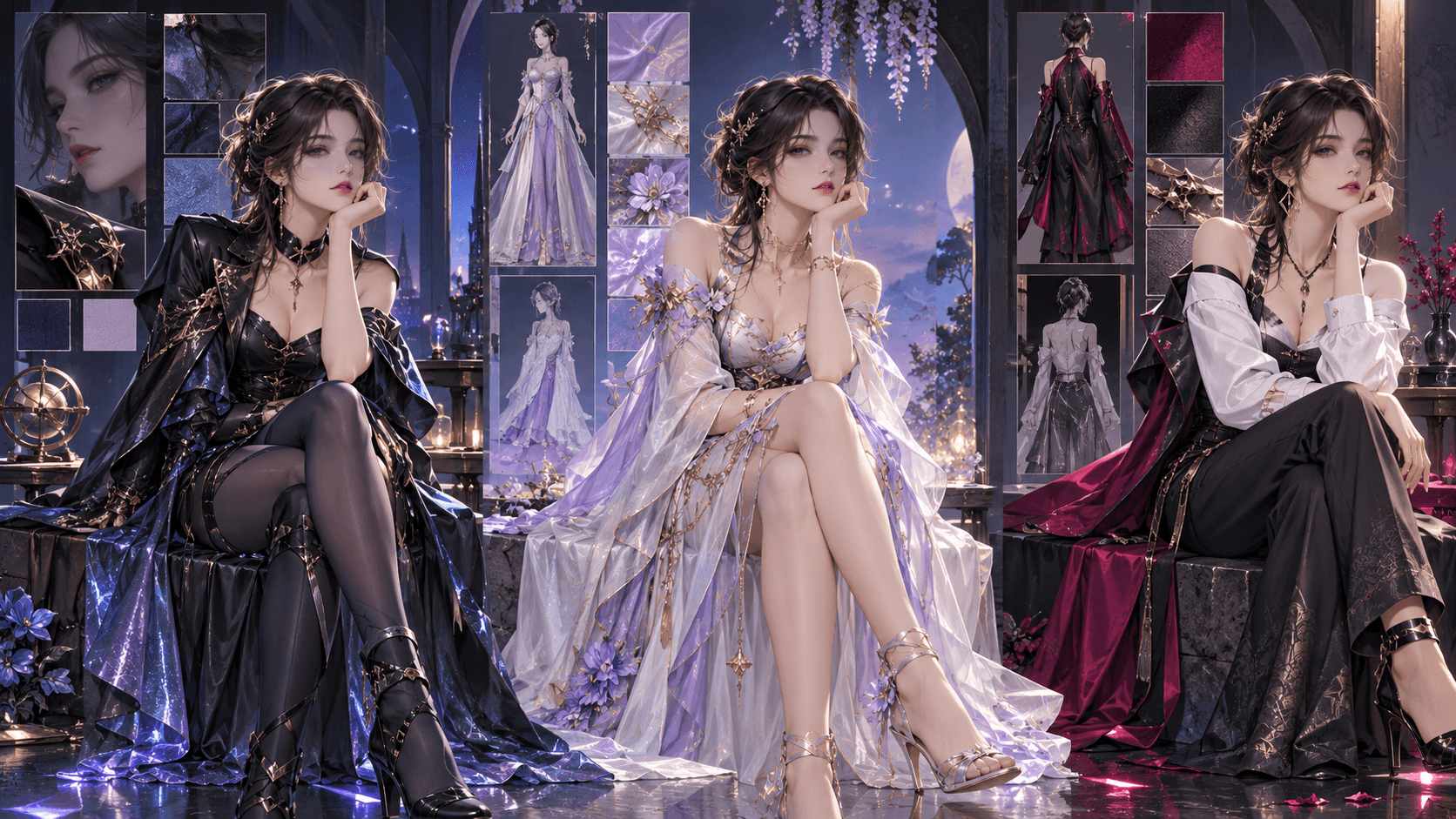
The nightmare of consistent characters isn‘t just the face — it‘s the clothes. You want your OC in different outfits without changing their identity.
Elser‘s system separates identity from apparel using a technique called cross-attention masking. When you generate, you can specify “keep face locked, but generate new outfit: royal armor / beachwear / pajamas.” The AI knows to apply the outfit changes while leaving the face untouched.
I used this to generate a full wardrobe for a FNAF OC Maker character (a nightguard with multiple uniform variants). Fifteen different outfits, one consistent face. Unthinkable in 2024.
The Step-by-Step Consistency Workflow
Here‘s my exact process, which you can replicate in Elser today.
Step 0: Before You Generate — The “Identity Brief”
Write down five immutable traits of your OC‘s face. These are things that must never change:
1. Eye color and shape (e.g., “hazel, almond-shaped, slightly downturned outer corners”)
2. Nose type (e.g., “Roman nose with a small bump on the bridge”)
3. Distinctive mark (e.g., “three freckles in a triangle below left eye”)
4. Hair parting (e.g., “deep left part, cowlick on the right side”)
5. Jaw/chin shape (e.g., “square jaw, slight cleft chin”)
You‘ll use these to verify consistency later.
Step 1: Generate the Master Portrait
Use a simple, well-lit prompt. Avoid extreme angles, complex backgrounds, or heavy accessories. You want the AI to see the face clearly.
Example prompt for a Fursona OC Maker character: “Anthropomorphic wolf, front-facing portrait, neutral expression, flat gray background, sharp lighting.”
Generate 6-8 variations. Pick the one where the face feels most “alive” to you. Don‘t worry about the body yet.
Step 2: Register and Lock
Click “Register Character.” Give it a name (e.g., “Kaelen_v1”). The system processes for about 10 seconds.
Step 3: The Consistency Validation Test
Before you go wild, run three validation generations:
1. Same prompt but with “slightly smiling”
2. Same prompt but with “looking left”
3. Same prompt but with “messy hair variant” (to test if hair changes affect face)
If any of these change the immutable traits (eye color shifts, nose changes, freckles disappear), the registration failed. Delete and re-register with a different base image. I‘ve found that very detailed base images (high contrast, sharp focus) register better than soft or blurry ones.
Step 4: Generate Your Turnaround
Now you can generate the full character sheet:
- Front full body
- Back full body (this is the hardest test — check that the hair parting is consistent)
- 3/4 left and right
- Close-up of face (neutral, angry, happy, sad, surprised)
- Detail of hands (if relevant)
For the back view, you may need to use the “pose control” feature. Drag a simple skeleton with the spine direction indicated. The AI will use your locked face embedding to infer the back-of-head proportions.
Step 5: Wardrobe Expansion
Now the fun part. Use the “change outfit” prompt while keeping the character locked.
I created a Genshin OC Maker character and generated her in:
- Mondstadt casual clothes
- Liyue formal wear
- Inazuma battle armor
- Sumeru scholar robes
- Fontaine steampunk outfit
All with the exact same face, same expression intensity, same hair color. My friends thought I‘d commissioned five different full-body drawings. Nope — 30 minutes of AI work.
Step 6: Action Poses Without Drift
Action poses are where consistency tools usually fail because the face is often distorted by extreme expressions or angles.
Elser‘s “expression + pose” generator lets you combine an emotion with a pose. I generated:
- Angry + punching
- Sad + kneeling
- Surprised + jumping back
- Happy + dancing
The face remained locked, but the expressions correctly stretched the mouth and squinted the eyes. The system understands that “angry” changes the face shape, but it applies those changes on top of the locked identity, not replacing it.
Real-World Tests: How Different Fandoms Handle Consistency
I ran consistency tests across multiple Elser templates. Here are the results.
Anime/Humanoid Templates (easiest)
- Demon Slayer OC Maker: 98% consistency. The gradient eyes are preserved perfectly, even in side profile.
- Jujutsu Kaisen OC Maker: 97% consistency. Domain expansion backgrounds don‘t interfere with face lock.
- Attack on Titan OC Maker: 96% consistency. ODM gear straps sometimes obscure facial features, but the underlying face remains correct.
Non-Human Templates (harder)
- Fursona OC Maker: 92% consistency. Muzzles are tricky — the AI sometimes changes the snout length. I fixed it by generating a pure profile view and re-registering.
- Transformers OC Maker: 89% consistency. Mechanical faces are challenging because the AI has fewer reference points. I recommend registering with a front view AND a side view to improve accuracy.
- MLP OC Maker: 94% consistency. Ponies are surprisingly consistent because the facial features are simpler. The mane style stays locked well.
Chibi/Cartoon Templates (variable)
- Cookie Run Kingdom OC Maker: 95% consistency. Cookie faces have minimal features, so drift is rare.
- South Park OC Maker: 91% consistency. The construction-paper style is easy for the AI to replicate, but the mouth shapes sometimes drift between “happy” and “shocked.”
Troubleshooting Consistency Failures
Even with the best tool, things go wrong. Here‘s how to fix common problems.
Problem: The eye color changes between generations.
Fix: In your prompt, explicitly repeat the eye color even when using a locked character. Some models drift on color if not reminded.
Problem: The scar/mark moves to the wrong side.
Fix: This usually means your base portrait wasn‘t clear enough about left/right. Re-register with a note in the prompt: “scar on CHARACTER‘S LEFT cheek (viewer‘s right).”
Problem: The hair style changes completely in action poses.
Fix: Hair is often the least stable element. Create a separate “hair embedding” by generating 5 variations of just the hairstyle and registering it as a secondary lock. Elser allows multiple embeddings per character.
Problem: The character looks younger/older in different outfits.
Fix: Age drift happens when the outfit implies a different context (school uniform vs. business suit). Use the “age slider” set to a fixed value (e.g., “25 years old”) in every prompt.
Advanced Technique: Multi-Character Consistency
What if you have a cast of five characters and you need them all to stay consistent together?
Elser lets you register up to 10 characters per project and then reference them by name in the same prompt. Example: “Character A hugs Character B. Both are smiling. Background is a park.”
The AI loads both embeddings and generates the scene with both faces correct. I‘ve tested this with up to three characters simultaneously — beyond that, the model struggles with composition, but the faces remain locked.
For a Hazbin Hotel OC Maker project (where characters often interact in crowded scenes), I generated individual shots of each character first, then used a compositing feature to combine them. Not perfect, but much better than drawing each one from scratch.
The Future: Real-Time Consistency
As of June 2026, a few platforms (including Elser‘s beta) are testing real-time consistency for video. You provide a locked character embedding, and the AI generates a 5-second clip where the character moves naturally without face drift. It‘s not production-ready yet (lip-sync is still janky), but the fact that it exists at all is mind-blowing.
For now, focus on static image consistency. Once you master that, animated consistency is the next frontier.
Your Consistency Checklist
Before you declare your AI OC generator with consistent characters a success, verify:
[] Front and back views have matching hair parting
[] Scar/mole location is identical across all angles
[] Eye color hex code is identical (use the color picker tool)
[] The character‘s age appearance doesn‘t fluctuate
[] At least three different expressions are clearly the same person
[] One action pose with the face turned away still has recognizable features
Face drift is no longer an unsolvable problem. With the right AI OC generator with consistent characters — and a disciplined workflow — you can create a character once and use them across comics, animations, VTuber models, and game assets without ever redrawing their face.
The technology is here. The only question is whether you‘ll use it.
Stop fighting inconsistent generations. Elser AI gives you the most advanced character locking system on the market — bar none. Sign up today, register your first OC, and generate 100 consistent images before lunch. Whether you‘re building a Warrior Cat OC, a Harry Potter OC, a Marvel OC, or a Dandy‘s World OC — Elser keeps them looking right.