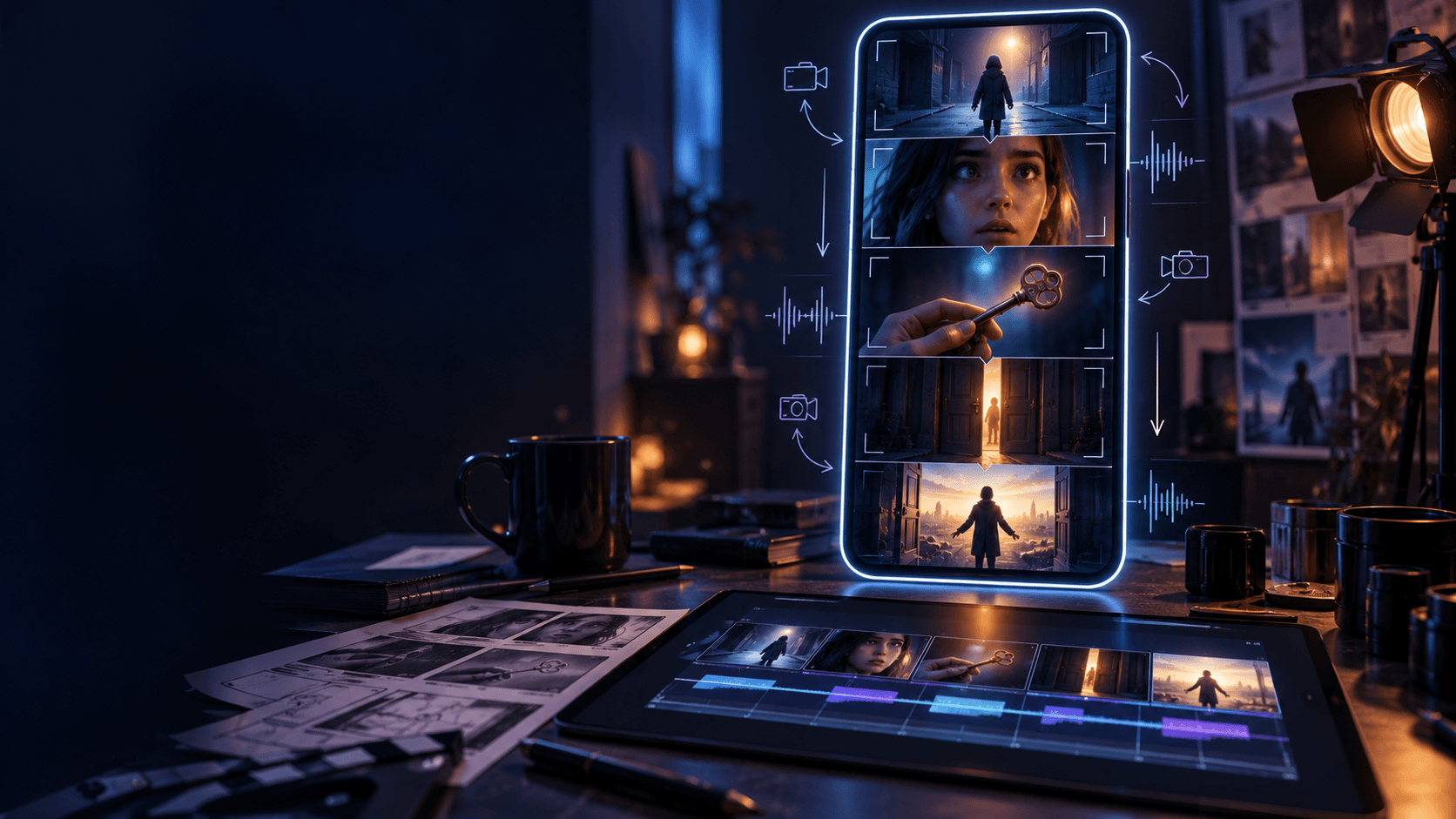
50 Comic Panel-to-Video Prompts for Manga and Webtoon Creators
A comic panel already contains composition, character design, lighting, and a decisive moment. Image-to-video should reveal motion implied by the drawing without replacing the artist’s choices. The most useful prompt says what moves, how much, for how long, and what must remain still.
Use these prompts only with artwork you created or are authorized to animate. Replace bracketed details and adapt syntax to the model. For dialogue, animate clean art without balloons when possible, then restore lettering in the edit.
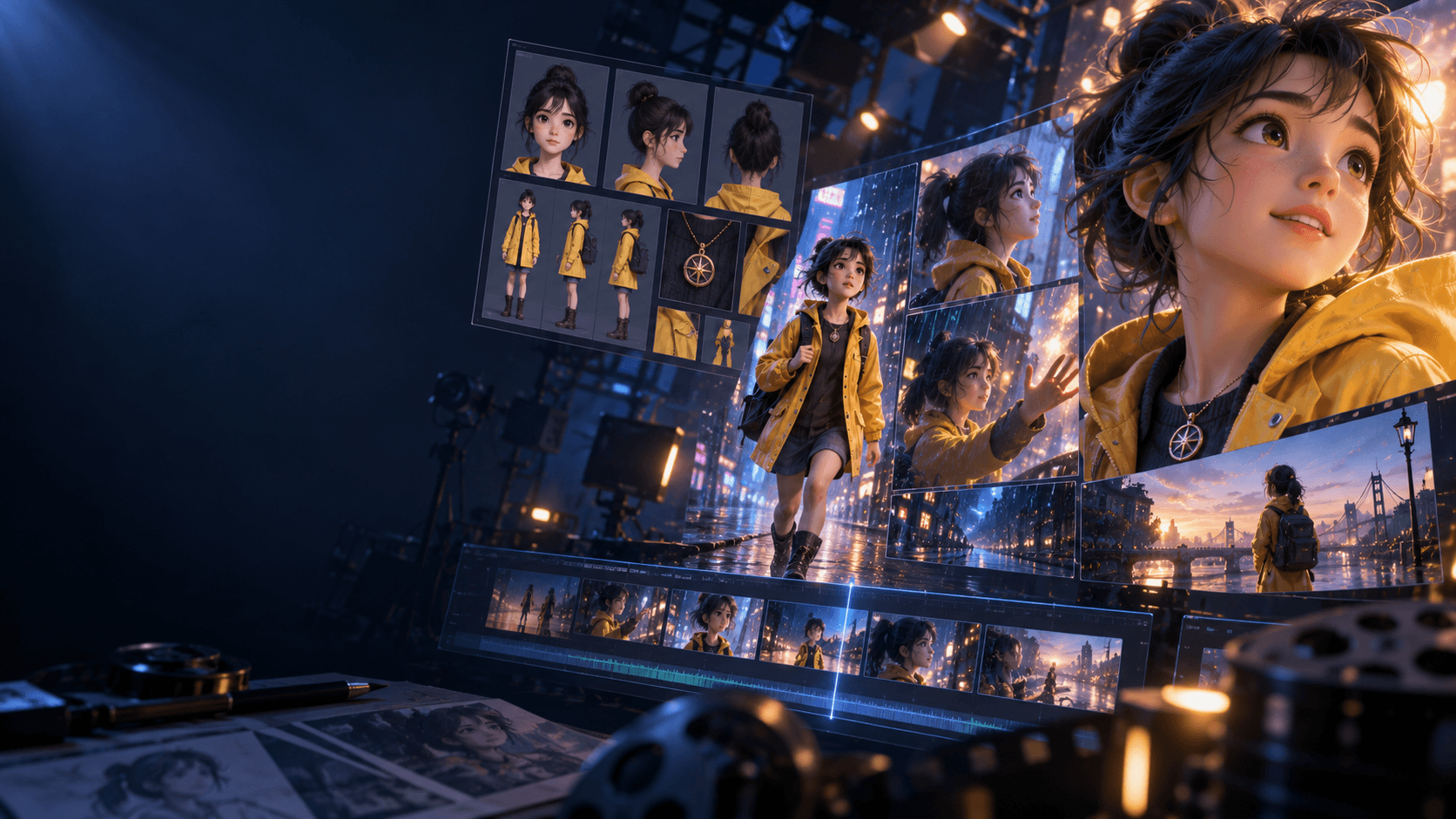
Want to connect panels to a complete narrative workflow? Elser AI helps develop scripts, characters, storyboards, scenes, and audio. Register and test one representative panel before processing a chapter.
A Panel-to-Video Prompt Formula
Preserve [art style, character, composition]. Animate [primary subject] with [specific motion]. Add [secondary motion]. Camera [movement]. Duration [seconds], [pace]. Keep [locked elements] unchanged. No [failure risks].
In image-to-video, avoid redescribing the whole image unless necessary. Runway’s official guidance recommends emphasizing desired motion because the source image already defines visual content.
Subtle Character Acting
Preserve the original manga line art and framing. Character blinks once, breathes softly, and shifts gaze toward the doorway. Locked camera; no face, hair, costume, or background redesign.Animate a restrained smile forming over four seconds, with a tiny exhale and relaxed shoulders. Keep eyes, jaw, hairstyle, screentone, speech-balloon-free composition, and ink lines stable.Character lowers their eyes, fingers tighten slightly around the letter, then looks back up. Minimal natural motion; preserve hand anatomy, paper text area, and panel crop.Create a slow surprised reaction: pupils focus, brows lift, mouth opens slightly. No head turn, camera motion, or style shift; maintain original facial proportions.Character’s anger stays controlled: jaw tightens, brow lowers, coat hem moves in wind. Keep mouth closed and identity exact; no dramatic aura.Animate one tear collecting, traveling down the existing cheek path, and leaving the chin. Preserve expression, line weight, screentone, and lighting.Character turns their head only 15 degrees toward camera while hair follows with slight delay. Maintain face structure and costume; no body rotation.Two characters hold eye contact. Foreground character breathes; background character blinks at 00:03. No lip movement, camera locked, panel composition unchanged.Animate a tired sigh: chest lowers, eyelids briefly close, one loose hair strand settles. Keep the drawing’s quiet pacing and monochrome finish.Character raises one hand to adjust glasses, then returns to the original pose. Preserve finger count, lens shape, face, and background; five seconds.
Camera and Depth
Slow 5% push-in toward the character’s eyes over four seconds. Add minimal layer-separated parallax to foreground leaves and distant wall; preserve all drawn shapes.Gentle pullback reveals the panel as a lonely wide shot. No new objects beyond the illustrated boundaries; stable line art and restrained depth.Pan left across the wide webtoon panel at constant speed, following the character. Preserve original perspective; animate only cloth and distant signs.Vertical camera drift downward from face to the object in the character’s hand. Do not invent hidden anatomy; use the full source artwork as boundary.Create a shallow arc around the subject using subtle 2.5D parallax, maximum five degrees. Keep facial identity and background geometry stable.Fast push-in ending exactly on the shocked eye at 00:02, then hold. Preserve ink texture; no lens distortion or added speed lines.Rack-focus effect from foreground flower to character without changing drawn detail. Locked camera and composition, gentle atmospheric movement only.Simulate handheld tension with extremely subtle drift, not shake. Character remains sharp and geometrically stable; no panel expansion.Tilt upward from boots to face over four seconds. Maintain body proportions and garment construction; do not generate missing areas outside source.Slow lateral parallax through rain layers while the character remains still. Preserve original camera, face, and architecture.
Atmosphere and Environmental Motion
Animate steady rain, puddle ripples, and one coat-edge flutter. Keep character pose and monochrome hatching fixed; no camera movement.Snow falls at three depth layers; visible breath appears once; scarf moves gently. Preserve face and panel contrast.Sunlight through leaves flickers softly across the scene, branches sway minimally, dust motes drift. Do not change base palette or drawing.Neon signs pulse asynchronously and reflect in the existing wet street. Character remains still; no new lettering or color contamination.Steam rises from the cup in two curling strands while the character blinks once. Locked framing, no hand or cup deformation.Curtains move in a light breeze, papers lift at corners, room shadows remain consistent. Preserve every character line.Distant crowd silhouettes move slowly without gaining facial detail. Foreground cast remains fixed and on-model.Underwater particles rise, hair drifts with gentle current, fabric follows. Preserve anatomy and do not add bubbles over the face.Small embers pass foreground, smoke moves behind the subject, firelight fluctuates subtly. Keep costume damage and expression unchanged.Stars drift almost imperceptibly while a meteor crosses once at 00:03. Preserve sky composition and character silhouette.
Action Panels
Animate the swordsman completing only the illustrated slash: sleeve and coat follow through, debris moves outward, camera holds. Preserve sword shape and hands.Start from still anticipation, character dashes screen-right in one clean burst, leaving frame at 00:02. No duplicated limbs or invented opponent.Punch connects at 00:01, opponent recoils with readable body mechanics, dust releases, then hold. Keep faces and outfits consistent; no extra impacts.Magic circle rotates once, symbols glow without changing design, light builds, then a single energy pulse exits frame. Character stays anchored.Mecha rises from crouch as panels settle and dust falls. Maintain mechanical topology, markings, proportions, and original lens.Arrow releases from the existing bow, string snaps forward, hair and sleeve react. Preserve hand grip and bow geometry.Character lands, knees absorb weight, cape settles, small stones bounce once. No camera spin or superhero shockwave.Creature opens its eye, scales shift with breathing, one claw moves forward. Preserve silhouette and horror ink style.Vehicle accelerates through the existing perspective, wheel motion and dust aligned. No body redesign or background warping.Freeze the main figure while speed lines and foreground debris animate toward camera for 1.5 seconds, then cut to black.
Transitions and Webtoon Formats
Animate black ink spreading from the panel’s shadow until it fills frame, preserving the artwork until covered. Two-second transition.White flower petals cross frame and create a natural wipe into the next shot. Maintain source style; petals do not obscure the face before 00:02.Begin on the full vertical webtoon panel, slowly scroll downward at readable speed, pausing briefly on each emotional beat. No internal image regeneration.Separate three stacked webtoon moments into a controlled vertical camera path with soft holds, preserving panel borders and reading order.Transform the final sparkle into a bright match cut; camera and character stay fixed until the light covers frame.Use the character’s closing eye as a transition to black, then hold one second. Preserve eyelashes, face, and ink texture.Animate page-turn shadow across the manga spread without bending the drawn characters. End on a clean white frame.Create a 9:16 social teaser: slow push-in, two atmospheric motions, central safe area for later captioning. Do not generate text.Loop six seconds seamlessly: hair and leaves return to original positions, blink occurs once near midpoint, camera locked.Extend the panel into a five-second establishing shot using only plausible edge continuation; keep the original center untouched and avoid new characters.
Production Workflow
Clean and Separate the Art
Remove balloons and captions into editable layers. Separate foreground, character, and background when possible. Restore hidden line art conservatively rather than asking the model to invent important anatomy.
Choose One Motion Hierarchy
Define primary motion, secondary motion, and camera. If all three are large, identity and composition often suffer. Manga benefits from stillness; a blink, rain, and a slow push-in may be enough.
Test Short and Extend Carefully
Generate three-to-five-second proofs. Seedance 2.5 officially supports longer one-pass scenes and multi-round extension, but longer capacity should not replace editorial shot design. Review boundaries and continuity.
Add Sound After Picture Timing
Use panel mood to design ambience, Foley, dialogue, and music. ByteDance’s Seed Audio 1.0 can generate speech, effects, and ambience, according to its launch materials. Keep stems where possible and protect dialogue clarity.
Review Against the Original
Overlay the first frame with the source. Check face, line weight, screentone, lettering areas, costume, props, and crop. Then watch for temporal drift.
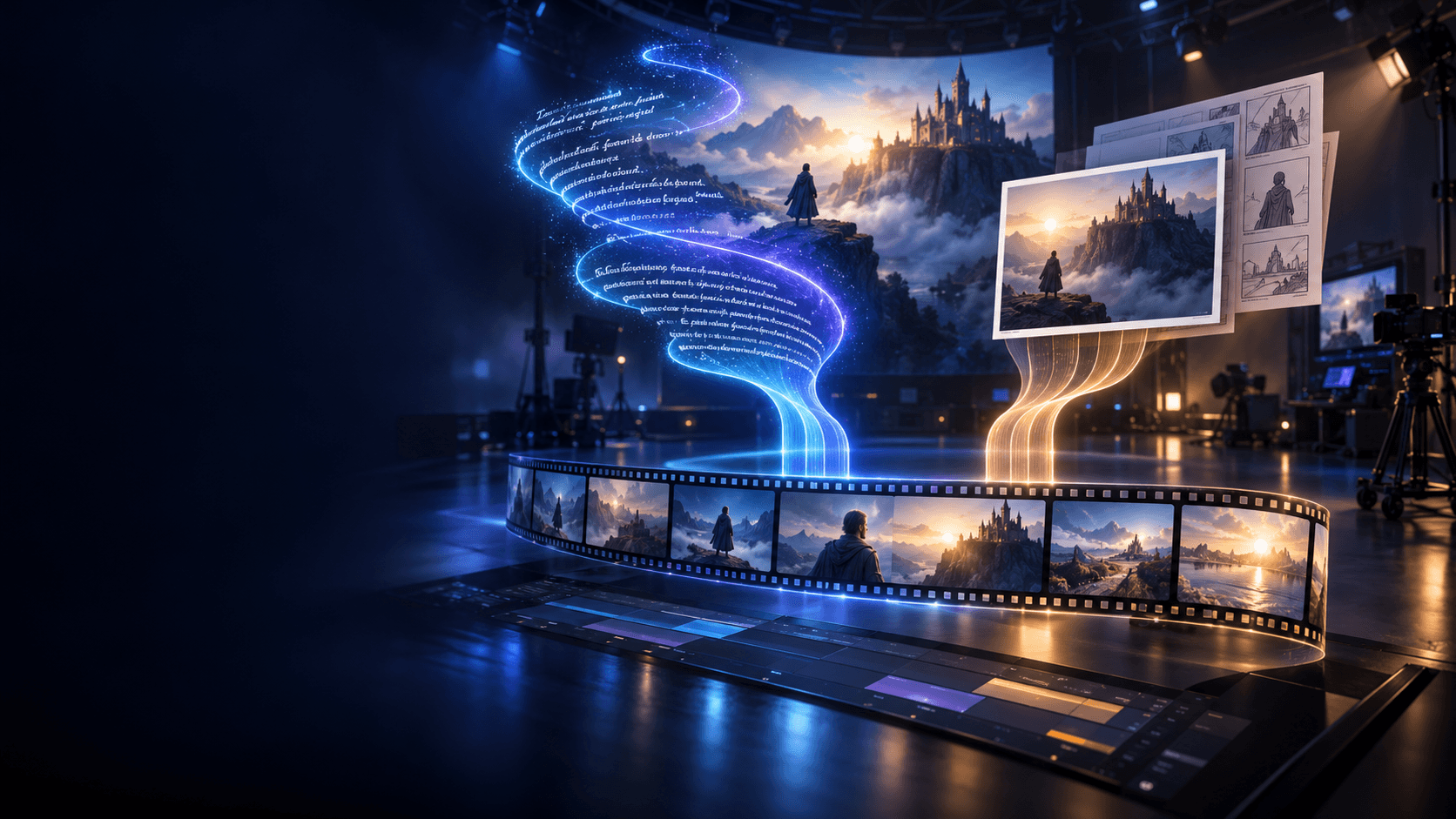
Turn the approved panel sequence into a story rather than a motion demo. Register with Elser AI and connect script, character, storyboard, scenes, and audio.
FAQ
Can I animate any manga panel I find online?
No. Copyright still applies. Use your own work, licensed material, public-domain sources where applicable, or explicit permission.
Should I remove speech balloons first?
Usually yes. Animate clean art and restore crisp typesetting afterward. Generated text often distorts, and moving balloons can distract.
How much motion should a panel have?
Only enough to support the story beat. Start with one character action, one environmental action, and restrained camera movement.
How do I preserve black-and-white screentone?
Explicitly lock monochrome line art and screentone, avoid photorealistic language, minimize transformation, and compare every frame with the source.
Is vertical webtoon animation different?
Yes. Design the camera path around vertical reading order and mobile safe areas. Often the best motion is a controlled scroll with localized animation.
Conclusion
Panel-to-video succeeds when motion serves the drawing. Preserve style and composition, state one clear action, control camera and secondary movement, and edit generated clips as shots—not miracles.
To move from licensed artwork to a coherent anime sequence, start with Elser AI and build a short storyboard test before animating an entire chapter.