How to Fix AI-Generated Hands, Faces, and Clothing in Anime Videos
The wrong response to a broken hand is often “regenerate the entire clip.” That may fix five frames and destroy the face, costume, and timing that already worked. Production repair should minimize the area, duration, and variables being changed.
This guide presents a triage system for three frequent problems: hand anatomy, facial identity, and clothing continuity. It combines generative repair with ordinary editorial techniques because the most reliable solution is not always another generation.
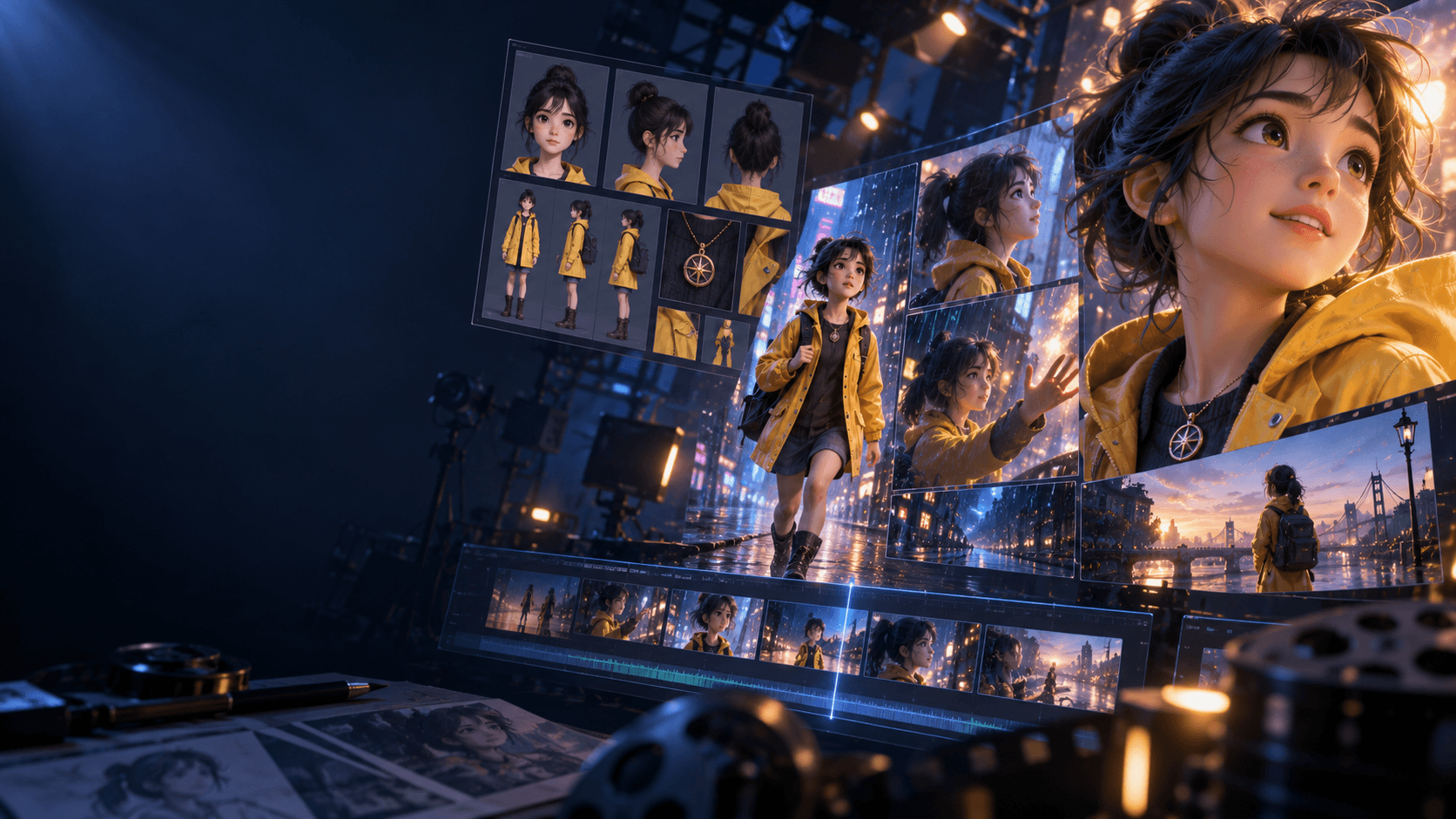
Preventing defects begins with stable assets. Use Elser AI to establish characters, storyboards, and shots, then register and test difficult poses before rendering a long sequence.
First, Classify the Error
Record four facts:
- Where? frame range and screen region.
- What? anatomy, identity, texture, topology, occlusion, or temporal flicker.
- How long? one frame, short event, or entire shot.
- What must survive? performance, camera, face, garment, background, and timing.
Then choose the smallest intervention. A one-frame finger duplication may need paint. A hand that changes shape for three seconds needs a tracked replacement or partial regeneration. A whole-body failure may justify a new shot.
Fixing AI-Generated Hands
Diagnose the Cause
Hands fail when they are small, blurred, occluded, interacting with complex objects, or changing orientation rapidly. Ambiguous source poses give the model several plausible but incompatible interpretations.
Repair Option 1: Paint or Patch
For one to three bad frames, paint from adjacent frames, clone stable texture, or warp a nearby correct hand. Add motion blur and grain after the repair so it belongs to the shot.
Repair Option 2: Replace From a Hand Reference
Create a clean still of the required grip from the correct camera angle. Mask the hand plus wrist and object-contact area, then generate or composite the replacement. Preserve sleeve, object, lighting, and motion direction.
Prompt example:
Repair only the character’s right hand gripping the sword handle. Five anatomically coherent fingers with thumb opposing the grip; wrist aligned to forearm; preserve sword position, sleeve, body, face, camera, lighting, and background. No extra fingers or object changes.
Repair Option 3: Redesign the Action
If a detailed hand remains tiny on screen, cut to an insert or hide contact behind foreground motion. Clear visual storytelling beats displaying every finger.
Fixing Drifting Faces
Identify the Drift Point
Compare the first approved frame with the moment of failure. Common triggers include head rotation, hair crossing the face, extreme expression, motion blur, leaving frame, or another face entering.
Establish an Identity Anchor
Use an approved portrait with the same angle and expression range. Describe fixed traits, then repair the smallest face region possible. Avoid changing lighting or makeup in the identity pass.
Prompt example:
Restore the exact approved character identity throughout frames [range]: same oval jaw, amber eye shape and spacing, small nose, short black layered hair, copper streak on character-left. Preserve expression performance, head motion, lip sync, camera, body, lighting, and background. Change facial identity only.
Use a Tracked Face Patch
For a stable shot, a corrected face patch can be tracked and blended. Match perspective, blur, color, edge softness, grain, and occluding hair. This is controlled compositing, not deception, when used on an authorized fictional character or consenting performer.
Cut Around the Failure
An editorial cut, reaction shot, foreground wipe, or two-frame insert can remove an irreparable transition. Continuity of emotion matters more than preserving a specific generation.
Fixing Clothing and Accessories
Separate Color Drift From Construction Drift
Color that changes under new lighting may be physically plausible and correctable in grading. A collar that changes shape, disappearing buttons, or a belt switching sides is structural and needs local repair.
Repair With a Wardrobe Lock
Use the canonical clothing references and one concise block:
Restore wardrobe state A0 only: navy cropped coat, high collar, five brass buttons, black piping, brown belt, pouch on character-right, black knee boots. Preserve body performance, face, hair, hands, camera, environment, and light. No redesign or added decoration.
Protect Occlusions
Hands, hair, bags, and foreground objects may cross the garment. Place them above the repair or include enough context for correct reconstruction. Inspect edges frame by frame.
Luma’s instruction-based Modify workflow can transform elements in an existing clip and exposes different strength levels. Its guidance says the target should be visible in the first frame. Use conservative transformation when the source motion is valuable, and test whether identity survives before processing a full clip.
Keep the approved character and wardrobe close to the storyboard. In Elser AI, test continuity across the sequence so repairs do not become isolated guesses.
A Repair Decision Matrix
| Problem | Short/local | Long/local | Whole shot | |---|---|---|---| | hand defect | paint/patch | tracked replacement | redesign or regenerate | | face drift | corrected frame/patch | identity-constrained pass | regenerate from keyframe | | clothing color | grade | tracked grade | scene grade | | clothing topology | local generative repair | video modify/composite | regenerate from approved still | | flicker | frame interpolation/deflicker | temporal repair | reconsider model or shot |
Always duplicate the shot before repair and keep handles around the affected range for blending.
Prevent Defects Upstream
Design for Readability
Give hands enough screen space. Use clear grips, separated fingers, and silhouettes that do not merge with clothing. Simplify overly intricate costume motifs that must move constantly.
Approve Still Keyframes
Fix anatomy and identity before animation. Image-to-video tools inherit visible structure. Runway’s own guidance recommends focusing image-to-video prompts on motion, which makes a clean source frame especially valuable.
Reduce Simultaneous Demands
Do not combine a 360-degree spin, wardrobe transformation, complex hand interaction, lip sync, and exploding background unless the shot truly needs them. Split the sequence into editable beats.
Use Reference-Rich Models Carefully
Seedance 2.5 supports many reference inputs and timestamp-level instructions according to ByteDance, which can help with complex shots. Label roles and remove contradictions. Reference abundance cannot rescue poor art direction.
Generate Handles
Create extra frames before and after the intended edit. Handles allow transitions, speed changes, and repair boundaries without cutting into the performance.
Quality Control Before Export
Watch once at normal speed without stopping; note only errors you genuinely perceive. Then inspect problem ranges frame by frame. Check:
- finger count, grip, wrist, and object contact;
- eye spacing, jaw, hairline, and expression continuity;
- collar, fasteners, accessory side, hems, and fabric topology;
- edge chatter around hair, sleeves, and hands;
- grain, blur, color, and compression consistency;
- legal and consent requirements for source assets.
After repair, watch the full sequence again. A technically perfect patch can still draw attention if timing or motion feels wrong.
Keep a Repair Log
Record the defect, affected frames, chosen method, source reference, repair version, and reviewer. Repeated errors reveal an upstream problem: a hand pose may need a better keyframe, a face may lack a profile reference, or a costume may be too complex for its screen time. The log turns isolated cleanup into evidence for improving the next scene.
Archive the unrepaired shot and the repair elements separately. Future re-edits may change timing, and a flattened patch with no handles is difficult to reuse. For client work, retain an approval image or short review clip so the accepted change is unambiguous.
When one corrected shot passes, build it into the sequence rather than treating it as a demo. Register with Elser AI to continue from character and storyboard through scene assembly.
FAQ
Should I regenerate or fix a bad AI video?
Repair when most of the shot works and the defect is local. Regenerate when anatomy, identity, timing, and composition all fail or the repair would be more expensive.
Can prompts reliably fix hands?
Prompts help, but a clear reference, mask, readable pose, and local edit are more important. Tiny or heavily occluded hands remain difficult.
How do I keep lip sync while repairing a face?
Constrain the repair to identity and preserve the original lower-face motion. A tracked patch or specialist face pass may be safer than full regeneration.
Can color grading fix changing clothes?
Only color and tonal drift. Changed seams, buttons, length, or accessory positions require structural repair.
Is video-to-video editing better than starting over?
It is valuable when source motion and camera are strong. Test transformation strength and identity preservation on a short segment first.
Conclusion
Treat defects as bounded production problems. Classify the error, preserve what already works, choose the smallest repair, and review it in the full edit. Clean keyframes, readable action, simpler shot goals, and a continuity bible prevent more problems than any negative-prompt list.
For an anime workflow built around stable characters and planned scenes, start creating with Elser AI and identify the hardest anatomy or continuity shot during storyboarding—not after the final render.