GPT-5.6 Price Cut Explained: Which Model Is Best for AI Video Creators Now?
OpenAI's GPT-5.6 price changes make one thing clear: choosing a model by reputation alone is now expensive and unnecessary. As of August 28, 2026, GPT-5.6 Sol costs $4 per million input tokens and $20 per million output tokens under OpenAI's current promotional pricing. Terra costs $2 input and $12 output, while Luna costs $0.20 input and $1.20 output. Cached input is priced at one-tenth of normal input for all three.
The headline reductions arrived in stages. OpenAI cut Luna by 80% and Terra by 20% on July 30. On August 21, it reduced Sol API and credit pricing by more than 20% for a promotional period. OpenAI's current ChatGPT rate card says Sol promotional pricing is available at least through November 21, 2026.
For an AI video creator, the important question is not “Which model is smartest?” It is “Where does additional reasoning change the final video?”
First, Understand What GPT-5.6 Does in a Video Workflow
GPT-5.6 is not a direct video-output model. OpenAI's model documentation lists text and image input with text output for the GPT-5.6 family. It can analyze references, develop scripts, turn a brief into shot plans, create structured prompts, compare revisions, generate production metadata, and coordinate tools. A separate video model or platform renders the footage.
That distinction prevents a common budgeting mistake. Text-model cost is usually a small part of video production. The larger cost comes from video generations, discarded takes, extensions, upscaling, voice, and post-production. A better text model is worth paying for when it reduces those expensive iterations.
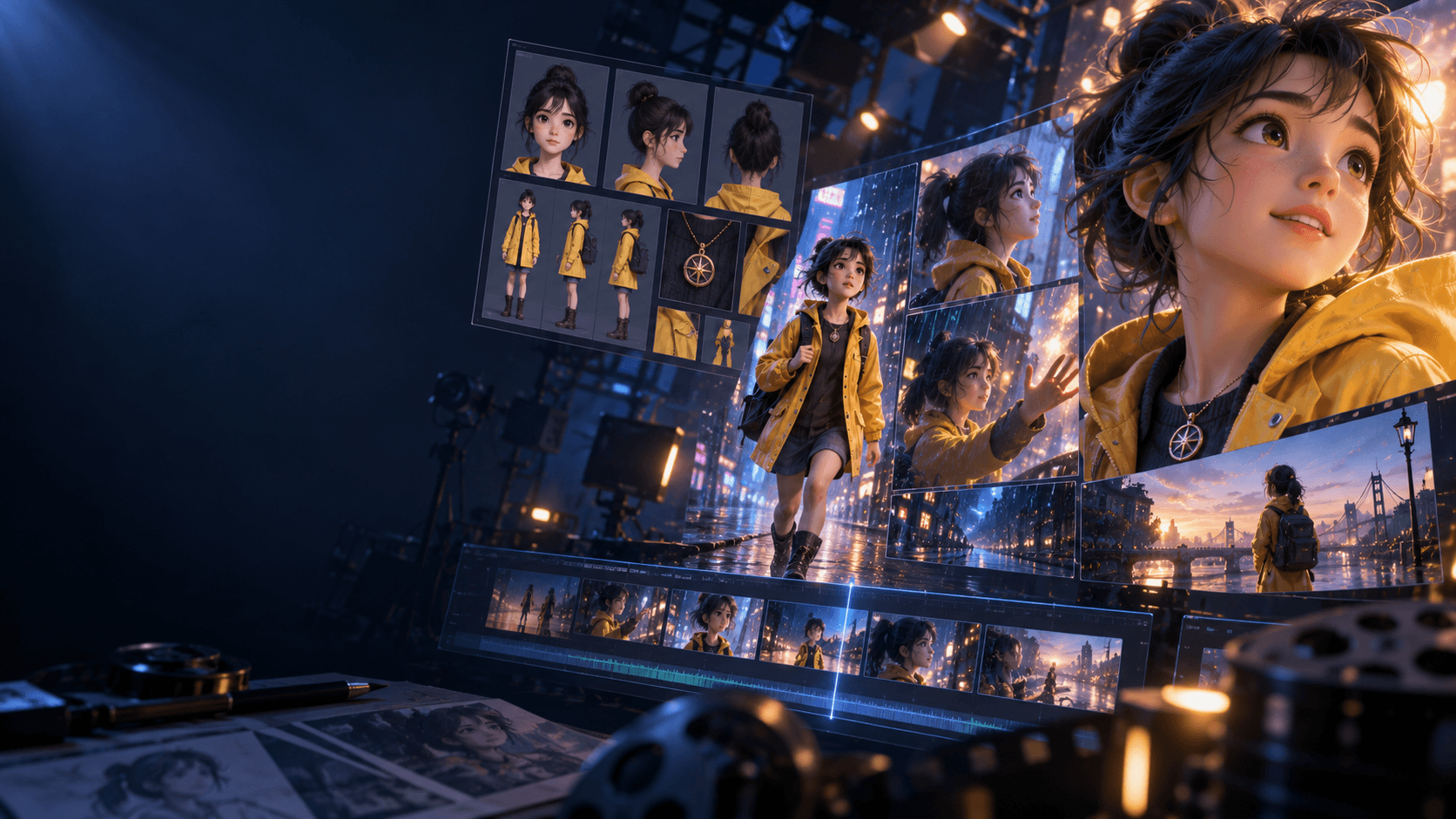
If you want to move directly from a GPT-developed script and storyboard into animation, Elser AI connects character design, scene generation, voice, sound, and final editing in one creative workflow.
The Current GPT-5.6 Prices
Prices below are per one million text tokens as of August 28, 2026.
| Model | Input | Cached input | Output | OpenAI positioning | | GPT-5.6 Sol | $4.00 | $0.40 | $20.00 | Frontier model for complex professional work | | GPT-5.6 Terra | $2.00 | $0.20 | $12.00 | Balance of intelligence and cost | | GPT-5.6 Luna | $0.20 | $0.02 | $1.20 | Efficient, high-volume workloads |
All three have a 1.05-million-token context window and support multiple reasoning-effort settings, according to OpenAI's model pages. That does not mean you should fill the context window. Large, untidy context can increase cost and make requirements harder to prioritize.
When Sol Is Worth the Premium
Use Sol where one strong decision can prevent many downstream failures.
Complex Narrative Architecture
A multi-scene short with parallel character arcs, planted clues, and a strict runtime benefits from deeper planning. Sol is the best default for identifying contradictions across a long script, checking whether every scene changes the story, and proposing a coherent restructure.
Creative Direction Across Many References
If you supply a visual bible, character sheets, brand rules, a script, product requirements, and previous test notes, Sol can reason across the complete package. The value is not prettier prose. It is finding conflicts such as a night scene that depends on a daylight reference or a character action that violates an established injury.
Difficult Prompt Debugging
Use Sol to diagnose recurring video failures from screenshots, generation settings, prompts, and test notes. Ask for ranked hypotheses and controlled experiments—not a rewritten prompt with 100 new adjectives.
Automated Review with Consequences
If the model decides whether a shot enters a paid rendering queue, publishes metadata, or triggers another tool, stronger reasoning and explicit validation may justify the cost.
Sol is rarely necessary for rewriting 50 captions or formatting file names. Reserve it for decisions that change the project.
Why Terra Is the Practical Default
Terra is the most balanced choice for daily creative work. At $2 input and $12 output per million tokens, it is half Sol's input price and 40% cheaper on output.
Use Terra for:
- converting a treatment into a scene-by-scene outline;
- writing and revising dialogue;
- generating structured video prompts from an approved storyboard;
- checking shot continuity;
- creating voice direction and sound briefs;
- rewriting a scene for a different runtime;
- preparing platform-specific titles, descriptions, and subtitles;
- summarizing feedback into an actionable revision list.
Terra is particularly attractive when a human creative director remains in the loop. You do not need the model to make every judgment; you need it to produce strong options, expose tradeoffs, and follow a production format reliably.
For most solo creators, start with Terra. Escalate a task to Sol only when the first pass reveals genuine complexity.
Where Luna Changes the Economics
Luna's July price reduction was the largest. At $0.20 input and $1.20 output per million tokens, it is one-tenth Terra's input price and output price.
That makes Luna useful for high-volume, bounded tasks:
- 100 variations of a short hook;
- subtitle cleanup under a strict style guide;
- tag and metadata generation;
- file naming and shot-log normalization;
- extracting character attributes from approved documents;
- translating short production notes;
- classifying feedback by scene and issue type;
- checking that required fields exist in prompt templates;
- producing low-cost first drafts for human triage.
Do not confuse affordability with universal suitability. A cheap model used on an ambiguous brief can produce hundreds of inconsistent assets faster. Luna performs best when inputs, constraints, and output structure are explicit.
A Better Three-Model Production Strategy
Apply the routing strategy to an actual anime brief in Elser AI: register, define one scene, and compare planning quality and accepted-output cost before standardizing a model.
The most economical workflow routes tasks by risk.
Stage 1: Luna for Expansion and Organization
Generate premise variations, normalize research notes, tag references, and format shot records. Keep outputs structured and easy to reject.
Stage 2: Terra for Development
Turn selected ideas into scripts, storyboards, prompts, dialogue, and revision plans. Terra should handle most iterations.
Stage 3: Sol for High-Leverage Review
Before committing to costly rendering, ask Sol to inspect the final script, character bible, shot plan, and prompt package for contradictions, missing information, and likely failure points.
This is more effective than using Sol for every brainstorming message or using Luna for the final production decision.
Once the plan is approved, Elser AI can take it into character generation, storyboarding, animation, voiceover, music, sound effects, and editing without forcing you to rebuild the creative context.
Prompt Caching Matters More Than Many Teams Realize
AI video projects repeatedly send the same information: visual style, character profiles, safety rules, output schemas, and project constraints. OpenAI currently prices cached input at 90% below uncached input.
Place stable instructions and references before variable scene requests. Use explicit cache breakpoints where supported. Do not change punctuation or ordering in the stable block unnecessarily, because changes can reduce cache reuse.
Caching saves input cost, not output cost. Avoid verbose answers when a shot table or JSON structure will do. A model that writes 5,000 words where 500 were needed remains expensive even with perfect input caching.
What the Price Cut Does Not Tell You
Official token prices do not include:
- video-generation credits;
- image generation;
- web search or other tool fees;
- storage and transfer;
- failed generations;
- human review time;
- third-party platform markups;
- Fast mode premiums;
- taxes and currency conversion.
OpenAI also notes that subscription prices and quota budgets are separate from API token rates. Check the billing surface you actually use.
A Simple Model-Selection Test
Once the text workflow is chosen, start a project with Elser AI and carry the approved script and shot plan into character, storyboard, and video production.
Take 20 real production tasks and run them through the candidate models with the same inputs and acceptance rubric. Score:
- factual and requirement accuracy;
- number of human edits;
- consistency of output format;
- time to approved result;
- downstream video iterations caused or prevented;
- total token and tool cost.
The cheapest accepted result wins—not the cheapest first response.
FAQ
What are the latest GPT-5.6 API prices?
As of August 28, 2026, OpenAI lists Sol at $4 input and $20 output, Terra at $2 and $12, and Luna at $0.20 and $1.20 per million tokens. Check the official pricing page before budgeting future work.
Is Sol's lower price permanent?
OpenAI describes the current Sol reduction as promotional. Its rate card says the promotion is available at least through November 21, 2026.
Which GPT-5.6 model should an AI video beginner use?
Start with Terra for scripts and prompts. Use Luna for repetitive structured work and Sol for difficult planning or final review.
Can GPT-5.6 generate finished videos?
Not directly according to its documented modalities. It supports the planning and orchestration around video creation; use a video-generation platform for rendering.
Does reasoning effort affect cost?
Reasoning consumes tokens and can affect latency and total cost. Test the lowest effort that reliably passes your acceptance criteria.
Conclusion
The GPT-5.6 price changes reward intentional routing. Luna makes volume work dramatically cheaper. Terra is the sensible daily driver. Sol is a high-leverage reviewer and problem solver. Use capability where failure is expensive, caching where context repeats, and short structured outputs where verbosity adds no value. The result is not merely a lower AI bill—it is fewer wasted renders and a cleaner path from idea to finished video.