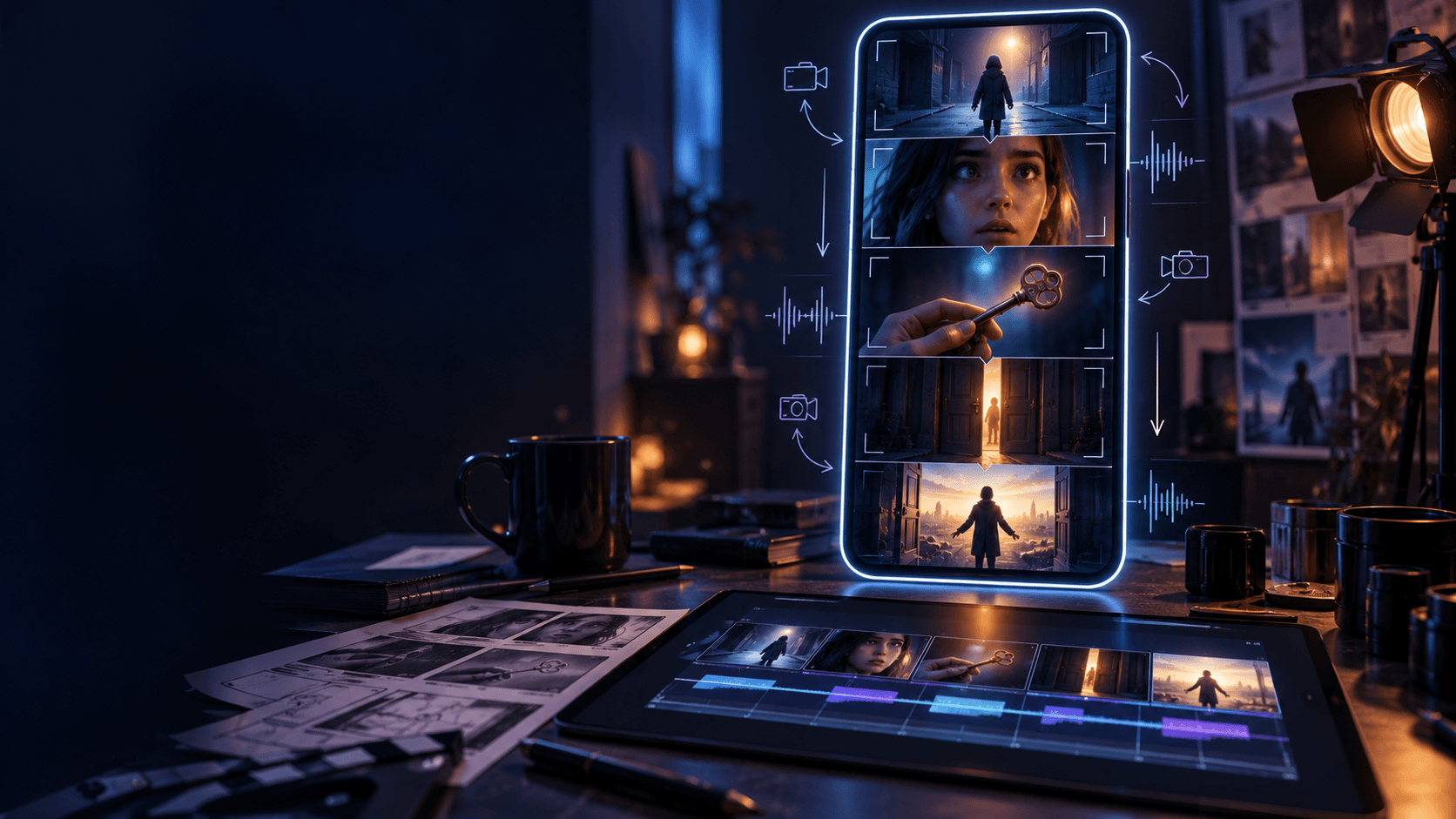
How to Make a 30-Second Anime Short with Seedance 2.5
Thirty seconds is long enough to tell a story and short enough to expose every weak production decision. If a character changes clothes halfway through, a camera crosses the action axis, or the sound design has no relationship to the visuals, viewers notice immediately.
Seedance 2.5 gives creators a more ambitious starting point. ByteDance says the model can generate up to 30 seconds of audio-video in one pass, extend the result through additional rounds, work with extensive image, video, and audio references, and apply targeted timestamp-level edits. The challenge is no longer merely “make the image move.” It is deciding what deserves to happen in those 30 seconds.
This workflow is designed for a solo creator making a compact anime short—not a random montage and not a compressed episode.
Begin with One Irreversible Change
A good micro-story contains a before and an after. Something changes that cannot be fully undone: a secret is revealed, a train departs, a character makes a choice, or an object awakens.
Weak premise:
A swordswoman stands in a beautiful city and fights enemies.
Stronger premise:
A swordswoman sent to destroy a mechanical bird discovers it carries her missing brother's recorded voice.
The second premise creates an emotional pivot. It also tells you what the final shot should communicate.
Write four beats before writing the visual prompt:
- 0–6 seconds: establish the character, place, and immediate goal.
- 6–14 seconds: introduce resistance or new information.
- 14–23 seconds: force the decision.
- 23–30 seconds: show the consequence and leave a memorable final image.
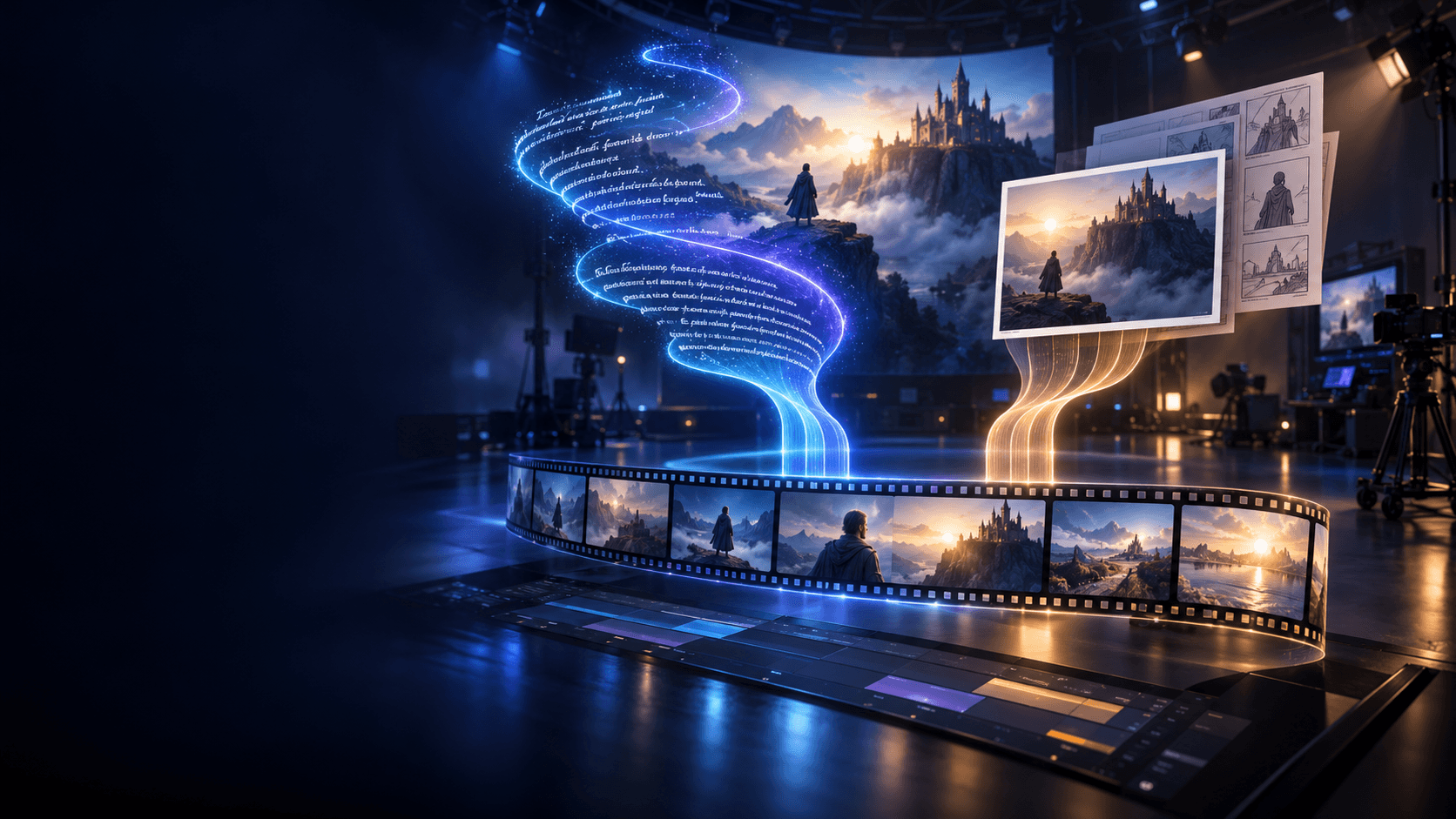
If you want help turning a premise into a structured scene, Elser AI can take an initial idea through script and storyboard development before you start generating expensive video variations.
Build a Reference Package, Not a Mood Board
Seedance 2.5 can accept up to 30 images, 10 videos, and 10 audio references in a single pass, according to its official release. That capacity is useful for professional projects, but it is not a target. A 30-second anime short can often be directed with five carefully chosen assets:
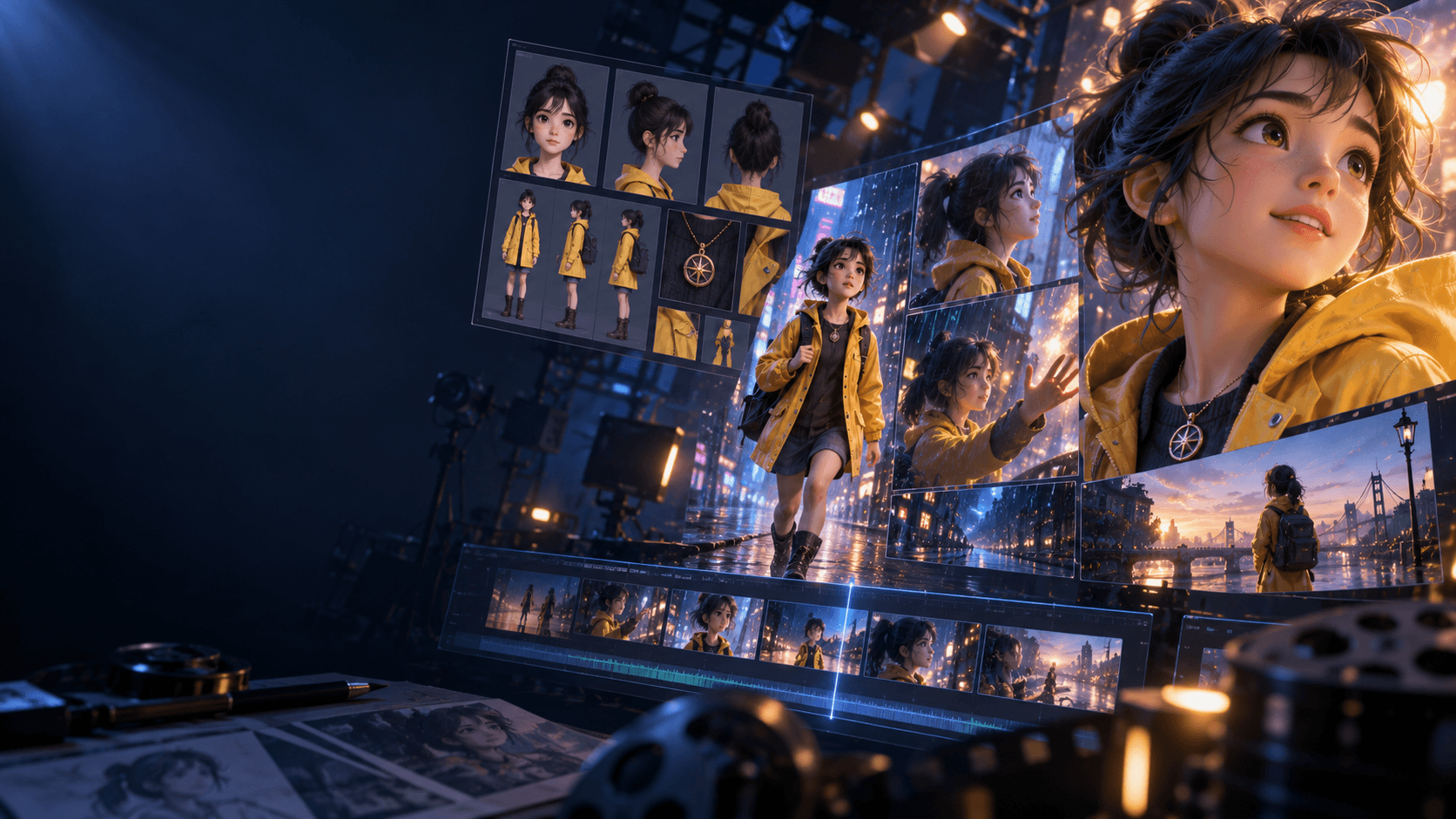
- A clean character reference showing face, hair, body proportions, and signature accessory.
- A full-body outfit reference with an unobstructed silhouette.
- An environment keyframe that defines architecture, lighting, and palette.
- A movement reference for the most difficult action or camera path.
- An audio reference only when rhythm, voice, or ambience is structurally important.
Give every reference one job. If two images disagree about the costume, the model has to improvise. If the environment reference uses warm afternoon light but the prompt requests a blue midnight scene, visual continuity becomes harder.
For recurring characters, create a reference sheet first. Elser AI is useful here because the same character design can inform the storyboard, scene planning, and later generations rather than becoming an isolated image.
Turn the Beat Sheet into a Shot Plan
Do not ask for 12 shots simply because the model supports a longer duration. Six well-connected shots usually communicate more than constant cutting.
Here is a practical plan for the mechanical-bird premise:
| Time | Shot | Story job | | 0–4s | Wide rooftop establishing shot | Orient viewer and show target | | 4–9s | Tracking medium shot | Establish pursuit and character identity | | 9–14s | Close-up of bird landing | Shift from action to curiosity | | 14–20s | Insert and reaction | Reveal recorded voice | | 20–26s | Slow orbit | Show the character's decision not to attack | | 26–30s | Pullback as bird flies away | Resolve with a strong final image |
Notice that the camera language slows at the turning point. Pacing is not just the number of cuts; it is the relationship between information and attention.
Write a Prompt That Directs Time
Use one stable character paragraph, one world paragraph, and a time-coded action section. Avoid changing the character description between shots.
30-second cinematic anime short, 16:9. Original heroine: 22-year-old swordswoman, short silver hair, amber eyes, fitted navy coat, brass compass at her collar, slim black sword. Preserve face, proportions, outfit, compass, and sword in every shot.

Moonlit mechanical city above the clouds, wet slate rooftops, navy and muted gold palette, realistic wind and cloth motion.

0–4s: Wide aerial establishing shot. A small brass bird lands on a distant roof. City ambience and light rain.
4–9s: Side tracking medium shot as the heroine runs toward it and draws her sword.
9–14s: The bird stops instead of escaping. Slow push-in; its chest opens to reveal a recording crystal.
14–20s: Close-up of the crystal. A young male voice says, “If you found this, I made it across.” Cut to her restrained reaction.
20–26s: Slow orbit as she lowers the sword and protects the bird from a patrol searchlight.
26–30s: Wide pullback. The bird flies toward the cloud horizon while she watches, holding the compass. Music resolves quietly.

Continuity: stable identity, screen direction, rain, moon position, and city design. No extra characters, captions, random costume details, or abrupt style shifts.
The prompt includes dialogue, but only one sentence. Early video tests should prove blocking and identity first. Long dialogue increases the number of things that must align simultaneously.
Generate a Low-Risk Test Before the Hero Render
Do not begin with the most complicated version. First test the segment that could invalidate the entire short:
- the identity change from wide shot to close-up;
- the bird's chest opening without deformation;
- the hand lowering the sword;
- the transition from action pacing to emotional pacing;
- the recorded line and reaction timing.
If your interface supports partial generation or targeted editing, isolate those moments. Seedance 2.5's official materials describe timestamp-level audio and video editing as well as reference-based editing, green-screen workflows, and camera perspective control. Availability may vary by product surface, so check the interface or API you actually use rather than assuming every deployment exposes every control.
Direct Sound as a Scene
Seedance 2.5 is built on an audio-video joint generation architecture. That makes sound part of the prompt, but restraint matters.
Separate sound into four layers:
Environment
Rain, distant engines, wind over rooftops, and the acoustics of open space establish location.
Action
Footsteps, coat movement, metal draw, and mechanical wing movement should occur at visible moments.
Dialogue
Specify the speaker, exact line, emotional delivery, and approximate entry point. Avoid asking for overlapping conversation during a complicated action test.
Music
Describe function rather than naming a copyrighted composition: “restrained low strings that pause at the reveal and resolve with a single warm chord.”
When you need more granular control, separate the production stages. Generate or edit voices, ambience, and effects, then align them on a timeline. Elser's connected animation workflow can help you combine scenes, voiceover, music, and sound effects while retaining control over timing.
Review the First Result Like an Editor
Watch once without pausing and write down only where attention breaks. Then review frame by frame.
Use this order:
- Story comprehension: Can a new viewer describe what changed?
- Identity: Is it obviously the same character?
- Spatial logic: Do direction, eyelines, scale, and geography remain coherent?
- Action: Are hand-object contacts and body mechanics readable?
- Sound synchronization: Do dialogue, effects, and reactions align?
- Aesthetic polish: Lighting, texture, saturation, and detail.
Do not fix color grading while the story is unclear. Do not rewrite the entire prompt because one hand is malformed. Match the correction to the failure.
Use Targeted Edits and Extensions
For a local failure, describe the time range, the unwanted behavior, the desired replacement, and everything that must remain unchanged.
Edit 14–17 seconds only. Keep the character, camera position, rain, lighting, bird, and audio unchanged. Correct the heroine's right hand so it rests naturally on the sword handle with five anatomically coherent fingers. Do not change her face, coat, or expression.
For an extension, restate the current scene state. The model needs to know where objects are, what the character has learned, and which visual rules continue.
Extend from the final frame. Preserve the heroine, rooftop, moonlight, rain, and city design. The bird is now flying away toward the right horizon. She turns left as the patrol light reaches the roof, conceals the recording crystal, and walks calmly toward the stairwell.
Finish Outside the Generation Box
A generated clip is not automatically a finished short. Use a final edit to:
- remove weak opening or ending frames;
- tighten reaction timing;
- normalize audio levels;
- add subtitles as a separate editable layer;
- preserve safe margins for vertical crops;
- verify that music and assets are licensed for your intended use;
- export a clean master before social compression.
If you are building more than one scene, Elser AI can serve as the production layer connecting script, storyboard, character references, generation, voice, and final cut.
FAQ
Can Seedance 2.5 really generate 30 seconds in one pass?
ByteDance's official release says yes. Complex prompts may still require revisions, and quality depends on the deployment, references, and scene difficulty.
Is one 30-second generation better than six five-second clips?
It can improve continuity because the model sees the sequence as a whole. Separate clips may offer more local control. Choose based on whether continuity or shot-level iteration is your largest risk.
How many characters should a first short contain?
One main character and one simple supporting subject is a sensible starting point. Multiple speaking characters increase identity, blocking, eyeline, and lip-sync complexity.
Should I generate dialogue with the video?
Test short lines when synchronized performance matters. For precise performance, translation, or later revisions, a separate voice and editing workflow may provide more control.
Can I use copyrighted anime characters?
Use original characters or assets you have the right to use. Platform rules and applicable law still apply to AI-generated media.
Conclusion
The best 30-second anime short is not the one with the most shots. It is the one with a readable change, a stable character, and a final image that feels earned. Seedance 2.5 provides unusually broad reference, duration, audio, and editing capabilities, but preproduction remains the multiplier. Make the story simple enough to direct, then use the model's complexity where viewers can actually feel it.