How to Build an Anime Series with AI Agents: A Step-by-Step 2026 Guide
Let's be real for a second. A few years ago, if you told someone you were going to "build an anime series with AI," they'd have laughed you out of the room. Anime production was—and still largely is—a labor-intensive, expensive, highly specialized craft. Hand-drawn frames. Complex character designs. Consistent visual language across hundreds of scenes. It takes teams of professionals months or years to produce a single season.
But 2026 is different.
This year, we're seeing major studios and independent creators alike embrace AI-assisted animation pipelines. Amazon approved three AI-generated animated series through its GenAI Creators Fund. Netflix launched INKubator, a "GenAI-native animation studio" focused on producing animated shorts and specials through experimental AI-driven pipelines. Utopai Studios and Huace partnered on a fully AI-generated Journey to the West animated series.
The technology has arrived. The question is: how do you actually build an anime series with AI Agents?
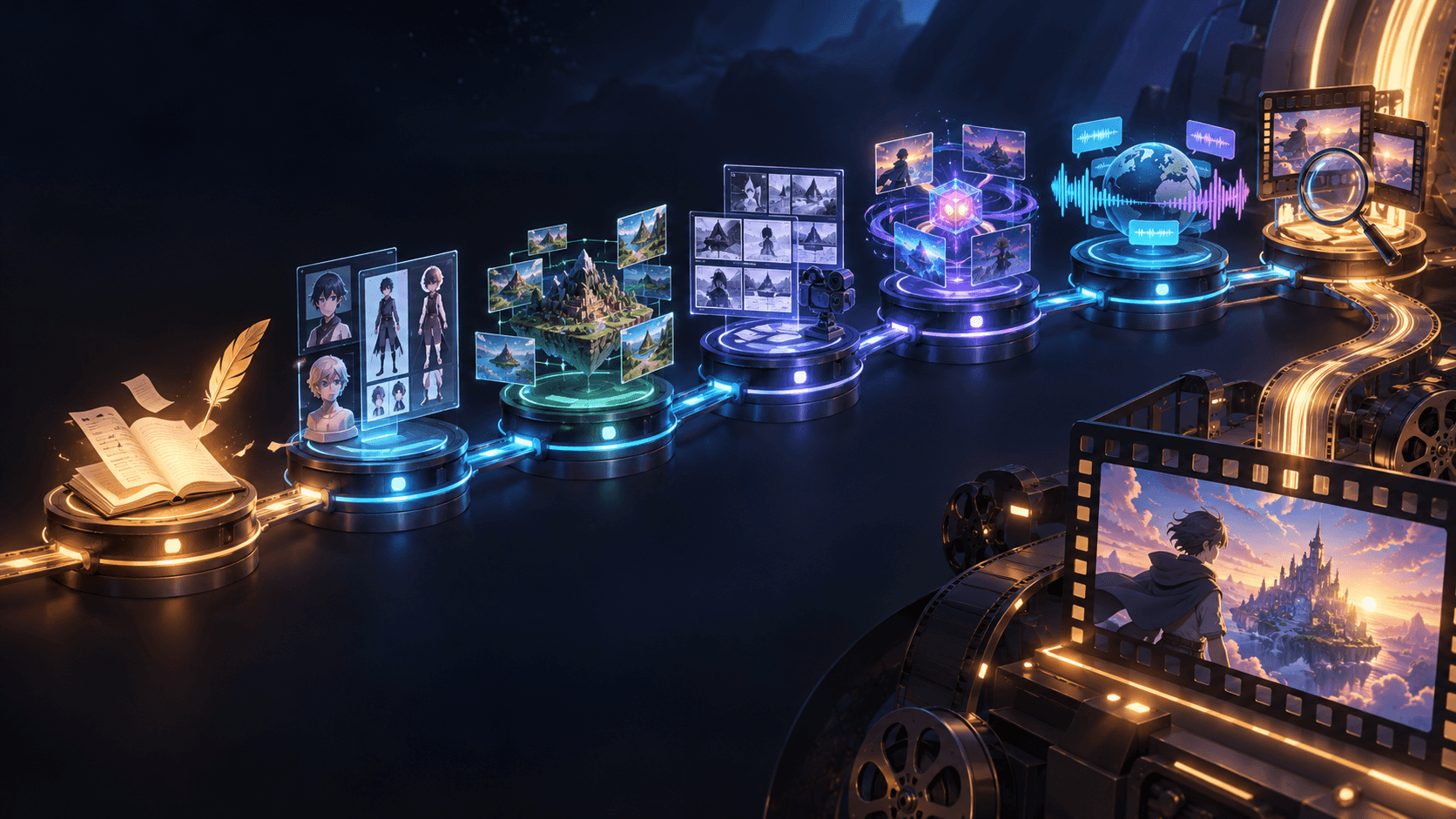
Step 1: Start With a Strong Foundation (Your Story)
Before any AI agent touches your project, you need a story. Not a complete script—that comes later—but a solid concept. Who are your characters? What's the world like? What's the central conflict?
This is where an AI Story Agent becomes invaluable. Feed your concept into an agent designed for narrative development, and it will help you expand your idea into a full story structure. Character arcs. Plot beats. Thematic throughlines. All the elements that turn a "cool idea" into a "compelling story."
The key insight from 2026's research on multi-agent storytelling is that iteration matters. Your first attempt won't be perfect. That's fine. Use your AI agent to generate, review, refine, and repeat. Each cycle improves the quality.
Step 2: Build Your World (The Setting)
Anime is famous for its immersive worlds. From the cyberpunk streets of Ghost in the Shell to the magical realms of *Studio Ghibli*, the setting is often as memorable as the characters.
AI world-building tools have come a long way in 2026. Google's Project Genie can build small worlds using advanced models that simulate physics and interactions for dynamic environments released HY-World 2.0, a multimodal world model that can automatically generate, reconstruct, and simulate 3D worlds from text, images, and video inputs.
For an anime series, you want a world that feels lived-in and consistent. Your World-Building AI Agent should track:
- Geography and locations
- History and lore
- Rules of magic/technology
- Political and social structures
- Cultural details
When these elements are consistent, your world feels real. When they're not, your audience notices immediately.
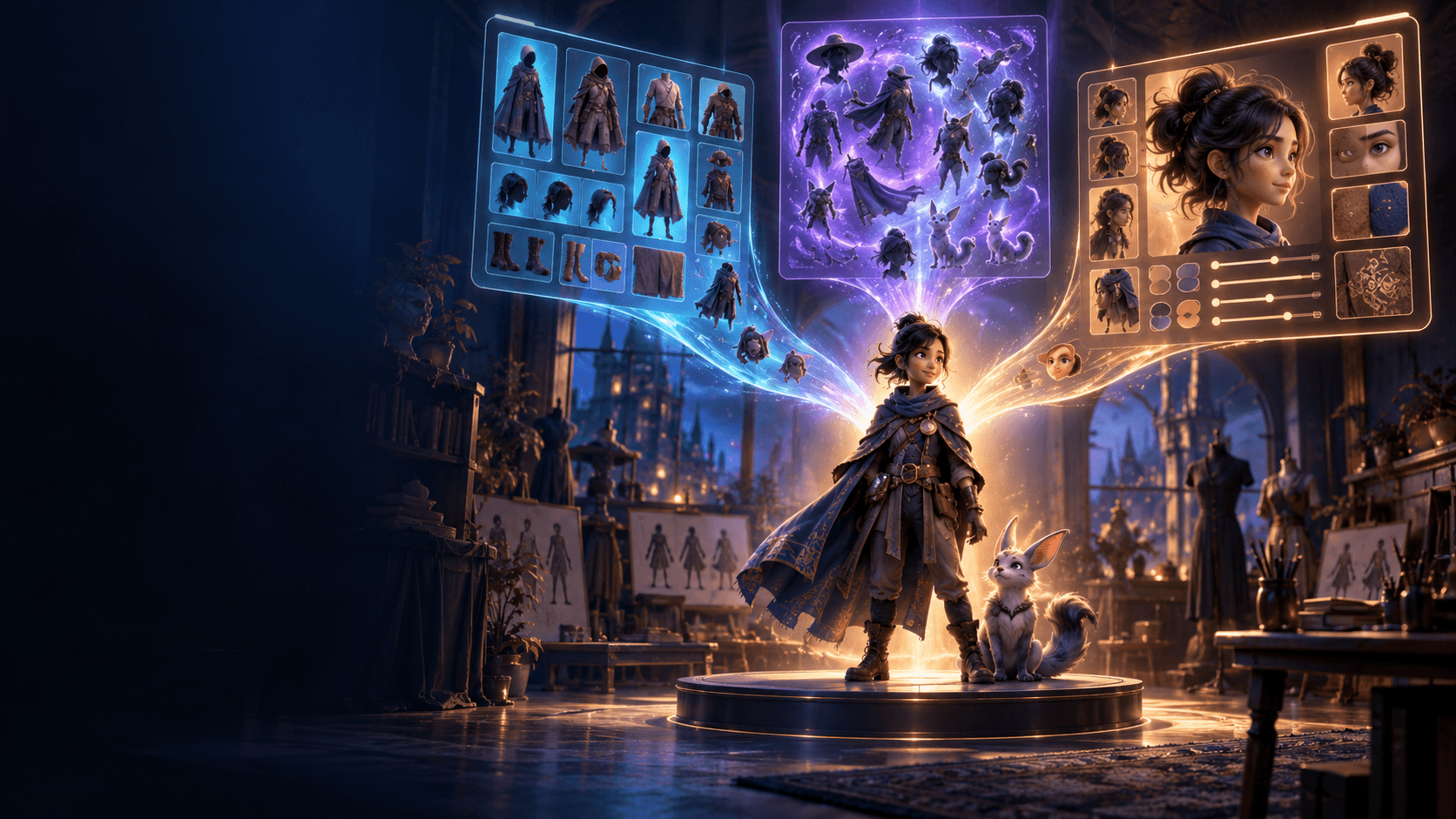
Step 3: Design Your Characters (With Consistency)
This is where most AI anime projects fall apart. It's easy to generate a single cool character image. It's much harder to generate that same character consistently across dozens of scenes, in different poses, with different expressions, from different angles.
Character consistency for long stories has been one of the biggest challenges in AI content creation. But 2026 has brought significant breakthroughs.
Research from earlier this year introduced frameworks like IdentityStory for human-centric story generation that ensures consistent character identity across images. CANVAS, a continuity-aware visual agentic storyboarding system, improved character consistency by 9.6% over previous best practices. ReCap established new state-of-the-art benchmarks for character consistency in story visualization.
For your anime series, you need an AI agent that can:
- Generate character designs that are visually distinctive
- Maintain those designs across all scenes and angles
- Adapt character appearances for different emotional expressions
- Ensure multiple characters remain visually distinct from each other
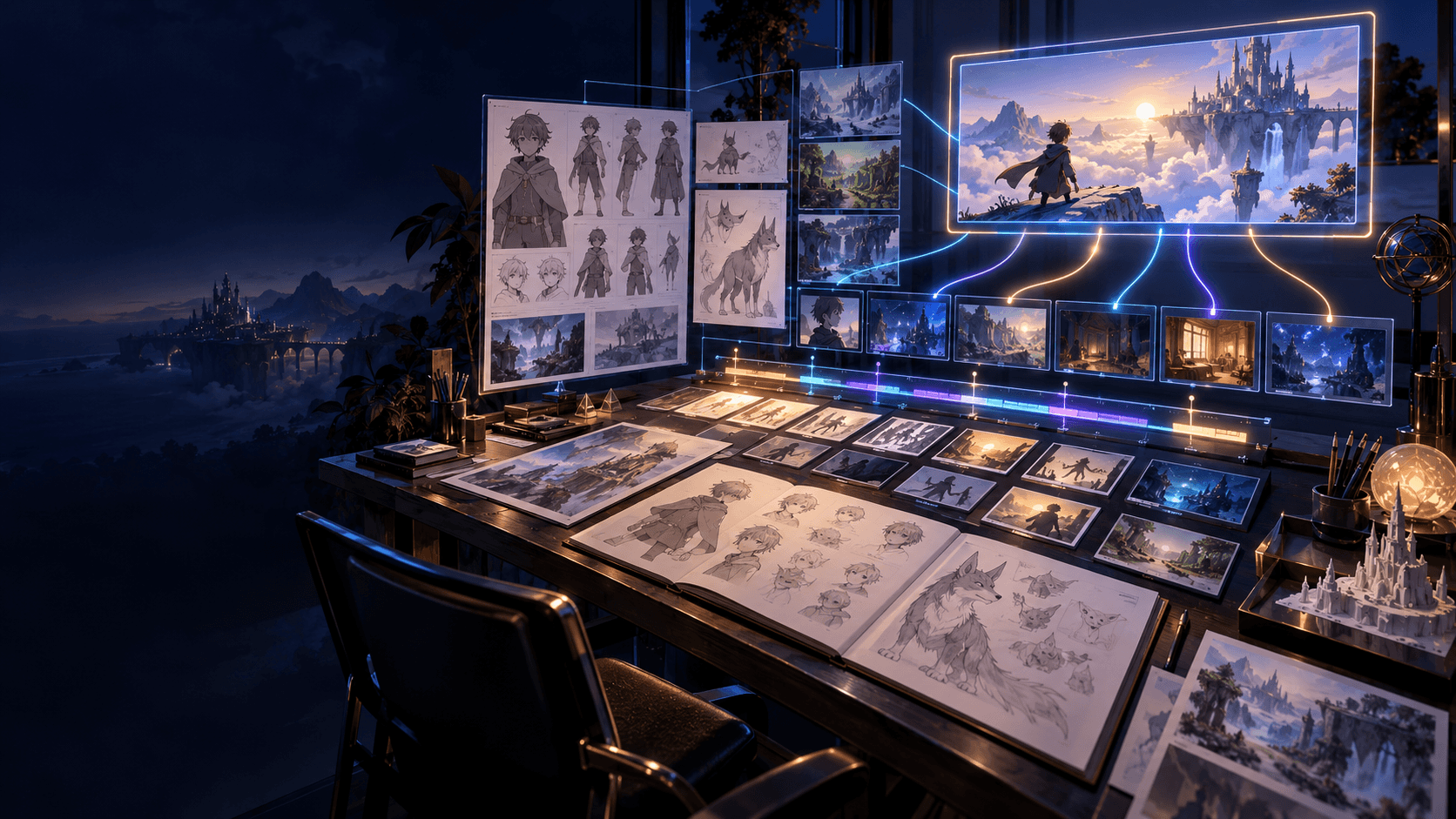
Step 4: Develop Your Storyboard (The Visual Blueprint)
Once you have your story, world, and characters, it's time to plan how it all looks on screen. This is where an AI Storyboard Agent comes in.
The best AI storyboard generators in 2026 can take your script and generate illustrated panels with shot directions, framing, and character consistency across scenes. Some platforms can even generate video directly from storyboards.
For an anime series, your storyboard is your production bible. It tells your animators (human or AI) exactly what each scene should look like. The more detailed and consistent your storyboard, the smoother your production will be.
Step 5: Generate Your Animation (The Final Product)
This is the step that used to be impossible for independent creators. Animation production requires specialized skills, expensive software, and massive amounts of time.
But in 2026, AI-native animation platforms are changing the game. Nura Studios launched Showcraft, an AI-assisted animation platform that integrates story development, pre-production, visual and voice creation, and final editing within a single environment. Cascade offers an end-to-end production platform with integrated tools to develop, manage, and scale productions from first idea to final delivery.
These platforms are designed to work from creator-developed assets, reducing production friction and lowering barriers to entry while maintaining control and consistency.
The Elser.ai Advantage: Your Complete Anime Production Team
Here's where Elser.ai stands apart from every other tool on the market.
Most AI anime tools focus on one specific step. A character generator here. A storyboard tool there. A video generator somewhere else. You end up juggling multiple platforms, re-entering the same information, and hoping everything stays consistent.
Elser.ai gives you all the agents you need in one integrated ecosystem:
- Story Architect Agent: Develop your narrative from concept to script
- World-Building Agent: Create and track consistent lore, geography, and rules
- Character Design Agent: Generate and maintain visually consistent characters
- Storyboard Agent: Plan every shot with continuity
- Production Agent: Manage your project from pre-production to final delivery
Every agent works together. Every piece of your project stays connected. Every character remains consistent from the first concept sketch to the final frame.